Junk Journal Cover Ideas: 25+ DIY and Vintage Designs
The cover is the part beginners overthink the most. It is the first thing you and everyone else sees, so it carries weight, but a beautiful cover does not need talent or special tools. The strongest covers in this whole craft are usually a piece of fabric, an old book spine, or a single pressed flower on kraft card.
Junk journal covers come down to two material families (paper or fabric) and one structural choice (wrap a board or repurpose a book). Inside that small space lives every cover you have ever screenshotted from Pinterest. Below we break the ideas down by material, throw in a quick how-to so you can actually build one, and finish with the one detail that decides whether the cover still looks great in six months or comes apart in your bag.
TL;DR. Easiest standout cover: fabric or vintage paper wrapped around boards, with a focal piece (lace, a tag, a pressed flower) and inked edges. Old hardback if you want the vintage feel for free. Whatever you make, seal it and add a closure or it will not survive a season in your bag.
What makes a cover actually work
A cover does two jobs. It protects the pages, and it sets the mood of the journal before you open it. The mood part is what people focus on; the protection part is what they wish they had thought about three months in, when the corners are fraying and the focal piece is hanging by a thread.
A few things separate covers that last from covers that fall apart:
- A real base. Chipboard, an old book cover, or thick cardstock as the structural layer. Anything thinner curls.
- The right adhesive for the material. PVA for paper and most fabric; tacky glue for heavy fabric and trims. A glue stick will not hold a cover.
- A sealed surface if you want it to last. Matte medium or wax over collaged paper keeps it from lifting at the edges.
- A closure. Chunky journals spring open. An elastic, ribbon, or button-loop earns its keep almost immediately.
Junk journal cover ideas by material
Five material families cover almost every junk journal cover on Pinterest. The table compares them at a glance; pick the row that matches the look you want, and the sections below give you the ideas for it.
| Material | Cost | Durability | Beginner-friendly | Pinterest pull |
|---|---|---|---|---|
| Fabric (linen, quilting cotton, lace) | $ | High | Yes | High |
| Vintage paper (book pages, maps, music) | Free–$ | Medium (seal it) | Yes | Highest |
| Mixed media (paint, paper, found objects) | $$ | High | Some skill | Medium |
| Themed (travel, gothic, botanical, seasonal) | Varies | Varies | Yes | High |
| Upcycled hardback (existing cover) | Thrift | Highest | Yes | High |
The honest read: if you are starting today, fabric or vintage paper are the lowest-friction choices. Upcycled hardback wins on durability and vintage feel for almost no money. Themed and mixed-media are where you go after a couple of finished journals, when you actually know what mood you want.
Fabric junk journal cover ideas
Fabric covers add instant softness and texture and hide a lot of beginner imperfections. A scrap of linen, a piece of an old tablecloth, or a remnant of quilting cotton wraps a journal beautifully.
Five to try:
- Linen wrap. Glue or sew linen around the boards for a soft, neutral, vintage feel.
- Patchwork. Stitch or glue several fabric scraps together for a layered, cozy look.
- Lace overlay. Layer lace over a solid fabric base for texture and a romantic touch.
- With a closure. Add a button-and-loop or a ribbon tie to keep a chunky journal shut.
- Pocket cover. Sew a small fabric pocket onto the front to tuck a tag or dried sprig into.
Fabric covers pair well with handmade journals. If you are choosing a base to cover, our guide to the best journal for junk journaling walks through the blank-book and handmade options.
Vintage and paper cover ideas
The fastest route to a vintage look runs through paper. Book pages, maps, sheet music, or printables glued over boards give you the aesthetic for almost no money, and almost no skill.
Five to try:
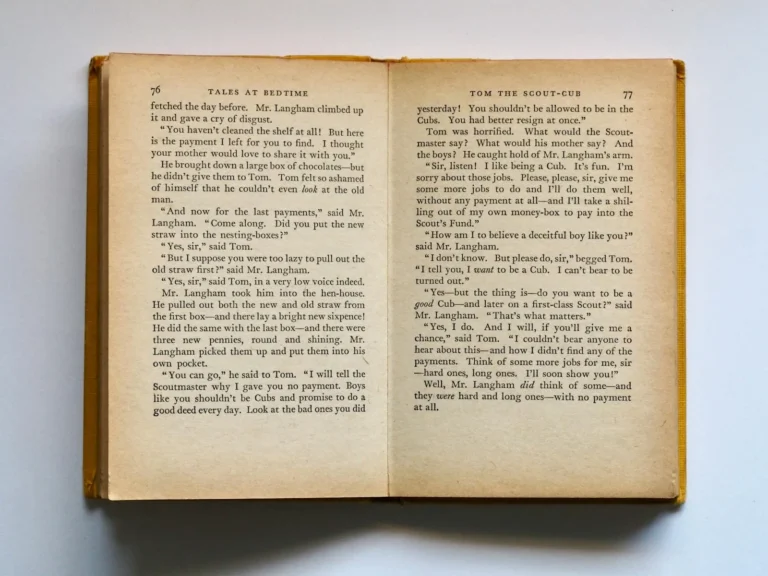
- Book page collage. Cover the boards in old novel or dictionary pages, then age the edges with brown ink.
- Map cover. A vintage map makes a striking travel-journal cover and reads instantly in a thumbnail.
- Sheet music. Old music sheets give an elegant, classic backdrop that goes with almost any focal piece.
- Printable. Use a vintage-style printable as a ready-made design. Our free printables roundup has options.
- Wallpaper or kraft base. A wallpaper scrap or plain kraft card with one focal element keeps it simple and clean.
Mixed-media and textured cover ideas
Here is where covers start to feel like little artworks. Mixed-media covers layer different materials and a little colour for depth: paint, paper, fabric, found objects all on one piece. The only mistake is stopping too early or going too far.
Five to try:
- Layered collage. Combine paper, fabric, lace, and a focal tag in one piece.
- Painted base. A wash of acrylic or watercolour under your layers ties the palette together.
- Texture paste stencil. A stenciled texture-paste pattern gives a subtle raised design.
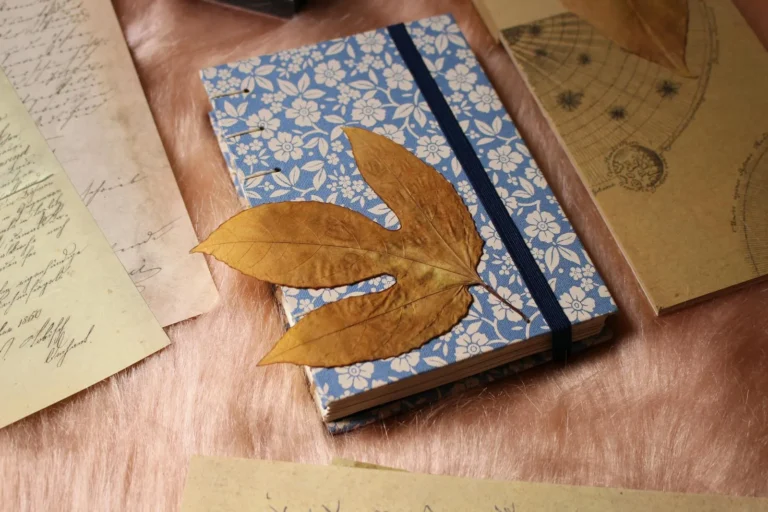
- Pressed flower. A single pressed flower or leaf under a clear seal is simple and striking.
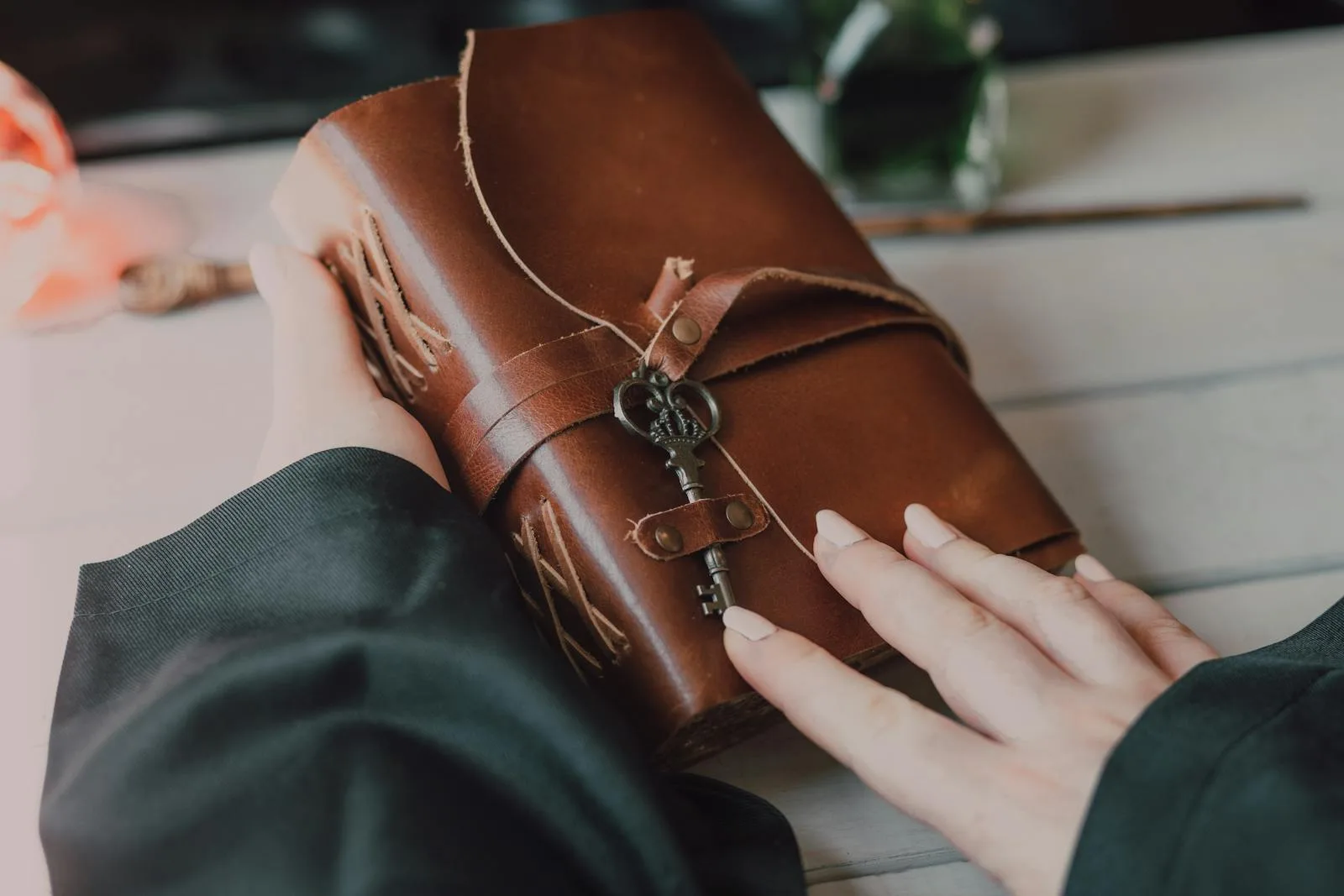
- Found object. A key, a charm, or an old button as the focal point adds character.
Make any cover look finished fast. Age every edge. Swipe a brown or sepia ink pad around the outer edges of the cover and any layered pieces. One step, two minutes, and it ties mismatched materials together so the cover looks collected instead of glued.
Themed and seasonal cover ideas
Skip the generic “pretty” cover. A clear theme reads in a Pinterest thumbnail in half a second, and makes the cover actually mean something to the journal underneath. Travel, gothic, botanical, holiday: pick a mood that matches the pages, and the cover almost designs itself from there.
Five to try:
- Travel cover with maps, stamps, and a luggage-tag closure.
- Gothic or vintage-dark cover in deep tones with old script and aged metal accents.
- Botanical cover with pressed flowers, seed-packet snippets, and soft greens.
- Seasonal covers for autumn, winter, or the holidays, swapped as you start new journals.
- Memory-keeper cover with a single meaningful photo as the focal point.
Themed covers also make the best pins, because the mood reads at thumbnail size.
Upcycled hardback cover ideas
The most-loved cover style in the craft is also the laziest: thrift an old hardback and use the cover that already exists. The patina, the cloth, the half-flaked gilt title: none of that can be faked with a new book. Five quick directions:
- Leave it raw. Keep the original cloth or leather; add only a closure and a focal piece.
- Layer over the title. Glue a tag or label fragment over the original title to retitle the book.
- Strip and rebuild. Remove the cloth, paint the boards, and rewrap in fabric or paper of your choice.
- Combine two books. Use the front cover of one and the back of another, joined with a new spine.
- Sleeve it. Wrap the whole hardback in a removable fabric sleeve so the original cover stays intact.
The full process of turning a thrifted hardback into a journal lives in how to make a junk journal from an old book.
How to make a junk journal cover (the basic build)
To make a cover, choose your material, cut it slightly larger than the journal boards, glue it down smoothly, then add layers, a focal piece, and aged edges. The process is the same whether you use fabric or paper.
The sequence:
- Measure and cut your cover material a little larger than the boards on all sides.
- Glue the base down with PVA, smoothing out air bubbles from the centre outward.
- Wrap and secure the edges to the inside of the boards, trimming bulk at the corners.
- Add layers and a focal piece (lace, a tag, a pressed flower, a title label).
- Age the edges and seal if needed, then add a closure like a ribbon or elastic.
If your layers lift or the fabric will not stick, the problem is almost always the adhesive, not your technique. See our glue guide for what holds heavier materials.
The one step beginners skip: sealing and aging
Most beginner covers fail the same way. The edges of the collaged paper start lifting around month two, the focal piece picks up bag fluff and goes grey, and the cover that looked great in the photo looks tired by autumn. The fix is one extra step at the end: seal it, and age the edges before you do.
Sealing means a thin coat of matte medium (acrylic polymer, like Liquitex or Golden) or a clear wax (beeswax polish or clear soft furniture wax, not solvent-heavy paste wax, which blooms on paper) over the finished cover. Matte medium is the easiest and most forgiving; it dries clear and slightly flexible, locks the paper layers down, and gives the surface a small amount of water resistance. Wax goes further, adding a tactile finish that ages well, but takes a little more care to apply evenly. Either way, the point is the same: a sealed cover does not lift at the edges, and a sealed paper cover survives a season in a tote bag without going furry.
Aging the edges is half cosmetic and half practical. Cosmetically, inked edges tie mismatched materials together and make a cover read as collected rather than slapped together. Practically, ink at the edge hides the inevitable wear that paper picks up around its corners, so a cover with aged edges looks better as it scuffs, not worse. A brown or sepia ink pad swiped around every layered piece and the outer edges of the cover does both jobs in about two minutes.
A closure is the third piece of the same puzzle. A chunky journal full of ephemera will spring open in a bag and force the cover to flex against the contents every time you pick it up. An elastic, a ribbon tie, or a button-and-loop keeps it closed and stops the cover doing structural work it was not built for.
Frequently asked questions about junk journal covers
What can I use for a junk journal cover?
Fabric, vintage paper, book pages, maps, chipboard, an old book cover, or printables. Most covers start with one base material, then add layers like lace, ribbon, and a focal piece; repurposed materials are part of the charm.
How do I make a vintage-looking junk journal cover?
Aged paper (book pages or sheet music), muted palette, brown or sepia ink around every edge. Distressing and a couple of layers do the rest.
What kind of glue works for fabric covers?
PVA.
Should the cover match the inside of the journal?
It helps but is not required. Matching the cover’s mood to the contents (travel, seasonal, vintage) makes the journal feel cohesive, but a favourite cover used regardless of what is inside is also a perfectly valid choice.
How do I keep a thick junk journal closed?
Add a closure (an elastic band, a ribbon tie, or a button-and-loop). Chunky journals full of ephemera spring open without one.
Pick a cover and build it this weekend
Do not let the cover intimidate you. Pick one material from the table above, glue it down, add a single focal piece, ink the edges. That is a finished cover. Seal it, add a closure, and you have a cover that survives a year of bag-life and still looks like the photo you screenshotted in the first place.
When the outside is done, fill the inside with our page ideas, tune your adhesives with the glue guide, or step back and read the complete beginner’s guide for the whole craft. The pile of paper that has been sitting on your shelf finally gets a cover worth opening.
Want a shortcut? Our free printable starter kit includes vintage cover papers you can print and wrap straight onto a journal. Sign up below and we will send it over.