This post contains affiliate links. We may earn a commission when you download a freebie or buy a subscription on Creative Fabrica, at no extra cost to you.
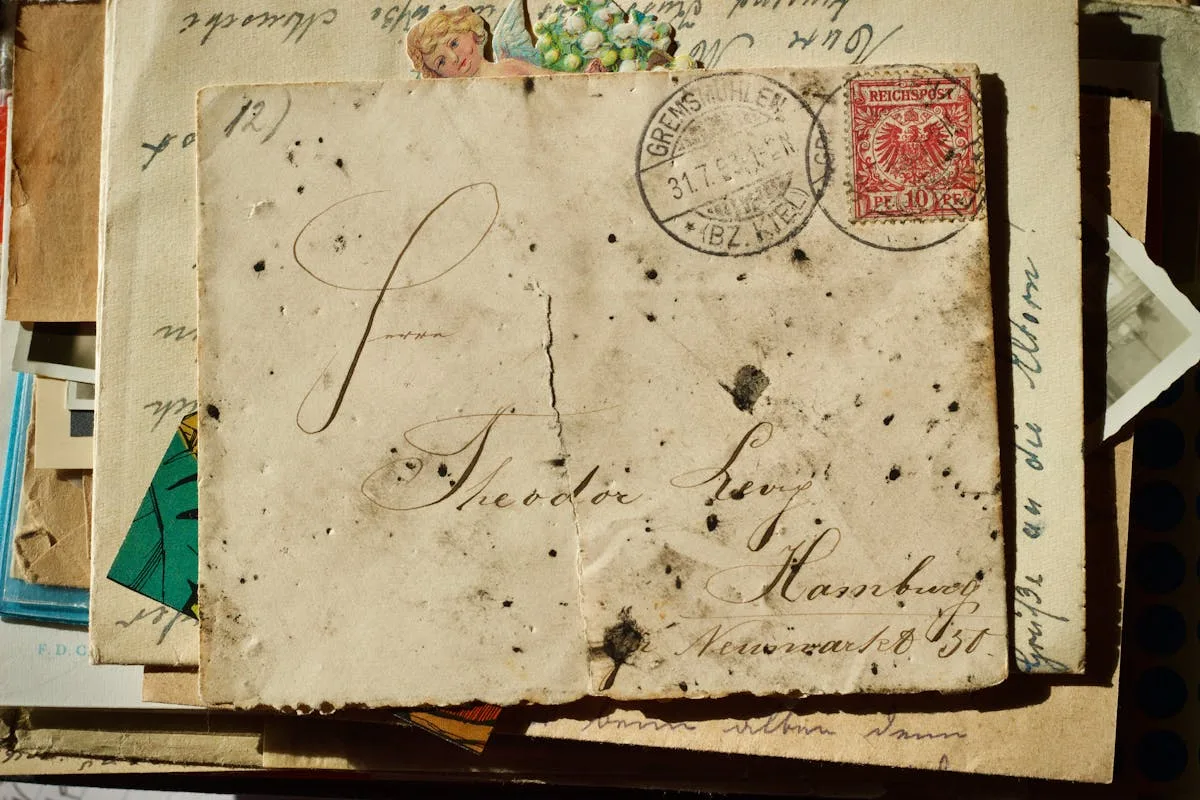
Junk journaling is the art of making a handmade book out of bits and pieces you would usually throw away: old envelopes, ticket stubs, scrap paper, packaging, magazine pages, and whatever else has a little life left in it. There are no rules, no skill requirements, and no expensive supplies, which is exactly why it has become one of the most beginner-friendly paper crafts around.
If you have ever saved a pretty receipt or a card you could not bring yourself to bin, you already have the instinct for this. Most people who try junk journaling are not artists. They are folks who like the idea of slowing down, working with their hands, and turning a pile of “junk” into something they actually want to keep. You do not need a single new thing to begin today.
Two things trip up almost every beginner, and we will get to both: the urge to buy a cart full of supplies before you have made a single page, and the fear that your first journal has to look like the polished ones you see online. Neither is true, and both are easy to sidestep once you know what is going on.
The short version: A junk journal is a DIY book of repurposed paper and ephemera. You can start with a notebook (or an old book), a glue stick, and a shoebox of saved scraps. Spend nothing to begin, and add supplies only once you know what you actually reach for. Your first pages are meant to be messy. That is the whole point.
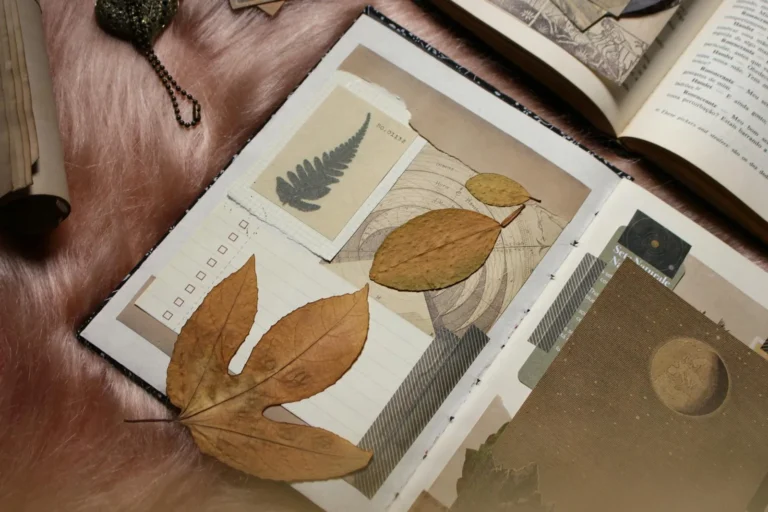
A junk journal is a handmade or repurposed book filled with collaged paper scraps, ephemera, and mixed media instead of plain blank pages. Think of it as a cross between a scrapbook, an art journal, and a diary, with the freedom to use whatever materials you have on hand.
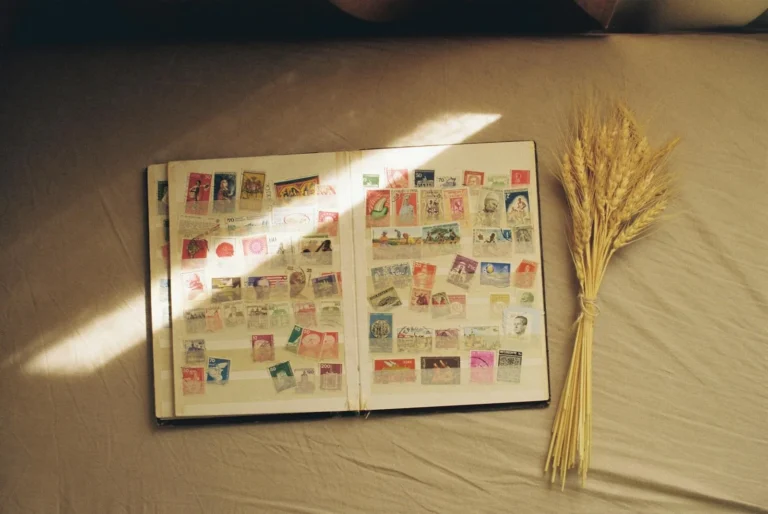
The “junk” part is literal, and friendly. The pages are built from things most people discard: brown paper bags, sheet music, book pages, fabric scraps, stamps, maps, dictionary pages, and packaging with nice colors or textures. Some people keep theirs purely decorative. Some write in them like a diary. Plenty use them as a memory keeper for a trip or a season. There is no correct way to fill one, and that freedom is a big part of why it sticks.
If you want the full breakdown of what goes inside one and how it differs from a scrapbook or a smash book, we cover that in what is a junk journal. For now, the one-line definition is enough to start.
Why do people love junk journaling?
People love junk journaling because it is cheap, low-pressure, and almost impossible to do wrong. You are working with materials that were already headed for the recycling bin, so there is nothing precious to “waste” and no wrong move to make.
A few reasons it tends to stick once people try it:
It costs almost nothing to start. Your raw materials are things you already own. The barrier to entry is a glue stick.
There are no rules. No straight lines to keep, no rubric, no “right” aesthetic. Crooked and layered is a feature, not a mistake.
It is genuinely relaxing. Tearing, gluing, and arranging is repetitive in the good way, the kind of quiet handwork that gives your brain a rest from screens.
It turns clutter into something you want. That drawer of saved cards, stamps, and ticket stubs finally has a home.
It grows with you. Beginners make simple collaged pages. A year in, the same people are binding their own books and dyeing paper with tea. It scales to whatever you want it to be.
The honest truth about your first journal: It will look like a beginner made it, because one did. Every junk journaler you admire has an ugly first book in a drawer somewhere. Make the ugly one on purpose and get it out of the way. Page ten will already look different from page one.
What do you need to start a junk journal?
To start a junk journal you need three things: something to be the book, something to stick things down with, and a small pile of paper “junk” to fill it. Everything beyond that is optional and can wait until you know your own style.
Here is the true starter list, the version that costs you nothing or close to it:
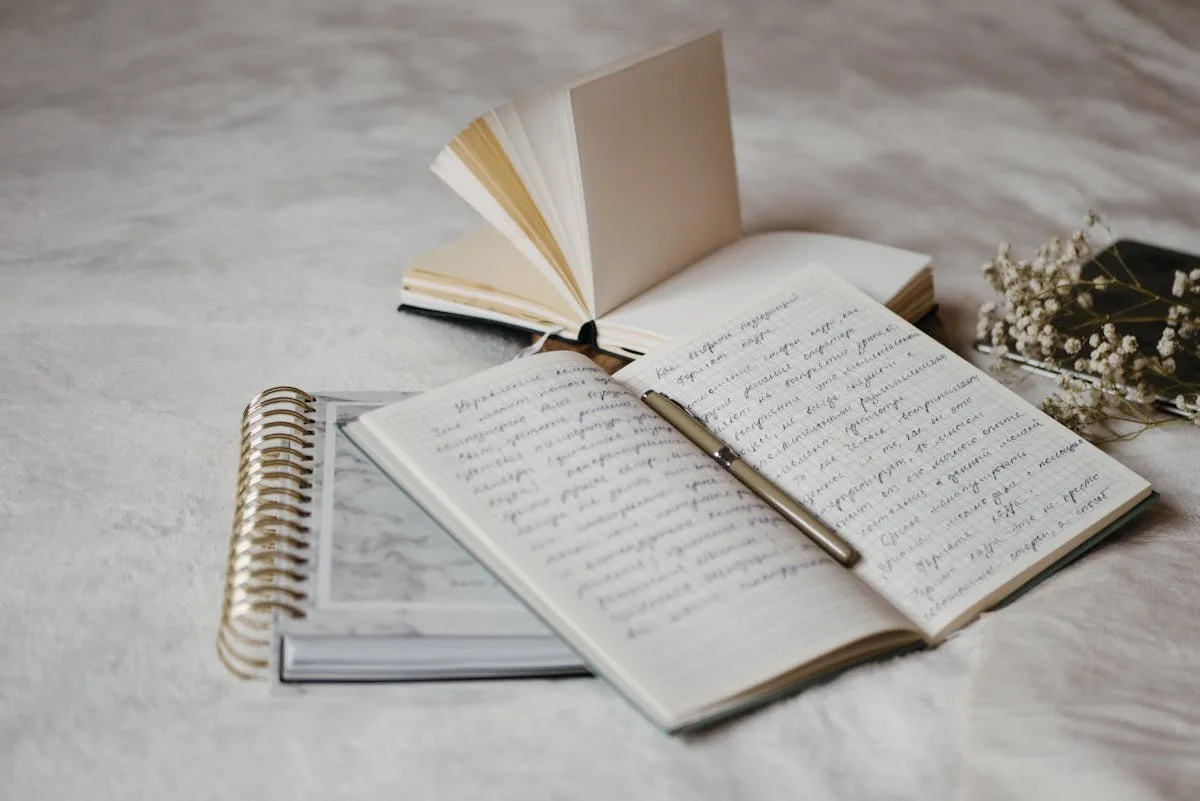
A base book. A cheap notebook, a composition book, a sketchbook, or an old hardback you do not mind cutting up. Many beginners start by turning a thrifted book into their first journal, which we walk through in how to make a junk journal from an old book.
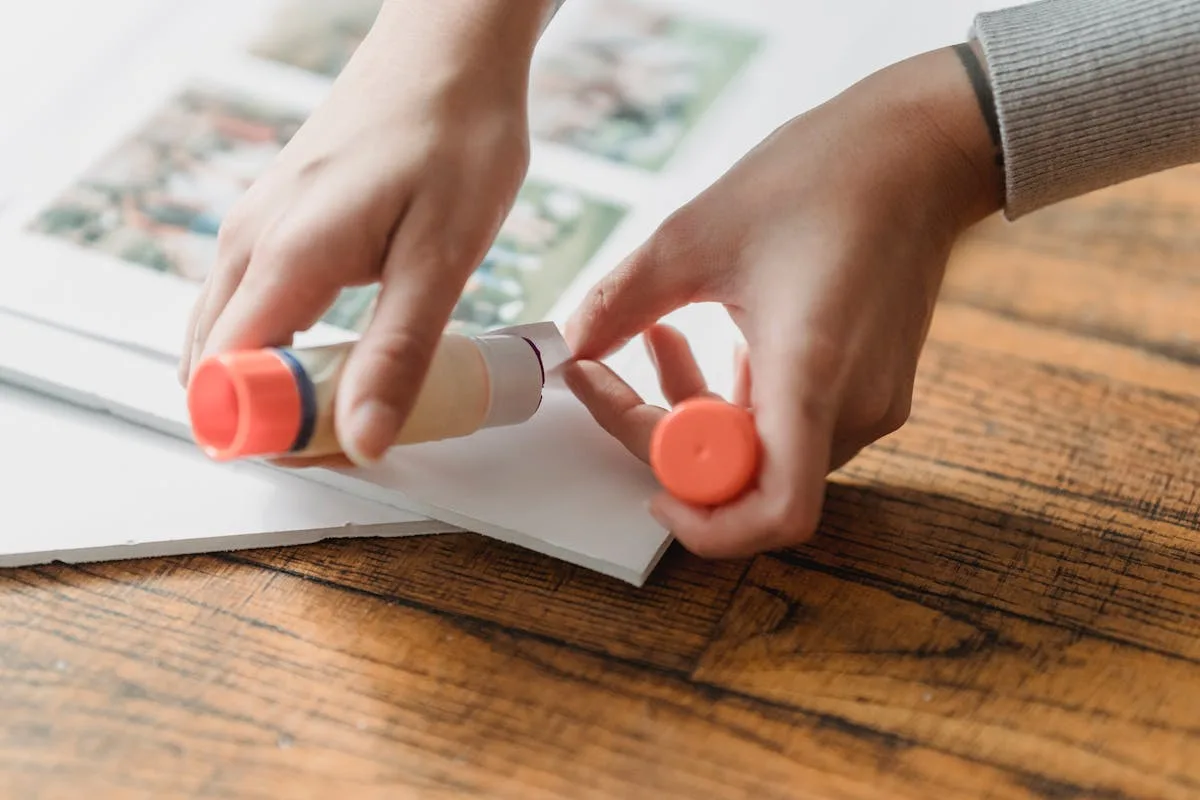
A glue stick or PVA glue. A basic glue stick is plenty for paper. You can upgrade later once you know what you are sticking down. Our breakdown of the best glues for paper crafts by job covers what to reach for as your pages get heavier.
Scissors. Any pair you own.
Your “junk.” Start a small box and toss in envelopes, packaging, cards, stamps, magazine pages, scrap fabric, sheet music, and anything with a texture or color you like.
That is the whole kit. We deliberately keep this short because the most common beginner mistake is buying a haul of stickers, washi tape, and ephemera packs before making a single page, then feeling stuck under a pile of stuff. Make a few pages first. You will learn fast what you actually reach for.
When you are ready to add to your stash thoughtfully, our junk journal supplies guide covers the essentials worth owning, the nice-to-haves, and where to find free and cheap materials (the dollar store and thrift shops carry more than you would think). And if you would rather start with a ready-made bundle, see our roundup of junk journal kits, including free printable kits you can download.
If a themed bundle sounds easier than hunting piece by piece, Creative Fabrica’s printable kits are a low-stakes way in, and its free plan includes ten downloads a month to try a couple. A vintage tags and labels kit is the most useful first one, since tags go on almost every page. From there a retro 50s kitchen kit or a herb garden kit gives you a whole themed spread in one download. You do not need any of this, but one matching set spares you a month of hunting before a themed page clicks.
How do you start a junk journal? (Step by step)
Starting a junk journal comes down to four steps: pick your base, gather your scraps, build a simple first page, and keep going without overthinking it. You can do all four in a single afternoon.
Choose your base book. Decide whether you are working in a notebook or transforming an old book. Either is fine. A notebook is the easiest place to begin.
Gather and sort your junk. Empty your scrap box onto the table and loosely group by color or type. You will start to see combinations you like.
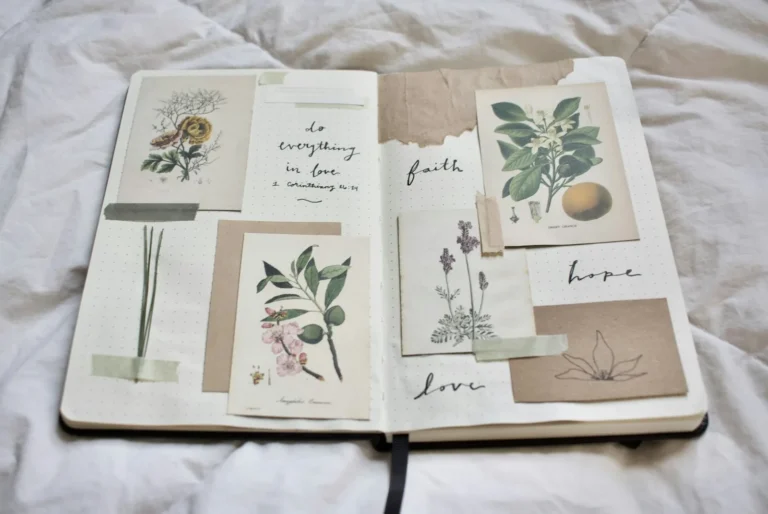
Make your first page. Pick a background (a book page, patterned scrap, or paint wash), glue down two or three layers, and add one focal piece like a photo, a stamp, or a ticket. Done.
Keep a loose rhythm. A page every few days beats a marathon you never repeat. The habit is the craft.
That is the high-level version. For a fuller walkthrough with beginner tips on first pages, pockets, and building a routine, head to how to junk journal, our step-by-step starter guide. New to crafting entirely and want the gentlest on-ramp? Start with junk journals for beginners.
Junk journal ideas to try first
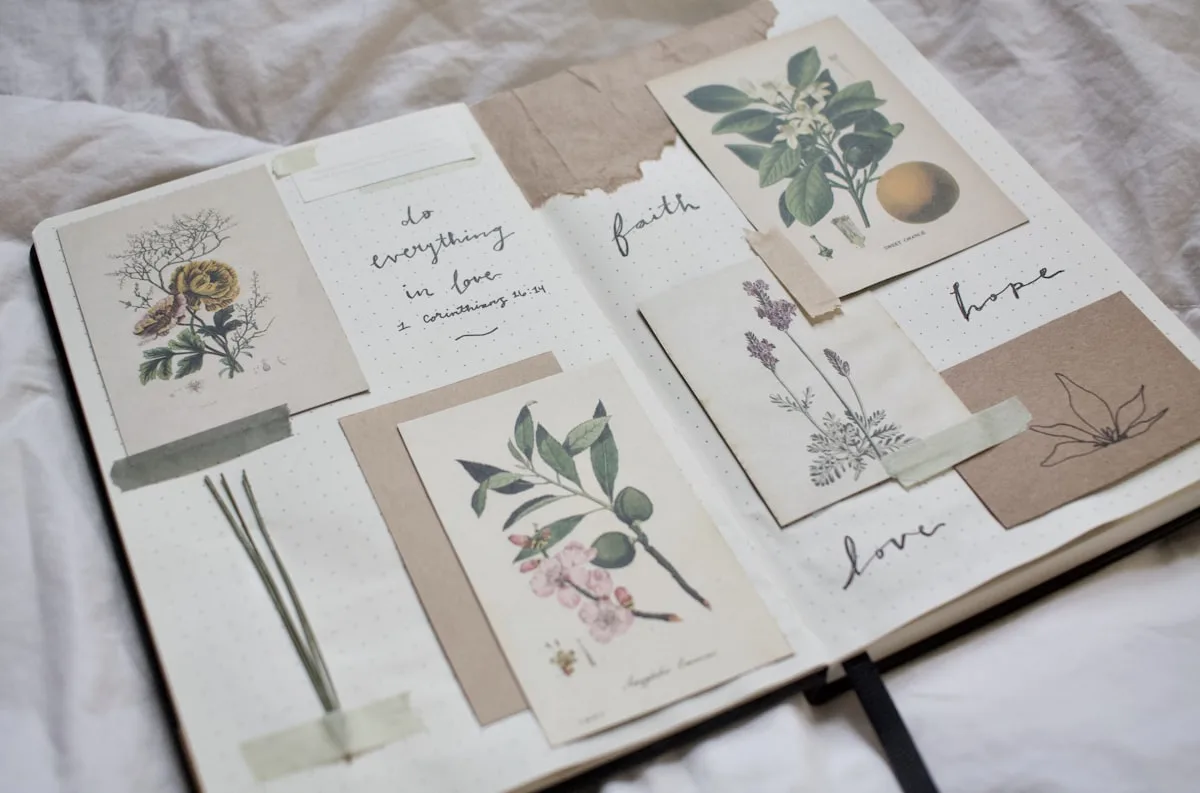
The best first ideas are the simple ones: a collaged background, a pocket for tucking in keepsakes, and a themed spread around something you care about. Start small and let pages stay messy while you find your style.
A few beginner-friendly ideas to get going:
A layered background page. Glue down a book page, a strip of patterned paper, and a stamp. Nothing else needed.
A pocket page. Glue an envelope or folded paper to the page and tuck in tags, notes, or photos. Interactive pages are the ones people flip back to.
A memory or travel spread. Collect ticket stubs, maps, and receipts from one trip onto a single spread.
A themed page. Pick a mood (vintage, garden, gothic, cozy) and pull only scraps that fit it.
For dozens more layouts, including pockets, tucks, and fold-outs, see our junk journal page ideas. The cover is its own kind of fun, so when you are ready to dress up the outside, we have a gallery of junk journal cover ideas too.
Junk journal vs scrapbook vs smash book: what is the difference?
A junk journal, a scrapbook, and a smash book overlap a lot, and the lines are blurry on purpose. The simplest way to tell them apart is by how structured and how “finished” each one tends to be.
Type
Main idea
How structured
Junk journal
A handmade book of repurposed paper and ephemera; layered and tactile
Low. No rules, messy is welcome
Scrapbook
Curated photos and memories laid out on themed pages
High. Often planned and polished
Smash book
A grab-and-go book you “smash” things into quickly
Very low. Fast and casual
In practice, most people mix all three without thinking about labels. If you are gluing saved bits into a book and enjoying it, you are doing it right. If the differences matter to you, we go deeper in what is a junk journal.
How much does junk journaling cost?
Junk journaling can cost nothing to start and stays cheap even as a long-term hobby. Your core materials are free (saved scraps and paper), and the few tools you do buy, like glue and scissors, are inexpensive and last a long time.
Here is a rough sense of where money goes if and when you choose to spend it:
Free to start: notebook or old book you already own, a glue stick from a drawer, saved paper and ephemera.
A small starter spend (low double digits): a bottle of PVA glue, a craft scissors, a roll or two of washi tape, and a pack of printables.
Optional upgrades over time: ephemera packs, a bone folder, ink and stamps, a paper trimmer, or pre-cut kits.
The cheapest way to grow your stash is free printables. We keep a regularly updated roundup of free junk journal printables, from vintage paper to tags and pockets, so you can fill pages without spending a thing.
Before you spend a dollar: Make five pages with only what you already have. By page five you will know whether you like flat collage or chunky layered pages, whether you reach for vintage or bright colors, and which “junk” you keep wishing you had more of. That knowledge is worth more than any starter haul.
How do you make the actual book?
Once you have caught the bug, the next step many people take is binding their own book instead of using a notebook. This means folding paper into small stacks called signatures and stitching them into a cover, which gives you full control over size, paper, and pockets.
It sounds intimidating and is not. A basic junk journal can be sewn together with a needle, thread, and a few folded pages in under an hour. If you would rather start with a base you do not have to build, see our picks for the best journal for junk journaling, which covers blank books, composition books, and handmade options by budget and skill level. When you are ready to build from scratch, we have a full construction tutorial on the way for binding signatures, adding pockets, and finishing covers.
Common junk journaling mistakes to avoid
The most common beginner mistakes are overbuying supplies, chasing a perfect look, and waiting for the “right” idea before starting. All three keep you from the part that actually makes you better, which is making pages.
Watch for these:
Buying before making. A cart full of ephemera will not teach you your style. Pages will.
Aiming for perfect. Layered and imperfect is the aesthetic. Crooked is fine.
Hoarding the good stuff. That pretty paper you are “saving” is meant to be used. Use it.
Comparing page one to someone’s year three. Everyone started ugly. Keep going.
Overthinking the theme. You do not need a concept. Glue something down and see what happens.
Frequently asked questions about junk journaling
What is the point of a junk journal?
The point is the making, not the result. A junk journal gives you a low-pressure, screen-free way to work with your hands, use up saved odds and ends, and keep memories or ideas in a book that is entirely your own. Some people use theirs as a diary or memory keeper, others purely as a creative outlet.
Do I need to be artistic to junk journal?
No. Junk journaling is built for non-artists. You are arranging and gluing existing materials, not drawing or painting from scratch. If you can tear paper and use a glue stick, you can junk journal.
What kind of book do I use for a junk journal?
Any book works: a cheap notebook, a composition book, a sketchbook, or an old hardback you repurpose. Beginners often start with a notebook for simplicity, then move on to transforming thrifted books or binding their own.
What do you put in a junk journal?
Repurposed paper and ephemera: envelopes, book and sheet-music pages, stamps, tickets, maps, fabric scraps, packaging, magazine cutouts, tags, and printables. Anything flat (or flat enough) with a color or texture you like is fair game. A folded letter or two tucked into a pocket adds tactile depth without bulk.
How do I start a junk journal with no supplies?
Grab a notebook, a glue stick, and a handful of saved paper, then make one collaged page. That is a real start. Everything else, from washi tape to ephemera packs, is optional and best added later once you know your style.
Start your first junk journal today
Junk journaling rewards starting more than planning. You do not need the perfect supplies, the perfect idea, or any artistic skill, just a book, some glue, and a willingness to make a few messy pages while you find your style.
Pick your base, pull out that box of saved scraps, and glue something down today. When you want a hand, we have you covered at every step: the full supplies guide, our step-by-step starter, pages of layout ideas, junk journal prompts for the days you stare at a blank spread, and a stash of free printables to fill your first pages.
Drawn to a more structured kind of journaling? A bullet journal is junk journaling’s tidy, list-keeping cousin and a natural next book to try.
Want a head start? Grab our free junk journal starter kit, a printable bundle of vintage paper, tags, and pockets you can print at home and glue straight into your first book. Sign up below and we will send it over.
Get free junk journal printables
New printables, page ideas, and paper craft tutorials, straight to your inbox.
This post contains affiliate links. We may earn a commission when you download a freebie or buy a subscription on Creative Fabrica, at no extra cost to you. The fastest way to land on a junk journal idea you will actually make is to pick a theme, a season, a style, or a format from…
A junk journal example is a finished or in-progress book you can look at to see how the supplies, pages, and cover actually fit together. We have grouped the most useful types below, with a short walkthrough of what each one looks like inside, so you can find the version closest to the journal you…
A beginner’s guide to junk journals: why it’s perfect for beginners, the few supplies you need, easy first projects, and mistakes to skip.
Manage Consent
To provide the best experiences, we use technologies like cookies to store and/or access device information. Consenting to these technologies will allow us to process data such as browsing behavior or unique IDs on this site. Not consenting or withdrawing consent, may adversely affect certain features and functions.
Functional
Always active
The technical storage or access is strictly necessary for the legitimate purpose of enabling the use of a specific service explicitly requested by the subscriber or user, or for the sole purpose of carrying out the transmission of a communication over an electronic communications network.
Preferences
The technical storage or access is necessary for the legitimate purpose of storing preferences that are not requested by the subscriber or user.
Statistics
The technical storage or access that is used exclusively for statistical purposes.The technical storage or access that is used exclusively for anonymous statistical purposes. Without a subpoena, voluntary compliance on the part of your Internet Service Provider, or additional records from a third party, information stored or retrieved for this purpose alone cannot usually be used to identify you.
Marketing
The technical storage or access is required to create user profiles to send advertising, or to track the user on a website or across several websites for similar marketing purposes.