To junk journal, you pick a book to work in, gather a small pile of
paper scraps, and glue them down in layers to make a page. There is no
skill test and no correct result, which is exactly why it is one of the
easiest crafts to start.
Most people who want to try junk journaling get stuck in the same
spot: they have watched a dozen videos, saved a hundred pins, and still
have a blank book because they are waiting to feel “ready.” You do not
get ready by planning. You get ready by gluing one thing down. This
guide takes you from empty book to first finished page in an
afternoon.
We will keep it simple on purpose. By the end you will have a first
page done, a sense of what you like, and a loose habit to keep it going.
The messy, magazine-worthy spreads come later. The habit comes
first.
The short version: Choose a base (a notebook or an
old book), gather your “junk,” then build one page: a background, two or
three layers, and a single focal piece. Repeat every few days. Do not
aim for perfect. Your first pages are supposed to look like a beginner
made them.
What do you need before you
start?
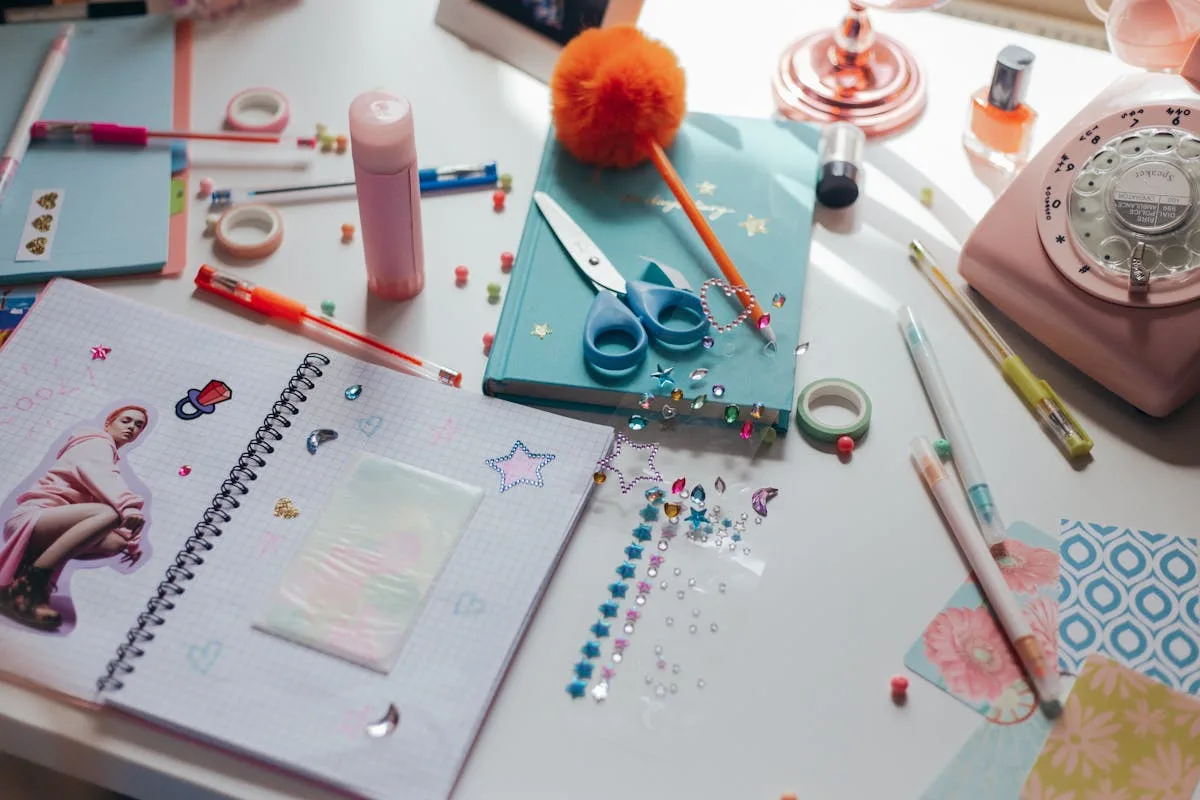
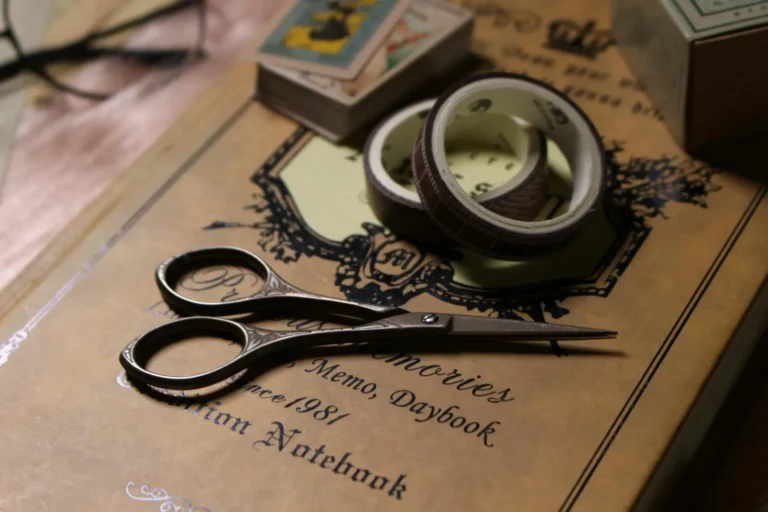
You need a book to work in, an adhesive, scissors, and a handful of
saved paper. That is the entire starter kit, and you can pull most of it
together from a drawer for free.
Quick checklist:
A base book: a cheap notebook, a composition book,
or an old hardback you do not mind cutting up.
Glue: a glue stick for light paper, plus PVA glue
for heavier pieces if you have it.
Scissors.
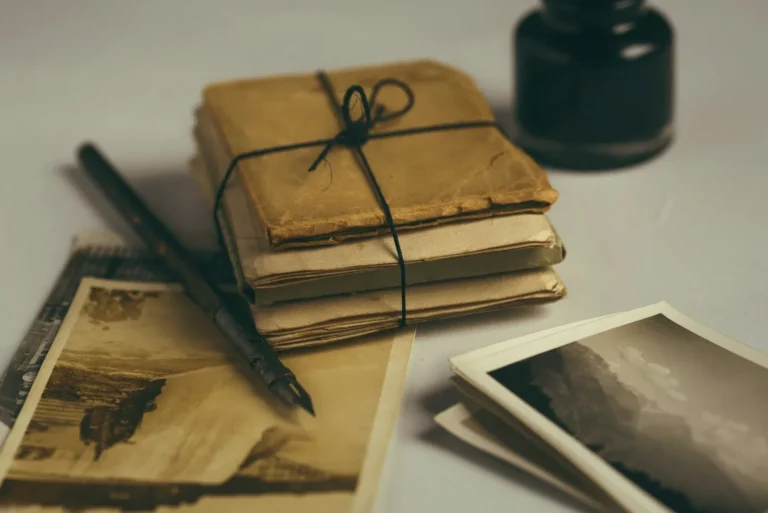
Your paper junk: envelopes, book pages, packaging,
tickets, stamps, magazine cutouts, anything flat you like.
If you want the full rundown of what is worth owning and where to
find it cheap, see our junk journal
supplies guide. For now, gather what you have and move on. Shopping
is not step one.
How to start a junk
journal, step by step
Starting a junk journal takes four steps: choose your base, gather
and sort your junk, build your first page, and keep a loose rhythm. You
can do the first three in a single sitting.
Step 1: Choose your base book
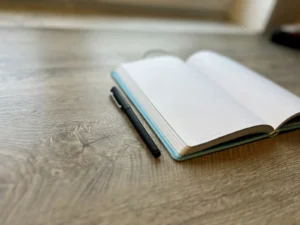
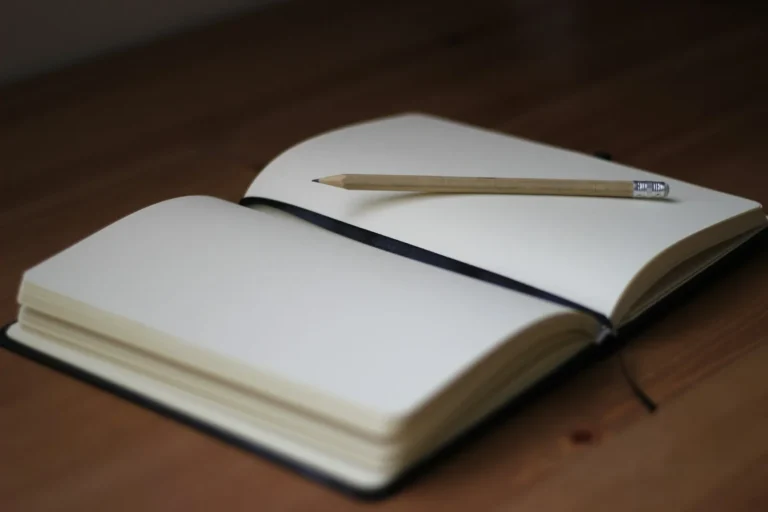
Decide what you are working in. A blank notebook is the simplest
place to begin because the structure is already there. If you want more
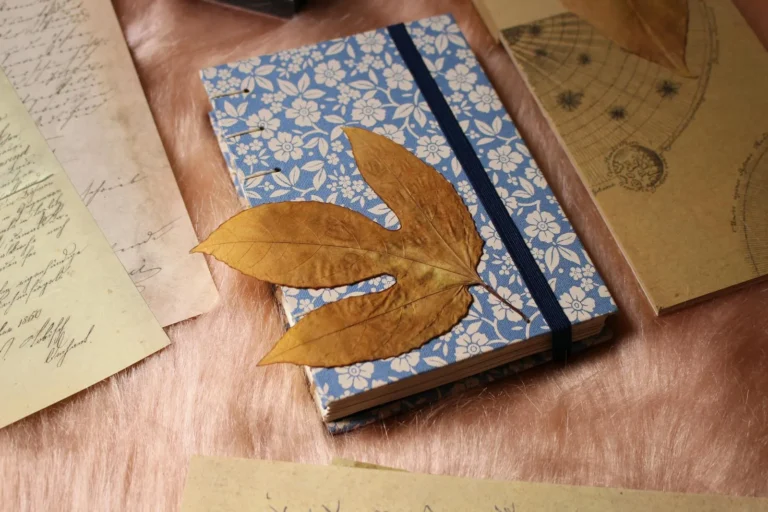
character, turn a thrifted hardback into your journal, which we walk
through in how to make a junk
journal from an old book. Either works. Do not let this choice stall
you, because you can always start another book later.
Step 2: Gather and sort your
junk
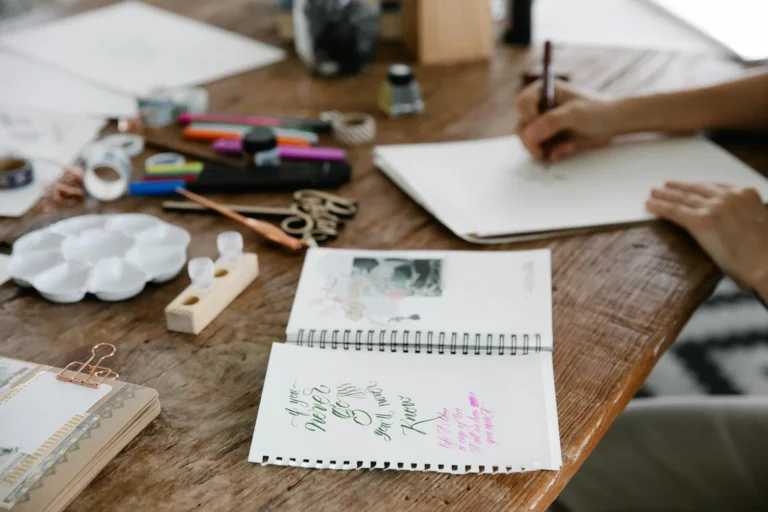
Empty your scrap box onto the table and loosely group it. Sort by
color, by type, or by theme, whatever helps you see what you have. You
do not need a lot. A small, varied pile beats a huge one, because too
many options is its own kind of paralysis. While you sort, set aside two
or three pieces you genuinely like. Those become the start of your first
page.
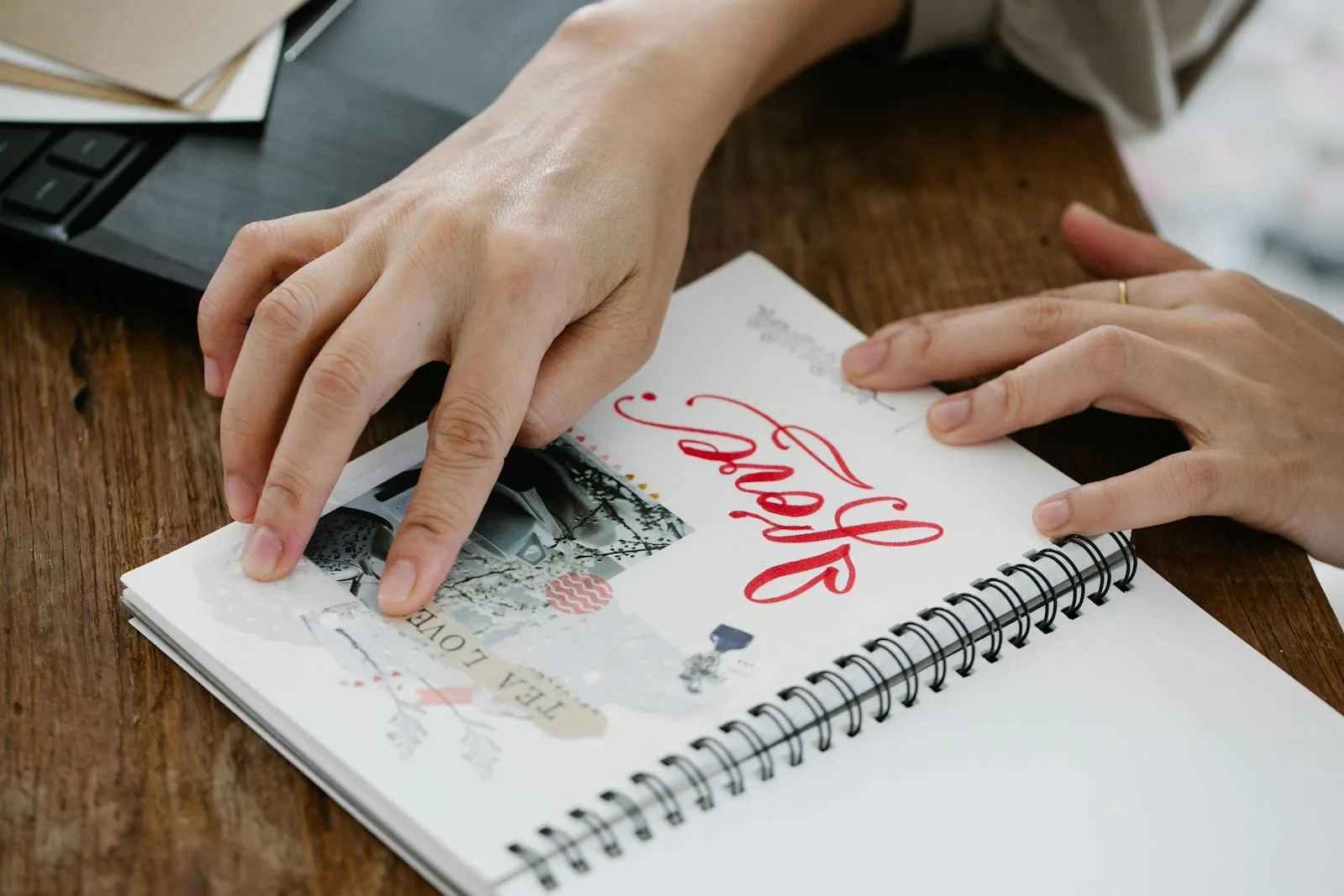
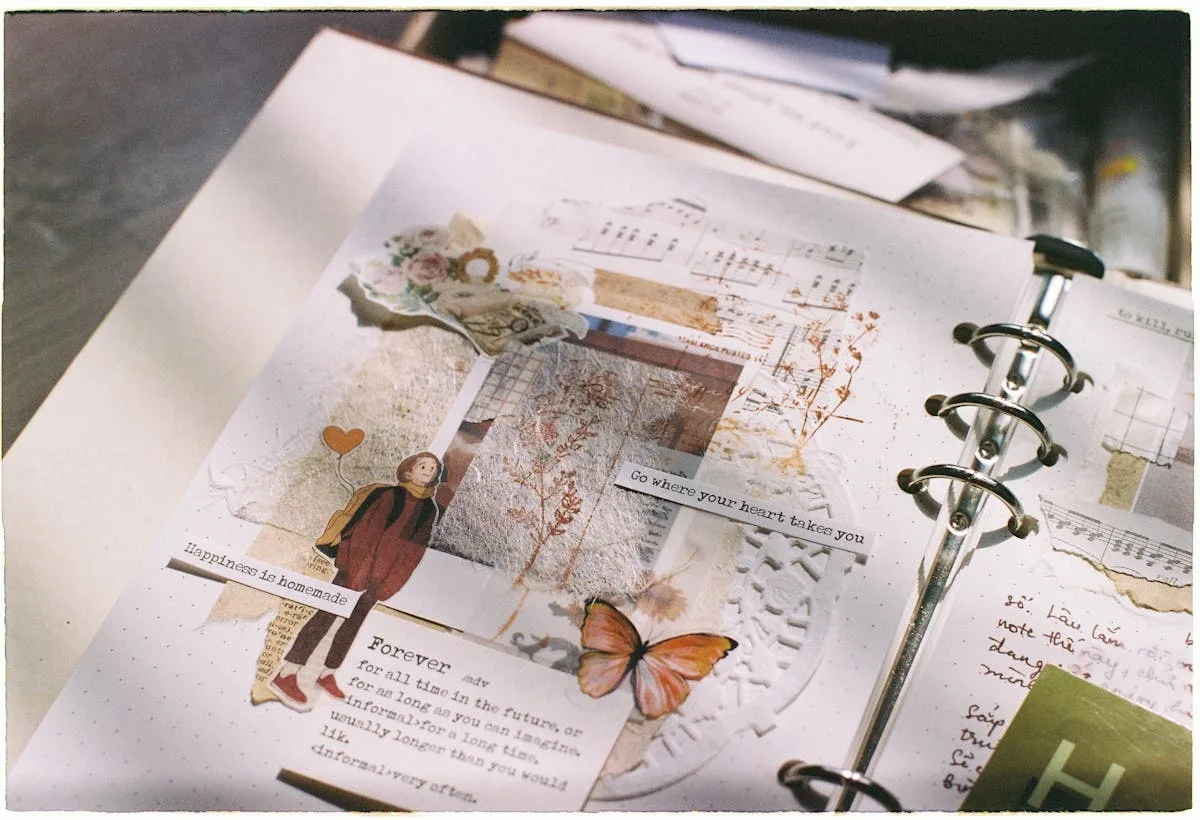
Step 3: Build your first page
Here is the simple formula that works every time:
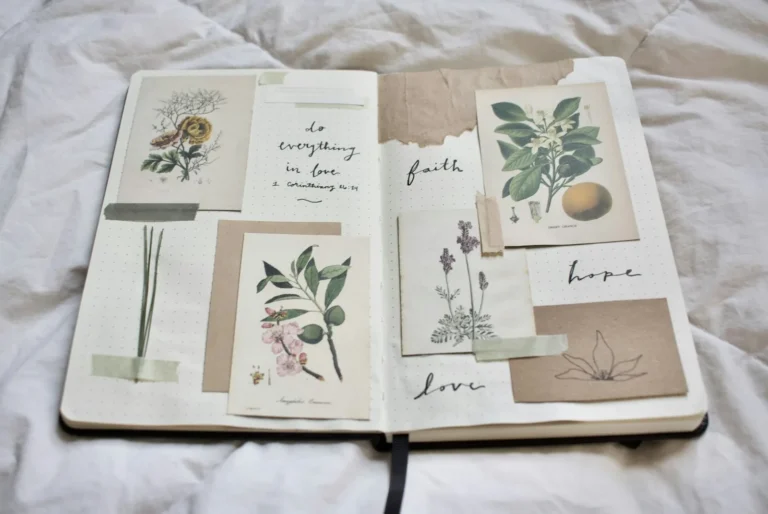
Lay down a background. Glue a book page, a piece of
patterned paper, or a light wash of paint across the page so you are not
starting on stark white.
Add two or three layers. Overlap scraps at angles.
Let edges hang off or tuck under. Crooked and layered is the look.
Add one focal piece. A photo, a stamp, a ticket, a
pretty label. One thing for the eye to land on.
Finish the edges. Rub an ink pad along the page
edges to “age” it, or add a strip of washi tape. Optional, but it pulls
a page together fast.
That is a finished page. Do not overthink the first one. The goal is
to break the blank-book spell, not to make art.
Step 4: Keep a loose rhythm
A page every few days beats a five-hour binge you never repeat. Junk
journaling rewards showing up more than going big. Keep your supplies
somewhere easy to reach so starting takes ten seconds, not ten minutes.
The habit is the whole craft.
What do you put
on your first junk journal page?
Your first page can be anything: a collaged background with a single
photo, a quote you like, or a small pocket holding a keepsake. Keep it
low-stakes. A simple “this is my first page” entry with the date is a
popular and pressure-free way to begin.
A few easy first-page ideas:
A dated intro page. Just the date, a background,
and one focal scrap. Done.
A pocket page. Glue an envelope to the page and
tuck a note or photo inside.
A color page. Pick one color and pull only scraps
that match it.
A “found paper” page. Use only things from your
recycling that day.
When you want more, we have a whole gallery of junk journal page ideas with
layouts, pockets, and fold-outs to try.
If you are frozen at the blank page: Glue down one
book page as a background and close the book. That is it. You have
started. Come back tomorrow and add a scrap on top. Momentum beats
inspiration almost every time.
Common beginner
mistakes (and how to avoid them)
The mistakes that stall beginners are all about pressure and stuff:
buying too much, aiming for perfect, and waiting for the right idea.
Make pages instead, and these fix themselves.
Watch for these:
Overbuying before making. A cart of supplies will
not teach you your style. Pages will.
Chasing perfect. Layered and imperfect is the
aesthetic. Embrace crooked.
Saving the “good” paper. That pretty scrap is meant
to be used, not hoarded.
Comparing your page one to someone’s year three.
Everyone started rough. Keep going.
Frequently
asked questions about junk journaling for beginners
Is junk journaling hard
for beginners?
No. Junk journaling is one of the easiest crafts to start because you
are arranging and gluing existing materials, not drawing or painting
from scratch. If you can tear paper and use a glue stick, you can do
it.
How do I start a
junk journal step by step?
Choose a base book, gather and sort a small pile of saved paper, then
build one page with a background, a few layers, and a single focal
piece. Repeat every few days to build the habit.
What should I write in a
junk journal?
Anything or nothing. Some people use theirs as a diary, some jot
quotes or to-do lists, and many keep theirs purely visual with no
writing at all. There is no rule about words.
How often should I junk
journal?
As often as you enjoy it. A page every few days keeps the habit alive
without it feeling like a chore. Consistency matters more than how much
you do in one sitting.
Do I need special supplies
to start?
No. A notebook, a glue stick, scissors, and saved paper are enough.
You can add washi tape, embellishments, and ink later once you know what
you reach for.
Make your first page today
The fastest way to learn junk journaling is to stop reading and glue
something down. Pick your book, grab three scraps you like, and build
one page using the background-layers-focal formula. That is the whole
craft in miniature.
Want a head start? Grab our free printable junk
journal starter kit, with vintage paper, tags, and pockets you can print
and use on your very first page. Sign up below and we will send it your
way.
Get free junk journal printables
New printables, page ideas, and paper craft tutorials, straight to your inbox.
This post contains affiliate links. We may earn a commission when you download a freebie or buy a subscription on Creative Fabrica, at no extra cost to you. The fastest way to land on a junk journal idea you will actually make is to pick a theme, a season, a style, or a format from…
Stuck staring at a blank spread? 50 junk journal prompts grouped by mood, with reflection, memory, themed, visual, and one-line ideas to break the block.
New to junk journaling? Learn what a junk journal is, what you need to start, and how to make your first pages using things you already have.
Manage Consent
To provide the best experiences, we use technologies like cookies to store and/or access device information. Consenting to these technologies will allow us to process data such as browsing behavior or unique IDs on this site. Not consenting or withdrawing consent, may adversely affect certain features and functions.
Functional
Always active
The technical storage or access is strictly necessary for the legitimate purpose of enabling the use of a specific service explicitly requested by the subscriber or user, or for the sole purpose of carrying out the transmission of a communication over an electronic communications network.
Preferences
The technical storage or access is necessary for the legitimate purpose of storing preferences that are not requested by the subscriber or user.
Statistics
The technical storage or access that is used exclusively for statistical purposes.The technical storage or access that is used exclusively for anonymous statistical purposes. Without a subpoena, voluntary compliance on the part of your Internet Service Provider, or additional records from a third party, information stored or retrieved for this purpose alone cannot usually be used to identify you.
Marketing
The technical storage or access is required to create user profiles to send advertising, or to track the user on a website or across several websites for similar marketing purposes.