The only junk journal supplies you truly need to start are a book to
work in, something to stick things down with, and a pile of saved paper
scraps. Everything past that is a choice, not a requirement, and most of
it you can find free or for a few dollars.
If you have spent any time looking at junk journals online, you have
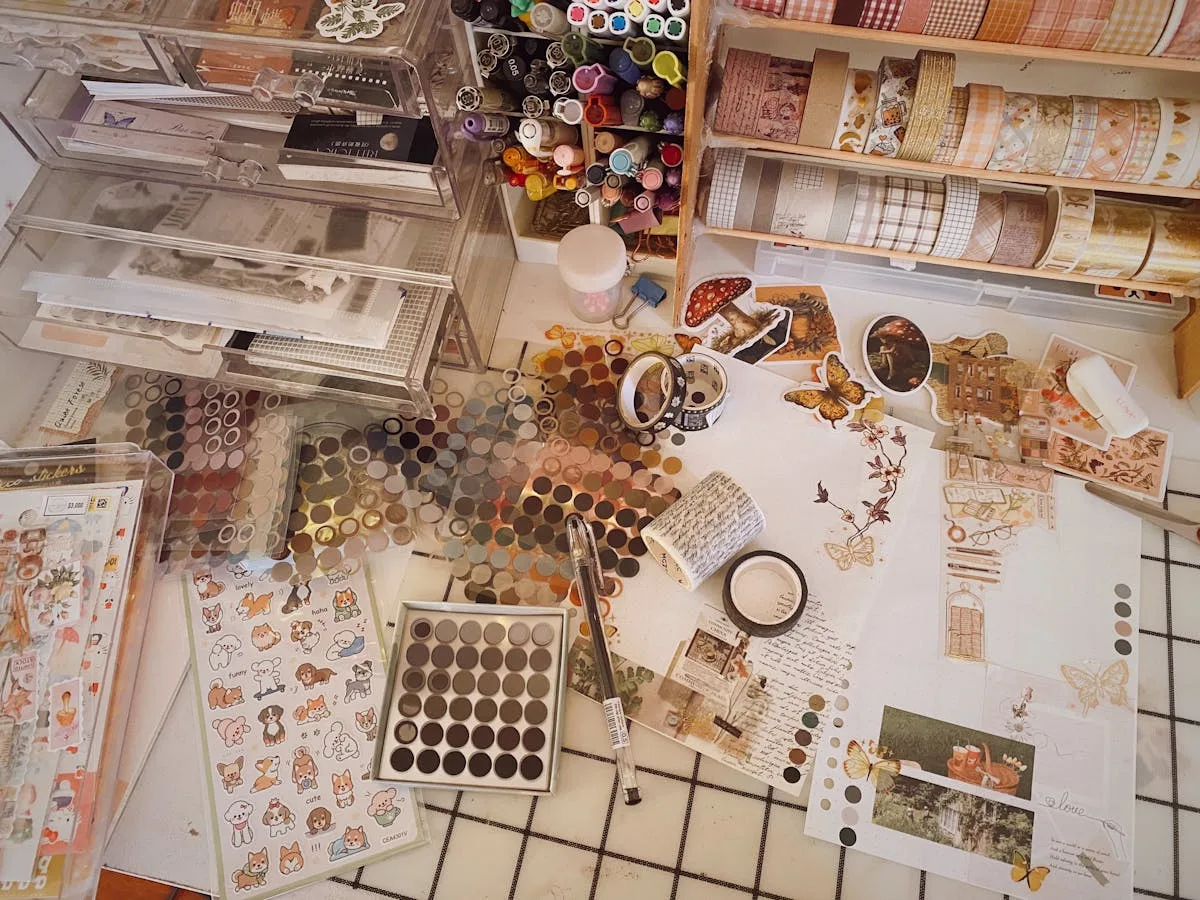
probably seen the hauls: drawers of stamps, stacks of ephemera packs,
ribbon by the spool. It looks like the price of entry. It is not. Plenty
of beautiful journals are made with a thrifted book, a glue stick, and a
shoebox of “junk.” The fancy stash comes later, if you want it at
all.
Here is what trips people up, and we will sort it out below:
beginners tend to buy the wrong things first (decorative extras) and
skip the two boring things that actually matter (a decent glue and a way
to organize scraps). Get those two right and the rest is just play.
The short version: Start with a base book, a glue
stick or PVA glue, scissors, and saved paper. That is a real starter kit
and it can cost you nothing. Add washi tape, a few embellishments, and
an ink pad once you know your style. Skip the giant ephemera hauls until
you have filled a few pages.
What supplies
do you need to start a junk journal?
The starter list is short on purpose: a base book, an adhesive,
scissors, and your collected paper junk. With those four, you can make
pages today. Treat everything else on this page as optional upgrades you
earn as you go.
Here is the true essentials list:
A base book. A cheap notebook, a composition book,
a sketchbook, or an old hardback you repurpose. This is the single thing
worth a little thought, so if you want help choosing, see our guide to
the best journal for junk
journaling, or learn to make
one from an old book.
An adhesive. A basic glue stick handles most paper.
PVA (white craft glue) holds heavier pieces and is worth owning early. A
tape runner is fast and mess-free if you want one later.
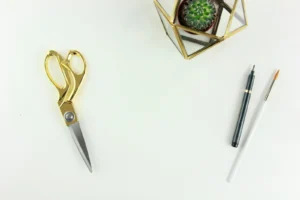
Scissors. Any sharp pair. A small craft scissors
for detail work is nice but not needed on day one.
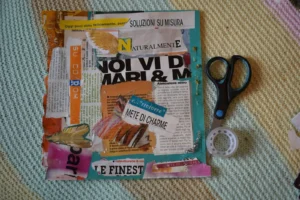
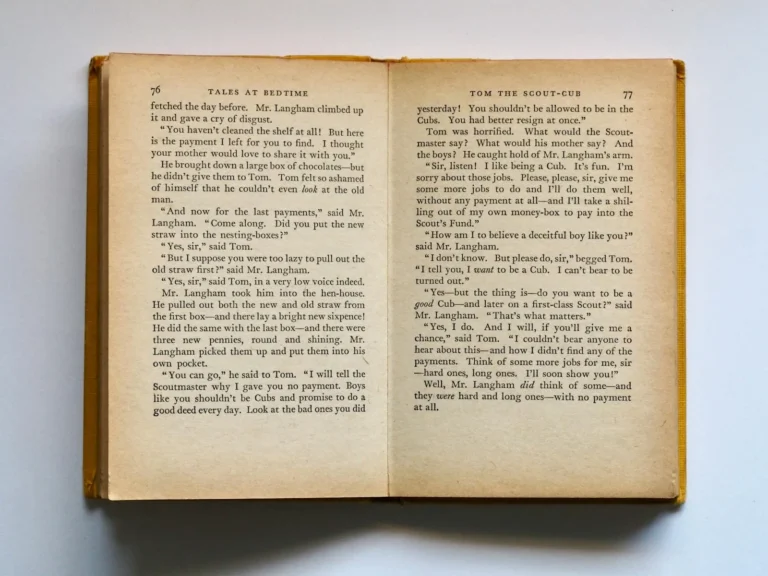
Your paper “junk.” The free part: envelopes, book
and sheet-music pages, packaging, magazine cutouts, tags, maps, and
anything flat with a color or texture you like.
That is the whole entry kit. We keep pushing this because the most
common beginner mistake is loading up on stickers and ephemera before
making a single page, then feeling buried. Pages first. Your stash will
tell you what it wants.
The full junk
journal supplies list (by category)
A complete junk journaling kit breaks down into five groups: a base,
adhesives, cutting tools, paper and ephemera, and embellishments. You do
not need everything in every group. Use this as a menu, not a shopping
mandate.
Base and structure
This is the book itself and anything that holds it together.
Base book or paper: notebook, composition book,
mixed-media pad, or an upcycled hardback.
Bookbinding thread and a needle if you plan to sew
your own signatures later.
A bone folder for crisp folds and clean creases. A
clean spoon or a credit card edge works in a pinch.
Adhesives
Adhesive is the one place we tell beginners not to cheap out
completely, because bad glue wrinkles paper and lets pieces peel.
Tape runner: fast, dry, and flat. Great for photos
and lightweight scraps.
Washi tape and double-sided tape: part adhesive,
part decoration.
Cutting and tools
Scissors (one regular, one small for detail).
A craft knife and cutting mat for clean straight
cuts, once you are comfortable.
A paper trimmer if you cut a lot of straight edges.
A real time-saver, not a starter need.
Paper and ephemera
This is the heart of junk journaling, and the cheapest part if you
know where to look.
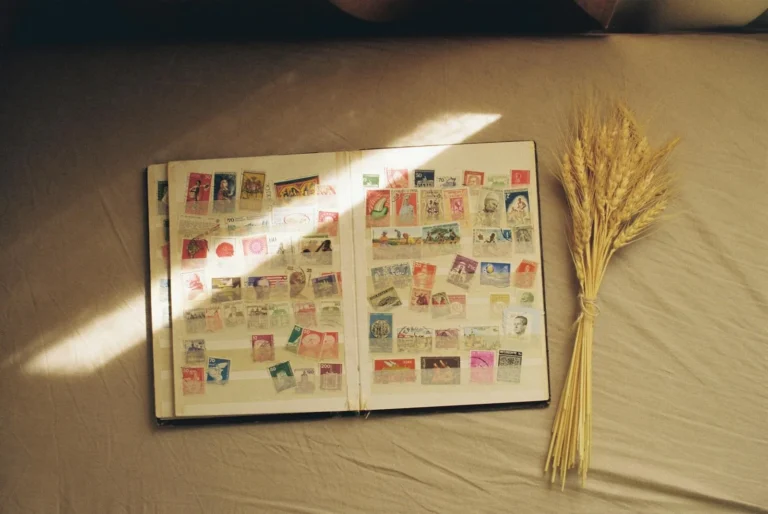
Saved ephemera: ticket stubs, receipts, stamps,
postcards, packaging, tea bag wrappers, sheet music, book and dictionary
pages.
Scrapbook and patterned paper for backgrounds.
Printables: themed paper, tags, and pockets you
print at home. We keep a roundup of free junk journal printables
so you can fill pages without spending.
Embellishments
The fun extras. Add these slowly.
Stickers, stamps, and ink pads (an ink pad for
distressing page edges goes a long way).
Tags, die cuts, and journaling cards.
Lace, ribbon, twine, buttons, and paper clips for
texture and tucked-in details.
If you would rather skip the piecemeal shopping and start with a
curated bundle, our roundup of junk
journal kits covers both paid kits and free printable ones.
Buy this, not that: If you only upgrade one thing
past the free starter kit, make it a bottle of PVA glue, not a sticker
pack. Good adhesive fixes the most common beginner frustration, which is
pieces curling and peeling off the page. Stickers are everywhere and can
wait.
Where
can you find cheap and free junk journal supplies?
The cheapest junk journal supplies come from things you already throw
away, plus the dollar store, thrift shops, and free printables. Junk
journaling was built on repurposing, so spending very little is the
tradition, not a compromise.
Where to look first:
Your recycling and mail. Junk mail, packaging,
shipping inserts, food boxes with nice patterns, and old greeting cards
are free ephemera.
The dollar store. Glue, tape, scissors, basic
stickers, and cardstock for a couple of dollars. Search “dollar tree
junk journal supplies” and you will see whole hauls built this way.
Thrift stores and library sales. Old books to
upcycle, sheet music, vintage paper, lace, and sewing notions for
pennies.
Free printables. Vintage paper, tags, and pockets
you print at home. Start with our free printables roundup.
The point of starting cheap is not just the money. It teaches you
what you actually reach for before you invest, so you do not end up with
a drawer of stuff that does not match how you like to work.
How do you organize
junk journal supplies?
Sort junk journal supplies by type, in clear containers you can see
into, so you actually use what you have. A simple system beats a
beautiful one you never maintain, especially once your scrap collection
grows.
A setup that holds up:
Sort by category: paper, ephemera, embellishments,
adhesives, tools. Loose grouping is enough.
Use clear boxes or zip pouches so you can see what
is inside without digging.
Keep a “current project” tray with the bits you are
using now, separate from the main stash.
Corral small flat pieces (stamps, tickets, die
cuts) in envelopes or small folders by color or theme.
The honest goal is friction-free access. If pulling out supplies
feels like a chore, you will journal less. Keep the things you use most
within arm’s reach of where you work.
What
is the difference between supplies and a junk journal kit?
Supplies are the individual materials you gather over time; a kit is
a ready-made bundle of coordinated materials sold or shared together.
Kits are a faster start, while building your own stash is cheaper and
more personal.
For a lot of beginners, a free printable kit is the sweet spot: it
gives you matching paper, tags, and pockets to start with, while you
slowly collect your own ephemera on the side. We cover both routes in
our junk journal kits guide.
Frequently
asked questions about junk journal supplies
What do I need to start
a junk journal?
A base book, a glue stick or PVA glue, scissors, and a small
collection of saved paper. That is enough to make your first pages
today. Everything else, from washi tape to ephemera, is an optional
upgrade you add later.
What kind of glue
is best for junk journaling?
PVA glue (white craft glue) is the most versatile because it holds
both light paper and heavier ephemera without much wrinkling. A glue
stick is fine for quick, lightweight work, and a tape runner is handy
for photos. Many junk journalers keep all three.
Can I make a junk
journal with no supplies?
Yes. Grab any notebook, a glue stick, and a handful of saved paper,
and you have what you need. Junk journaling is built on repurposing
things you already own, so a zero-budget start is normal.
What paper do you use
in a junk journal?
Almost any paper: book and dictionary pages, sheet music, scrapbook
and patterned paper, packaging, kraft paper, and printables. Mixing
weights and textures is part of the look, so do not worry about
matching.
Where can I get
junk journal supplies cheaply?
Start with your own recycling and junk mail, then check the dollar
store, thrift shops, and library book sales. Free printables cover
paper, tags, and pockets without any cost at all.
Start with what you have
The best junk journal supply list is the one you can act on today.
Grab a notebook, whatever glue is in the drawer, and your box of saved
scraps, and make a page. You will learn more from one finished spread
than from any haul.
When you are ready to build out your stash, do it slowly and in this
order: a good glue, then paper and printables, then embellishments. New
to the whole thing? Our complete beginner’s
guide to junk journaling walks you through the craft from the start,
and our step-by-step starter gets
your first pages going.
Want free supplies to begin? Grab our printable junk
journal starter kit, a bundle of vintage paper, tags, and pockets you
can print at home and glue straight in. Sign up below and we will send
it over.
Get free junk journal printables
New printables, page ideas, and paper craft tutorials, straight to your inbox.
This post contains affiliate links. We may earn a commission when you download a freebie or buy a subscription on Creative Fabrica, at no extra cost to you. Junk journal ephemera is the loose category of paper, fabric, and small flat objects that get glued, tucked, or layered into junk journals. It covers vintage paper,…
Turn a thrifted hardback into a junk journal. A step-by-step guide to choosing a book, removing pages, and binding your own upcycled journal.
Manage Consent
To provide the best experiences, we use technologies like cookies to store and/or access device information. Consenting to these technologies will allow us to process data such as browsing behavior or unique IDs on this site. Not consenting or withdrawing consent, may adversely affect certain features and functions.
Functional
Always active
The technical storage or access is strictly necessary for the legitimate purpose of enabling the use of a specific service explicitly requested by the subscriber or user, or for the sole purpose of carrying out the transmission of a communication over an electronic communications network.
Preferences
The technical storage or access is necessary for the legitimate purpose of storing preferences that are not requested by the subscriber or user.
Statistics
The technical storage or access that is used exclusively for statistical purposes.The technical storage or access that is used exclusively for anonymous statistical purposes. Without a subpoena, voluntary compliance on the part of your Internet Service Provider, or additional records from a third party, information stored or retrieved for this purpose alone cannot usually be used to identify you.
Marketing
The technical storage or access is required to create user profiles to send advertising, or to track the user on a website or across several websites for similar marketing purposes.