You decided to throw a vision board party. You probably already told
the group chat, picked up eight RSVPs, and now have no idea how many
magazines you actually need, a vague plan to “order pizza,” and a quiet
worry that this is going to turn into everyone scrolling Pinterest on
their phone for an hour and then leaving.
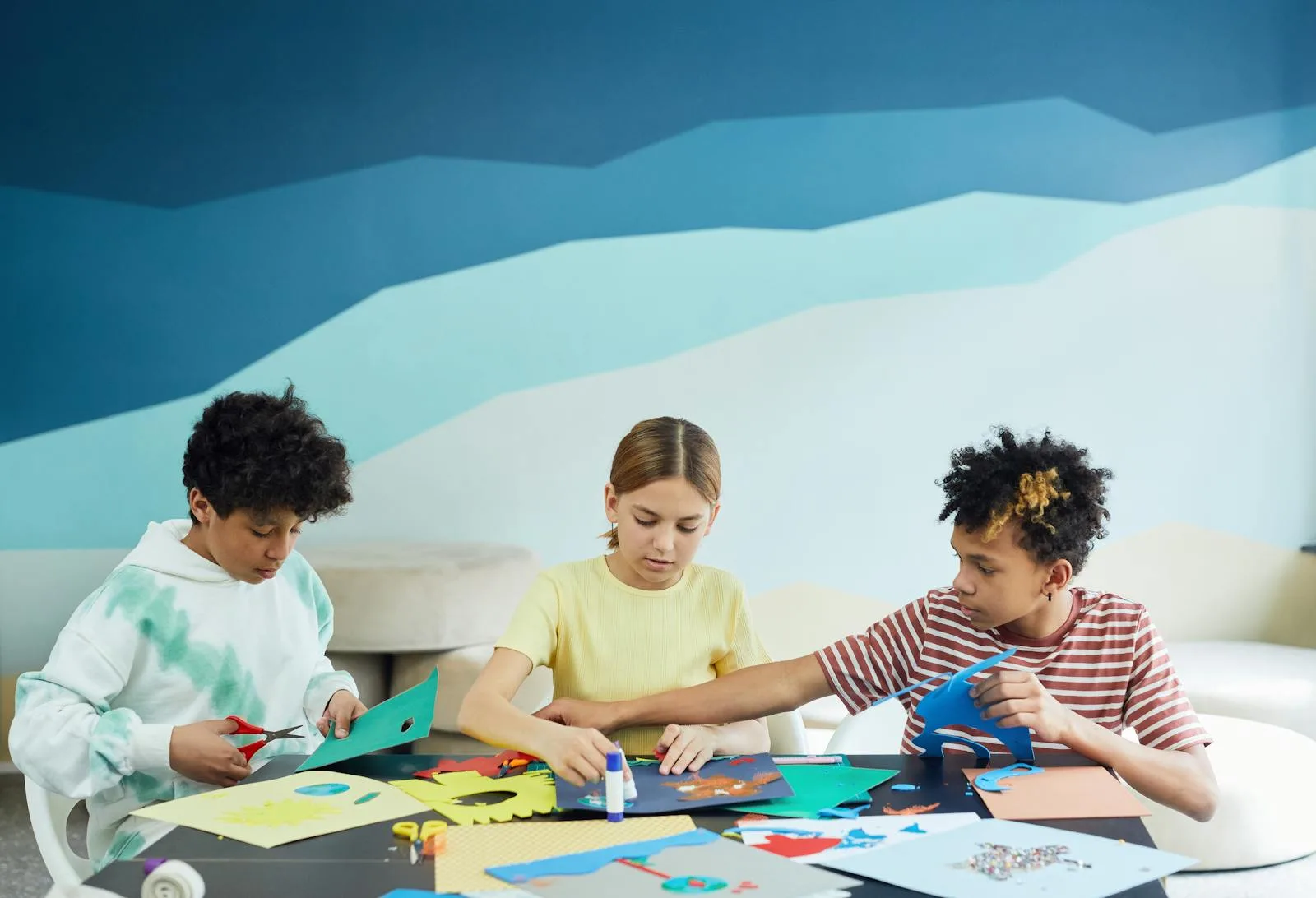
A vision board party works when six friends, a stack of magazines, a
real meal, and three hours of uninterrupted Saturday afternoon are in
the same room. It falls apart the second any of those four are missing.
The host’s job is to set up the supply table, feed people on time, and
otherwise stay out of the way of the actual crafting.
We have run this party three times (twice in January, once for a
birthday). The January ones always ran twenty minutes long; the birthday
one wrapped on time because the cake was a hard stop. Below is the
breakdown of what actually works: invites, supply math per guest, room
setup, the schedule that holds for three hours, snacks that do not
interrupt cutting, and prompts to push past the first round of
celebrity-photo cutouts.
The short version: Invite four to eight friends.
Plan three hours. Cover one table in butcher paper, scatter magazines,
put one supply station in the middle. Order food in advance so it lands
before crafting starts. Hand out a one-page goals worksheet at the door.
Have one playlist on low. Take a group photo at the end with everyone
holding their board.
How do you host a vision
board party?
You host a vision board party by booking the date, capping the guest
list at four to eight, gathering magazines and supplies a week in
advance, setting up one shared table with a supply station, planning a
three-hour block with food at the start, and handing every guest a goals
worksheet before they start cutting. Everything else is variation.
The four hosting decisions that matter most:
Guest count. Four to eight is the sweet spot. Two
is a coffee date with scissors. Twelve is a logistics project.
Time slot. Three hours, mid-afternoon. Long enough
to actually finish a board. Short enough that people do not lose
energy.
Format. One shared supply table beats per-guest
baskets. Magazines get shared, conversation flows, nobody runs out of
glue alone in a corner.
The single rule. No phones during cutting. One
announcement at the start, gently enforced. Otherwise the party becomes
everyone scrolling Pinterest on their phones for thirty minutes and the
room goes quiet.
For the four-item solo starter list, see our vision board supplies post; this
party guide assumes you are scaling that up to a group.
Vision board party
supplies (by guest count)
The most common host mistake is buying for one and multiplying by
six. Some things scale that way (a board per guest). Some do not (one
pair of scissors per two people is fine; one magazine per two people is
not). Here is the math.
Per guest (each person
needs their own)
One foam board or poster board. Pick foam board if
guests are taking the boards home today. Poster board if budget is
tighter or it is a one-off party.
One glue stick or tape runner. Brand-name glue
stick, not dollar-store. The cheapest sticks dry out within an hour of
being uncapped on a table.
One pair of scissors. Borrow from kitchen drawers
if needed. Mark the handles with a colored tape strip so guests know
which pair is theirs.
One goals worksheet. A printable one-pager handed
out at the door (we keep one in our vision board printables roundup).
Twenty minutes of writing before cutting starts is the single biggest
upgrade to the finished boards.
Shared at
the table (one for every two to three guests)
A small pile of magazines, ten to fifteen total.
Travel, home, fashion, food. Thrift store or library free pile a week
before the party. Buying twelve fresh magazines for one party is a $60
hit.
A pack of printed Pinterest images. Optional but
useful. Have guests email you a Pinterest board the day before, print
four-to-a-page, lay out at the table.
A pack of printed quote cards. From any free
printable pack (ours is in the printables roundup). Twelve quotes
printed two-to-a-page gives every guest something to grab.
A roll of washi tape, a small roll of patterned paper, and a
small box of stickers. One of each at the shared station.
Resist buying ten different sticker packs; clutter overwhelms the
table.
One-per-table (shared
by the whole group)
One sharp craft scissors. For tight curves around
faces.
One small bottle of PVA glue. For anyone gluing
heavier images or fabric scraps.
A few black markers (Pigma Micron or Sharpie
ultra-fine). For handwritten dates, annotations, anchor
words.
A pile of cardstock scraps. For mounting photos or
quote cards on backing paper.
A six-guest party fits on one rectangular dining table (six feet
long, three feet wide) with the supply station in the center. Eight
guests need a folding table extension, or two tables pushed together.
Cover whatever surface you use in cheap butcher paper or a roll of kraft
paper; the paper catches glue, scraps, and the inevitable spilled drink,
and rolls up into the trash at the end.
Buy this, not that: Skip the “vision board party kit
for groups” Amazon listings. They are usually the same as a single kit
with the multiplier in the title, sold at a premium. Build the party
supply pile from a thrift-store magazine run, a six-pack of foam boards
from a craft store, and a free printable pack. You save half the spend
and the kit is closer to what your friends actually want to cut.
The room setup
that keeps the energy in the room
A vision board party flows or stalls based on the room layout, which
is one of those things you do not notice until you have hosted one that
went flat. The setup is not complicated.
One main table for crafting. Big enough for
everyone to spread out a board and have working room for cutouts. Cover
in butcher paper.
One supply station in the middle of the table.
Magazines in a stack, quote cards in a fanned pile, scissors and glue
within arm’s reach. Anything guests have to get up for is a thing they
will not use.
A side table for food and drinks. Off the main
craft table, so the food is not landing on glued cutouts and nobody is
reaching across someone’s board for a chip.
A photo wall or empty spot for the group shot.
Decide in advance where the end-of-party board photo is going to happen.
A plain wall or a corner of the kitchen, not the cluttered craft
table.
A music setup. One playlist, kept low. Not a
podcast, not new releases. Something that pulls everyone into the same
energy without competing with conversation.
Lighting matters more than people realize. Daylight is best, so
afternoon (two to five p.m.) beats evening. If you are hosting in the
evening, add a couple of warm-tone lamps; harsh overhead light flattens
magazine colors and makes everyone’s cutouts look duller than they
are.
The three-hour
schedule that actually holds
A three-hour vision board party splits naturally into four blocks:
arrival and food, worksheet and chat, head-down cutting and gluing, and
share-and-go. Stretching it longer makes it drag. Compressing it shorter
means nobody finishes a board.
0 to 30 minutes. Arrive, eat, settle. Food on the
side table already laid out. People drift in, fill plates, find seats.
Loose chat, no agenda.
30 to 60 minutes. Worksheet and intentions. Hand
out the goals worksheet at the door, but the actual filling-in happens
in this block. Twenty minutes quiet writing, ten minutes optional
sharing if the group wants. Skipping this block is why so many party
boards look like aesthetic moodboards with no real goal underneath.
60 to 150 minutes. Head-down crafting. Magazines
open, scissors out, music on low. Phones away. Glue down. Refill snack
plates quietly if needed; otherwise stay out of the way and let people
cut.
150 to 180 minutes. Share-and-go. Each guest holds
up their board and says one sentence about it. Group photo. Cleanup is a
shared five-minute roll-up of the butcher paper. People take their
boards home rolled in a magazine page if foam, flat if poster.
Two scheduling notes. First, do not let the food block run over
forty-five minutes; people lose crafting energy after a long meal.
Second, do not run past three and a half hours; guests have evening
plans, the energy dips, and the last hour drags.
Snacks that
work (and the ones that ruin a board)
A vision board party menu has one constraint above all others:
nothing greasy, nothing crumbly, nothing that ends up on a glued cutout.
The classic party “chips and dip” combination is the worst possible
vision board food.
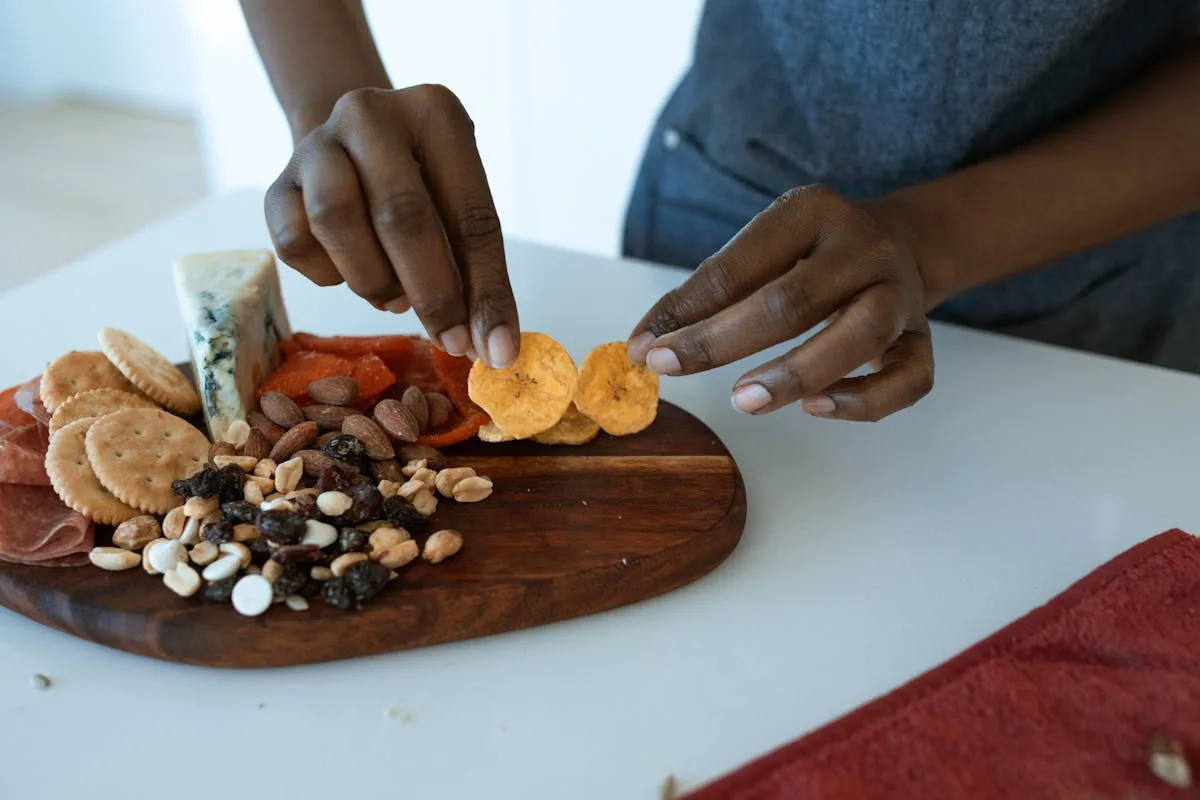
Snack boards over plated meals. A cheese-and-fruit
board, a charcuterie board, a hummus-and-veggie board. Easy to graze
without leaving the craft table. Less spill risk than dips.
Finger foods on toothpicks. Skewered fruit, cheese
cubes, mini sandwiches. Self-contained. No fingers smudging
cutouts.
Cookies and small baked goods. Crumb-controlled,
easy to grab, dessert-coded so they feel like a treat.
A pitcher of something nice. Sparkling water with
citrus, a small batch cocktail (or mocktail), tea or coffee on the side
table. Skip red wine on a white-board day; the spill is forever.
Two food trips to avoid. Pizza grease on fingers transfers to
magazine cutouts every time. And anything that needs a knife (a real
meal, a salad with vinaigrette) interrupts cutting and shifts the room
into dinner-party energy. Plan for grazing, not seating.
Prompts to push
past the first round of cutouts
The first thirty minutes of cutting, everyone gravitates toward the
same images: a beach photo, a coffee cup, a generic motivational quote.
The party gets interesting when guests push past the obvious into the
personal. A few prompts at the right time pull that out.
“What did your year look like five years ago that you would
never go back to?” Asked at the worksheet block. Pulls out
gratitude and specificity, both of which translate to better
cutouts.
“What is a small thing you want more of in your
day?” Asked mid-cutting, around minute 90. Pushes guests past
the big-goal images (career, travel) into the small ones (a morning
routine, a friend’s couch, a recipe).
“If your year had a soundtrack or a smell, what would it
be?” A sensory prompt that breaks the visual lock. Often
produces the most surprising cutouts.
“What is one image on your board you would not have picked
five years ago?” Asked at the share-and-go block. The answers
are usually the most personal thing said all afternoon.
These are conversation starters, not journal questions. Toss one in
mid-block, let it land, do not force every guest to answer. Two or three
guests will run with it; the rest will quietly think about it while they
cut.
What
kind of vision board party is right for your group?
The same format flexes across several occasions. The host decisions
change a little; the supply math stays the same.
New Year’s vision board party (January, four to eight
friends). The classic. Dated-2026 quote cards, themed-year
worksheets, a “January reset” energy. Pair with our 2026 vision board ideas for
prompts.
Birthday vision board party (any month). Reframe
the year ahead, host says a toast at share-and-go. Smaller guest list
(four to six). Birthday cake on the side table is fine; just not on the
craft table.
Bridal shower or bachelorette vision board.
Bride-to-be’s vision for the year of the wedding and after. Quote pack
leans romantic and home-coded.
Galentine’s vision board (mid-February).
Pink-and-red palette, heart-themed paper, brunch food on the side table.
Tends to run shorter (two hours) than a January party.
Classroom or workshop vision board (teens, adults).
Bigger guest count (up to twelve), more structure, a facilitator. See
our teen vision board guide for the
under-eighteen version.
A casual recurring “annual vision board sunday” with the same friend
group is the version that compounds. Year three, everyone brings last
year’s board to compare. Year five, the photos of the photos are their
own scrapbook.
Frequently
asked questions about vision board parties
How many
guests should a vision board party have?
Four to eight guests is the sweet spot for a vision board party.
Smaller than four and it feels like a coffee date; larger than eight and
the supply math gets expensive and the conversation splinters into
separate corners. For groups over ten, run two adjacent tables with a
host at each.
What supplies does
a vision board party need?
A vision board party needs one board per guest, one glue stick per
guest, scissors (one pair per two guests is fine), about ten to fifteen
magazines shared across the table, printed quote cards, a goals
worksheet for each person, washi tape and stickers at a shared supply
station, and a few black markers for annotations. Food and music live on
a side table away from the craft surface.
How long does a vision
board party take?
Plan for three hours total: thirty minutes for arrival and food,
thirty minutes for a goals worksheet and intention-setting, ninety
minutes of head-down crafting, and thirty minutes for sharing and group
photos. Shorter than two hours and nobody finishes a board; longer than
three and a half hours and the energy drops.
What kind of
food works for a vision board party?
Grazing food beats plated meals at a vision board party. A cheese
board, a charcuterie spread, finger foods on toothpicks, and cookies all
work because guests can eat without leaving the craft table. Skip greasy
or crumbly food (pizza, chips and dip) and anything that needs a knife
and fork; both interrupt cutting and risk landing on cutouts.
Can you have a
vision board party on a budget?
Yes. A budget vision board party for six runs around forty dollars
total: six foam boards from a craft store, a thrift-store magazine pile,
a free printable pack, dollar-store glue and scissors, and a homemade
snack board. The premium version (curated kits, fresh magazines, catered
food) runs three to four times that without making the boards
meaningfully better.
Throw the party that
gets boards on walls
A vision board party is one of the few craft gatherings where the
deliverable (a finished board you walk home with) and the process (three
hours with friends in the same room) both matter. Get the host setup
right and both happen on their own.
For the solo version of the build, our vision board supplies starter list
has the four-item version of the materials in this guide. For the deeper
material breakdown (which board, which glue, which magazines), the vision board materials post goes one
level deeper. And for prompts and themes for the boards themselves, the 2026 vision board ideas roundup
gives you twenty-five layouts to borrow.
Want a one-page goals worksheet to hand out at the
door? Grab our Craft Wren printable pack: a layout template,
twelve quote cards, and a one-page goals worksheet, sized to hand out to
a small group. Sign up below and we will send it over.
Get free junk journal printables
New printables, page ideas, and paper craft tutorials, straight to your inbox.
The best vision board quotes are the ones you would actually say to yourself on a bad Tuesday, not the ones that look pretty in gold script. A Pinterest screenshot of “shine your light” does almost nothing for the goal-setting research that makes vision boards work. A handwritten “It is okay to be at the…
A 2026 vision board works best when it covers four to six categories of your actual life (career, money, health, travel, relationships, creativity, home, self), with one specific outcome per category rather than a general mood. Pinterest is full of beautiful but useless boards that picture sixteen versions of “abundance.” The boards that actually move…
The vision board materials that actually matter and the ones to skip. Black foam board over poster, tape runner over glue stick, magazines, and the three quiet upgrades nobody puts in a kit.
The seven vision board books worth reading, sorted by who each one is for. Plus the patterns that quietly mark a book as filler before you spend the money.
Eleven free vision board printables across templates, quote cards, worksheets, themed paper, and trackers. The categories that actually help and the ones to skip.
How to write goals that work on a vision board: the four kinds every working board needs, the number-and-date trick, placement rules, and the review cadence that keeps the board alive.
Manage Consent
To provide the best experiences, we use technologies like cookies to store and/or access device information. Consenting to these technologies will allow us to process data such as browsing behavior or unique IDs on this site. Not consenting or withdrawing consent, may adversely affect certain features and functions.
Functional
Always active
The technical storage or access is strictly necessary for the legitimate purpose of enabling the use of a specific service explicitly requested by the subscriber or user, or for the sole purpose of carrying out the transmission of a communication over an electronic communications network.
Preferences
The technical storage or access is necessary for the legitimate purpose of storing preferences that are not requested by the subscriber or user.
Statistics
The technical storage or access that is used exclusively for statistical purposes.The technical storage or access that is used exclusively for anonymous statistical purposes. Without a subpoena, voluntary compliance on the part of your Internet Service Provider, or additional records from a third party, information stored or retrieved for this purpose alone cannot usually be used to identify you.
Marketing
The technical storage or access is required to create user profiles to send advertising, or to track the user on a website or across several websites for similar marketing purposes.