A junk journal example is a finished or in-progress book you can look at to see how the supplies, pages, and cover actually fit together. We have grouped the most useful types below, with a short walkthrough of what each one looks like inside, so you can find the version closest to the journal you want to make.
You can read fifty supply lists and a hundred Pinterest descriptions and still have no real picture of what a finished junk journal looks like. The supply lists tell you what to buy. The Pinterest pins show you one beautiful corner of one spread. Neither one shows you the actual book, cover to cover, the way another junk journaler would flip it open and walk you through it.
That gap is what this post is for. We walk through five types of junk journals, the kind of cover each one tends to have, two or three typical spreads inside, and what people usually tuck into them. By the end you will know which type you are drawn to and what your first three or four pages could look like.
The short version: Vintage junk journals are aged paper, old book pages, lace, and sepia photos. Travel journals are tickets, maps, receipts, and date stamps. Nature journals are pressed leaves, field sketches, and botanical labels. Mini journals are pocket-sized with one focal piece per page. Themed journals (gothic, holiday, fandom) pick a single mood and stick to it. Pick the one that pulls you in and start there.
For a craft this loose, examples teach faster than rules. There is no single right way to build a junk journal, which is why a finished book always answers more questions than another tutorial. You see scale (how big the pages actually are), density (how layered a spread usually is), and rhythm (how often a pocket or a flip-out shows up).
A finished example also tells you what the maker did not do. Vintage journals almost never have neon washi tape. Travel journals rarely have lace trim. Those omissions are part of the look. You only see them by looking at whole books, not isolated pages.
We have left out specific names and links here on purpose. We want you to look at types, not chase one creator’s exact style. Once you know which type you are after, search the type plus the word “flip through” on YouTube and you will surface dozens of full walkthroughs by real makers.
Vintage-style junk journal example
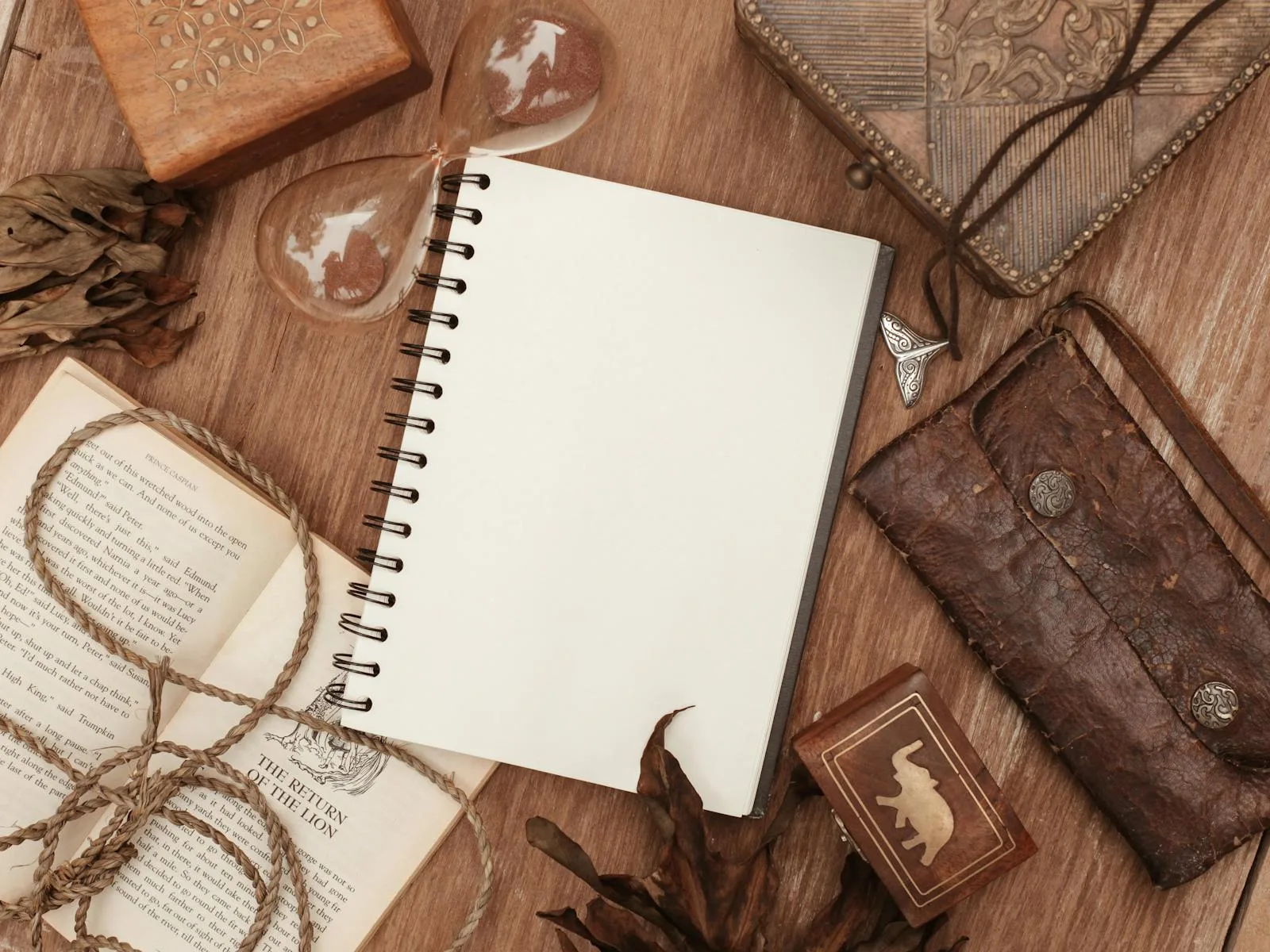
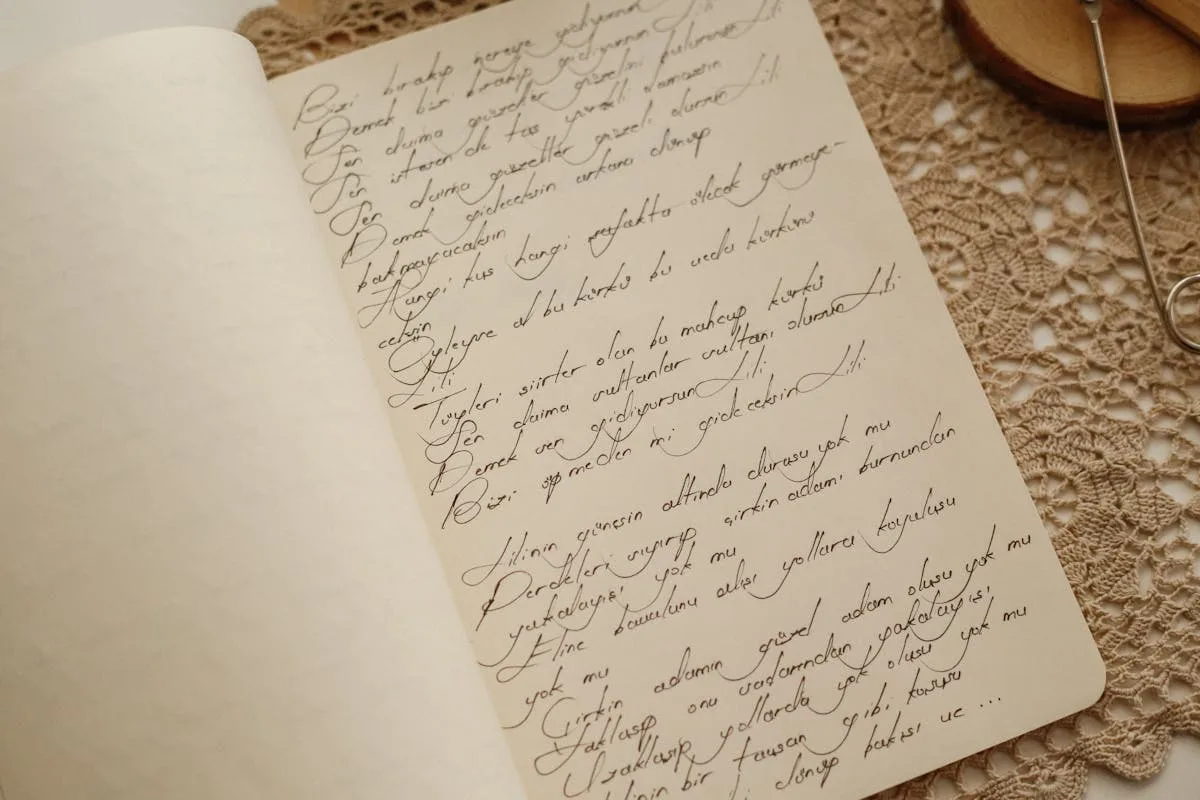
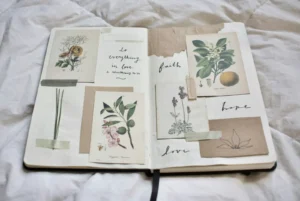
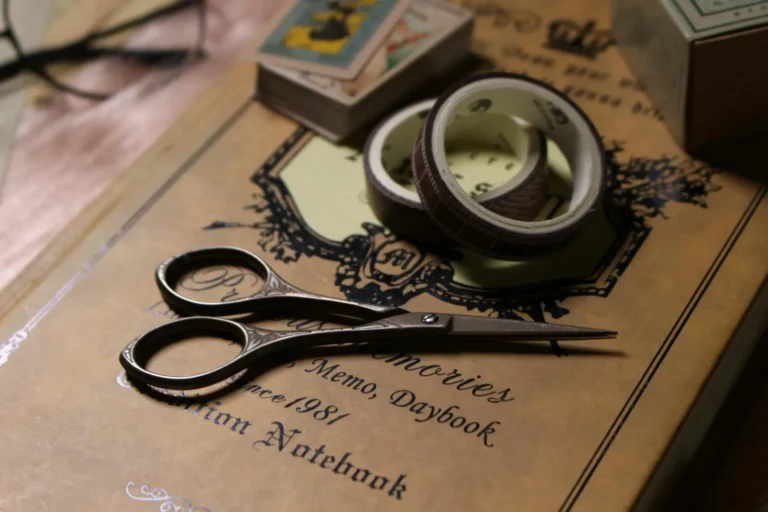
A vintage junk journal looks like something pulled from a great-aunt’s attic and gently used for a decade. The cover is usually fabric, old book boards, or a thrifted hardback, with the title peeling at the edges. Inside, every page leans warm: yellowed paper, sepia photographs, dictionary cutouts, lace strips, and the brown ink-pad edges that age every scrap by ten years.
What you usually see inside:
Cover. Repurposed hardback or a fabric-wrapped chipboard cover, often with ribbon ties instead of a clasp. Lots of texture, often a vintage label or postage stamp glued to the front.
First spread. A title page with handwritten date and a single ornament (an old key, a stamp, a pressed leaf), surrounded by aged background paper.
Mid spread. A pocket holding an old letter or a torn map, layered with a sepia photo and a strip of dictionary text picking up the theme.
Tucked items. Tags with handwritten notes, ribbon bookmarks, pressed flowers, fabric scraps cut to look like swatches.
Best beginner entry point: use brown ink to age every paper edge before you start. That single step does more for the vintage look than buying any specific supply.
Travel junk journal example
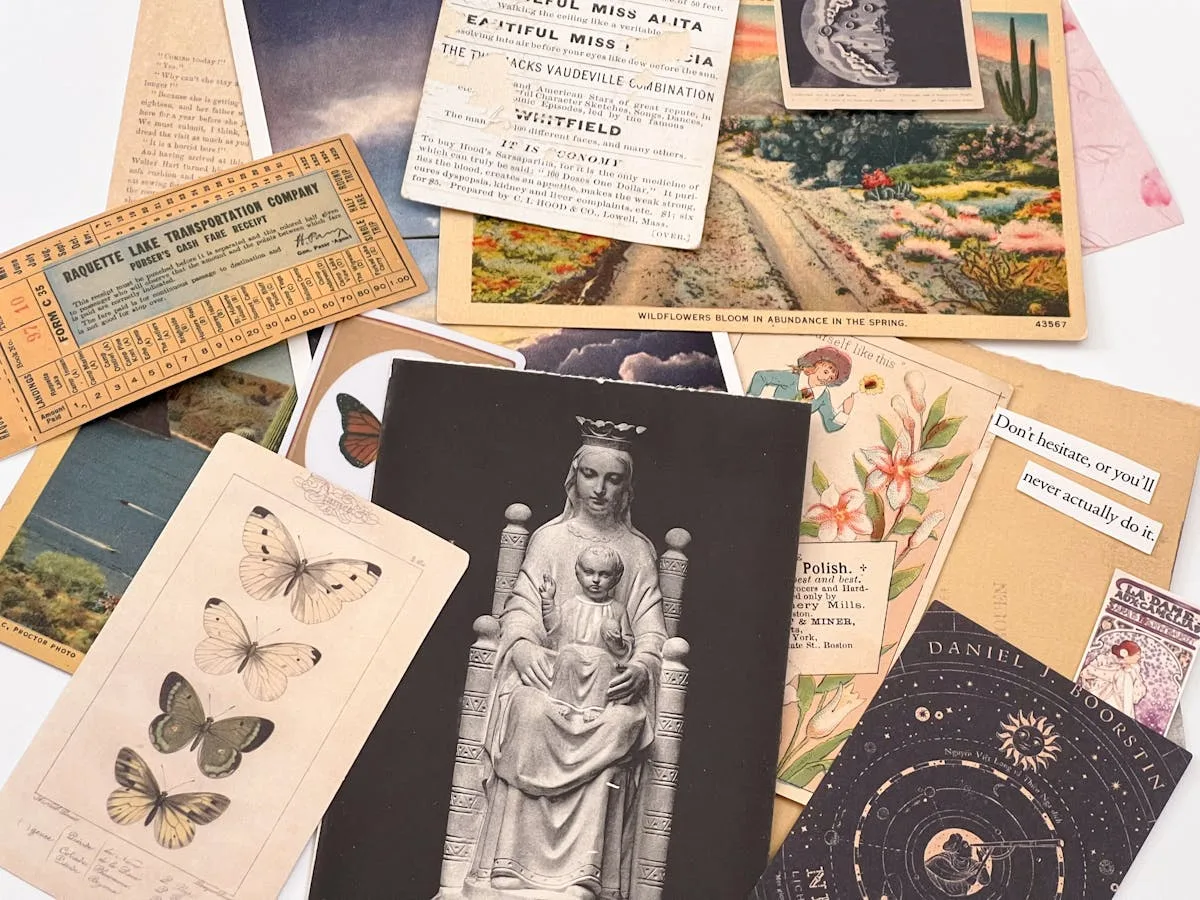
A travel junk journal is the closest junk journaling gets to a working logbook. Every spread carries proof of a real place: a ticket stub, a receipt with foreign currency, a coffee shop business card, the corner of a paper napkin from a roadside diner. The cover is often plain on purpose, because the book gets tossed in a bag for weeks.
What you usually see inside:
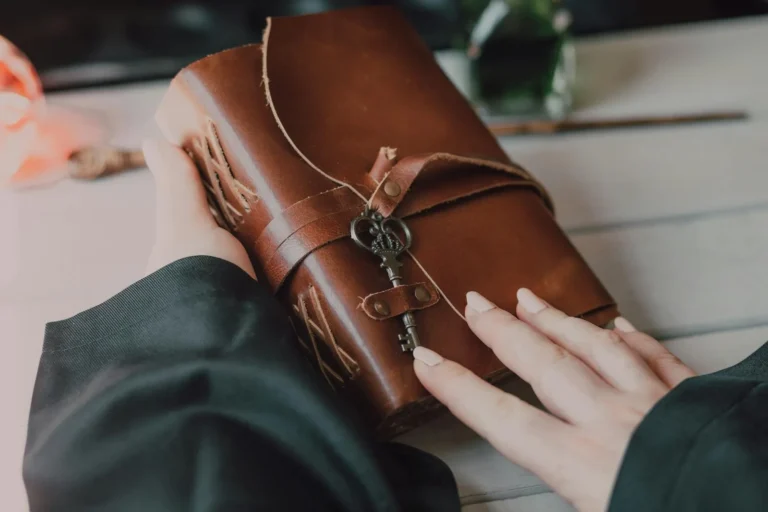
Cover. Plain canvas, leather, or a slim notebook with sturdy elastic. Often blank so it does not telegraph what is inside.
First spread. Trip title, dates, and a hand-drawn map sketch with the route inked in.
Daily spread. One side a written entry, the other side a collage: ticket, photo, receipt, sometimes a pressed flower from a walk.
Tucked items. Boarding passes, hotel keycards, foreign coin envelopes, pressed leaves identified by the city where you picked them up.
The travel journal is where a junk journal actually earns its name. Half of what goes in it would have ended up in a sock drawer otherwise.
Nature or garden junk journal example
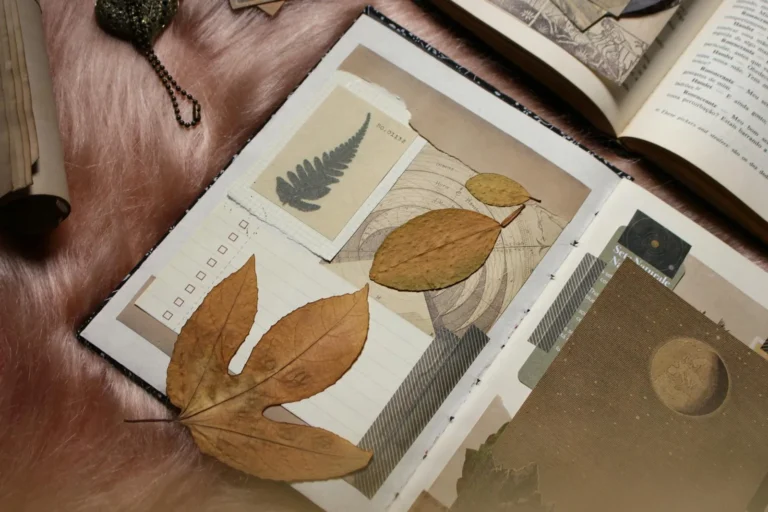
A nature junk journal trades collage for observation. The pages are quieter, with more white space, more handwriting, and more flat pressed material than any other type. It overlaps with botanical journaling and field notebooks, and many makers use a sturdier base book for it because they want the pages to lie flat against pressed material.
What you usually see inside:
Cover. Linen, cork, or kraft paper. Sometimes a hand-painted leaf on the front, often nothing.
First spread. A season title page, a hand-drawn seasonal chart, or a single pressed leaf with the date and location.
Mid spread. A pressed flower or leaf on the left, a written observation about it on the right, with a small sketch or watercolor wash in the margin.
Tucked items. Seed packets, garden labels saved from plants, photographs of the garden at the same date last year.
If you spend time outside and resent the artifice of a heavily layered collage, the nature journal is almost certainly your type.
Mini or pocket junk journal example
A mini junk journal is the project that gets finished. Small books fill up faster, which means more beginners actually complete one, which means more beginners stay with the craft. The whole book is often 3 by 4 inches or smaller, sewn from paper bag scraps or a folded envelope, and built in a single afternoon.
What you usually see inside:
Cover. A paper-bag cover with a tied-on tag, a folded envelope, or a kraft cardstock wrap. Often less than 4 inches tall.
First spread. A tiny title page, just a date and a single image.
Mid spread. One focal piece per page (a stamp, a photo, a torn bit of text). The small format forces restraint.
Tucked items. Mini tags, postage stamps, the corner cut off a larger piece of ephemera so it fits.
If your shelf is already covered in unfinished journals: make a mini. The finishing rate goes up dramatically, and a finished tiny book teaches more than a half-built full-size one.
Themed junk journal example (gothic, holiday, fandom)
A themed junk journal commits to a single mood from cover to last page. The most common themes are gothic or witchy, seasonal (autumn, winter, Christmas), and fandom (a favorite book series, a film, a band). Themed journals are where junk journaling overlaps most with scrapbooking, because there is usually a defined collection of imagery and a tighter color palette.
What you usually see inside:
Cover. Strong themed cover image (a moon for witchy, a sprig of holly for Christmas, a quote for fandom). Often darker palette than a vintage journal.
First spread. A theme statement page: a quote, an opening illustration, a date with thematic flourishes.
Mid spread. Pages built around themed ephemera (pressed dried herbs for witchy, vintage holiday cards for Christmas, printed fan art for fandom), layered with palette-consistent backgrounds.
Tucked items. Theme-aligned printables, sometimes a small tucked-in zine, occasionally a deck of themed tags.
The themed journal tends to attract makers who already collect a particular kind of imagery. The journal is where the collection finally finds a home.
What these examples have in common
Across all five types, the same three things show up in every finished junk journal we have looked at. They are the closest thing this craft has to rules.
A consistent palette. Vintage journals stay in the sepia-brown family. Travel journals lean toward the colors of their trip. Nature journals stay in greens, browns, and creams. The palette is what makes a layered spread look intentional instead of chaotic.
At least one pocket per spread, on average. A book with no pockets reads as a notebook. A book with a pocket on every other spread reads as a junk journal. Pockets are the structural marker of the craft.
Visible layering of three to five elements per page. Background, mid layer, focal piece, optional finishing element (washi, edge ink, stitching). Less than three feels sparse for a junk journal. More than five gets noisy.
If you are looking at your own first journal and it feels off, walk through those three. Most fixes are there.
Frequently asked questions about junk journal examples
What does a finished junk journal look like inside?
A finished junk journal usually has a layered cover, three to five elements per page (background, layers, focal piece, finishing touch), at least one pocket every few spreads, and tucked items like tags, photos, or ephemera throughout. The palette stays consistent within one journal, even when the contents vary.
How long is a typical junk journal?
Most handmade junk journals run 20 to 60 pages, which is one to three sewn signatures. Mini journals can be as short as 8 to 16 pages. Mass-market junk journal kits often include 30 to 50 pages already bound.
What is the difference between a junk journal and a scrapbook?
A scrapbook is usually built around a specific event or person and follows a chronological narrative. A junk journal is looser, more textural, and often has no narrative at all. Junk journals also lean more heavily on found, upcycled, and ephemera materials, where scrapbooks more often use new craft supplies. See our what is a junk journal for the full breakdown.
Where can I find more junk journal examples to watch?
YouTube “flip through” videos are the strongest source. Search the type plus “junk journal flip through” (e.g., “vintage junk journal flip through” or “travel junk journal flip through”) and you will surface dozens of full walkthroughs. Instagram is good for spread close-ups but rarely shows whole books.
Do I need to pick a theme or style before I start?
No. Most makers start unthemed, fill ten or fifteen pages, and notice a theme emerging on its own. Picking a theme upfront can feel forced and slows the first book down. Let it happen.
Start your own version this week
The fastest way to figure out which type is yours is to glance back through the five walkthroughs and notice which one made you say “that one, I want to make that.” Pull out paper that fits its palette, find a base book, and build one page in that style. Not the whole journal. One page.
You will not figure out your style from another supply list. You will figure it out from your first messy spread, then the second, then the one a month from now where you finally stop second-guessing.
Get free junk journal printables
New printables, page ideas, and paper craft tutorials, straight to your inbox.
To make a junk journal, you fold a small stack of paper into signatures, pierce three holes along the fold, and sew the signature to a flexible cover with a single length of thread. From there it is paper, glue, and a stack of receipts you forgot you saved. The whole bind takes about an…
25+ junk journal cover ideas, from fabric and vintage paper to mixed-media and themed designs, plus a simple way to make your own cover.
Manage Consent
To provide the best experiences, we use technologies like cookies to store and/or access device information. Consenting to these technologies will allow us to process data such as browsing behavior or unique IDs on this site. Not consenting or withdrawing consent, may adversely affect certain features and functions.
Functional
Always active
The technical storage or access is strictly necessary for the legitimate purpose of enabling the use of a specific service explicitly requested by the subscriber or user, or for the sole purpose of carrying out the transmission of a communication over an electronic communications network.
Preferences
The technical storage or access is necessary for the legitimate purpose of storing preferences that are not requested by the subscriber or user.
Statistics
The technical storage or access that is used exclusively for statistical purposes.The technical storage or access that is used exclusively for anonymous statistical purposes. Without a subpoena, voluntary compliance on the part of your Internet Service Provider, or additional records from a third party, information stored or retrieved for this purpose alone cannot usually be used to identify you.
Marketing
The technical storage or access is required to create user profiles to send advertising, or to track the user on a website or across several websites for similar marketing purposes.