The Best Journal for Junk Journaling (How to Choose Your Base)
You have a pile of paper you want to glue into something, and no idea what. The lined notebook from the drawer feels wrong. Every Pinterest tutorial skips the part where they tell you what kind of book the maker actually used, which leaves you guessing at the only decision that matters before you start. That gap is what this post is for.
The best journal for junk journaling has sturdy, slightly textured paper, a binding that lies flat, and room to swell as you add layers. For most people that means a mixed-media book, a composition book, a spiral-bound sketchbook, or a thrifted hardback. Which of those four is right depends on how heavy you layer, how much you want to spend, and whether you care about a vintage cover. New to the craft itself? Start with our complete junk journaling guide first.
TL;DR. Beginner, light collage: composition book ($). Wet media or heavy layering: mixed-media 120-160 gsm ($$). Vintage cover: thrift a hardback for the price of a coffee. Total control of size, paper and pockets: make your own.
What makes a good junk journal base?
A good junk journal base has paper heavy enough to take glue without buckling, a binding that opens flat, and enough room at the spine for the bulk you add. Those three things matter far more than the brand on the cover or the colour of the elastic band.
What to look for:
- Paper weight. Thin notebook paper wrinkles and bleeds the moment glue touches it. Heavier paper takes glue, ephemera, and wet media without warping.
- Binding that lies flat. Spiral, disc, and hand-sewn bindings open flat so you can work across a spread. Tightly glued spines push back every time you try to layer near the gutter.
- Spine room. Junk journals swell as you add layers. A flexible or expandable spine handles the bulk; a slim, rigid one pops open after the third page.
- Page count and size. Fewer thicker pages beat many thin ones. A6 to A5 are easy, portable sizes for beginners; larger gives you more room to play but is harder to carry.
If you would rather build a base with exactly these traits from scratch, see how to make a junk journal from an old book.
A quick word on paper weight (the one number that matters)
Paper weight is the spec worth learning first, because it predicts almost everything about how a page behaves under glue. It is usually listed in gsm (grams per square metre) on the back of the book, or in lb on US sketchbooks. Higher number, heavier paper.
Rough thresholds to memorise:
- 60-90 gsm (regular notebook / composition paper). Buckles under wet glue, can bleed if you saturate it. Fine for light collage, glue sticks, and washi tape; not great for PVA or paint.
- 120-150 gsm (light mixed-media). Where most junk journals want to live. Holds PVA, a coffee wash, and a few layers without warping much. This is roughly where US “80 lb mixed-media” lands.
- 180-200 gsm (heavy mixed-media / light cardstock). Heavy enough that wet glue stops being the problem. Good if you layer aggressively or use paint.
- 200-300 gsm (watercolour paper). Overkill for most people, but unbeatable for wet washes and heavy paint.
If you only remember one thing: anything labelled 120 gsm or above will forgive almost any beginner mistake. Below that, you can make it work with thin glue layers and a tape runner, but the paper is fighting you.
What “80 lb mixed-media” actually means
If you shop US sketchbooks, you will mostly see paper labelled in pounds (lb), not gsm, and the number is borderline meaningless without context. “80 lb” is the weight of 500 sheets of the paper at a parent size you will never see, and the parent size is different for cover stock, text stock, drawing paper, and bristol. That is why “80 lb cardstock” and “80 lb drawing paper” are not the same thickness at all.
The rough conversions worth memorising:
- 80 lb text ≈ 120 gsm. This is the floor for most “mixed-media” pads: Canson XL sits right here, Strathmore mixed-media often goes heavier. Comfortable range for junk journaling.
- 65 lb cover ≈ 175 gsm. Light cardstock, fine for chunky pages.
- 80 lb cover ≈ 215 gsm. Solid heavy mixed-media; almost nothing buckles.
- 140 lb watercolour ≈ 300 gsm. Overkill unless you paint.
A US “80 lb mixed-media” pad and a European 120 gsm mixed-media pad are basically the same paper. So if you see a beginner tutorial that says “use 80 lb paper,” they mean about 120 gsm, and you do not need to buy something different because your local shop labels in metric.
Base types compared
The table below covers the five bases people actually choose between. Scan the row that matches how you want to work; the section under it explains why.
| Base type | Paper weight | Lays flat | Spine swell | Cost | Best for |
|---|---|---|---|---|---|
| Composition book | 60-90 gsm | Partly | Limited | $ | Beginners, light collage |
| Mixed-media book | 120-200 gsm | Most | Some | $$ | All-rounder, wet media |
| Spiral / disc-bound sketchbook | 90-160 gsm | Yes | Excellent | $$ | Heavy layering, ephemera |
| Upcycled hardback | Whatever it came with | Depends | Excellent (after prep) | Thrift | Vintage look, almost-free |
| Handmade journal | Whatever you put in | Yes (if you sew it well) | Excellent | $-$$$ | Full control |
If you have ten minutes and need to act: composition book for under $5, mixed-media around $15, thrifted hardback if you have a Saturday. Everything else in this post is detail on top of that.
The best types of journals for junk journaling
Best for beginners: the composition book
A plain composition book is cheap, widely available, and surprisingly sturdy. The sewn signatures lie reasonably flat, and because it costs about as much as a coffee, you will not feel precious about experimenting. Glue two pages together back-to-back to thicken them and it handles light layering fine. The paper itself is around 70 gsm, so do not expect it to take a heavy PVA load without buckling, but for glue stick, washi tape, and light watercolour washes it is more than enough to learn on.
Best paper quality: the mixed-media book
A mixed-media book has thick, slightly textured pages (usually 120-200 gsm) made to take wet media, so it holds glue, paint, and ephemera without buckling. If you want pages that behave from day one and you are willing to spend a little more, this is the most forgiving option in the whole list. Look for a lay-flat or spiral binding rather than a tightly glued spine, otherwise the gutter will fight you on every spread.
Best for layering: the spiral or disc-bound book
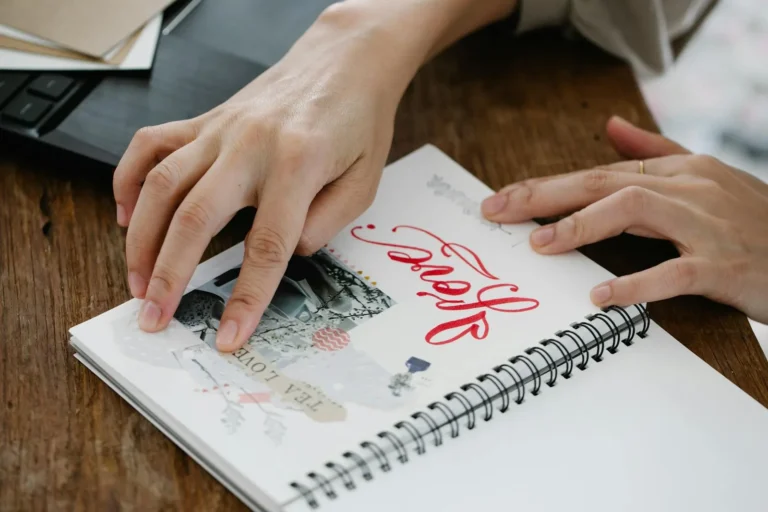
Most people who layer heavily end up here by their second book, after a glued spine pops open one too many times. Spiral and disc-bound books open completely flat and have flexible spines that swell to fit heavy layers without straining, so they take the abuse a chunky page throws at them. Disc systems (like Levenger Circa or Arc) also let you add, remove, and rearrange pages, which is genuinely useful once you start collecting more ephemera than your book can hold.
Best for a vintage look: an upcycled hardback
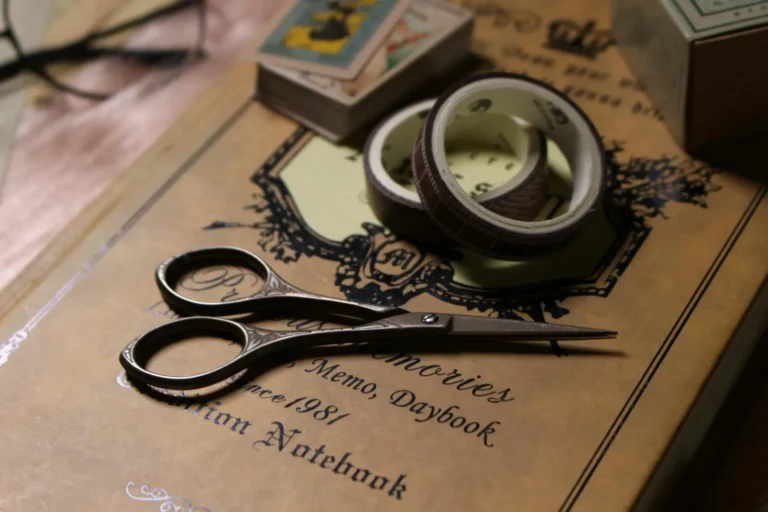
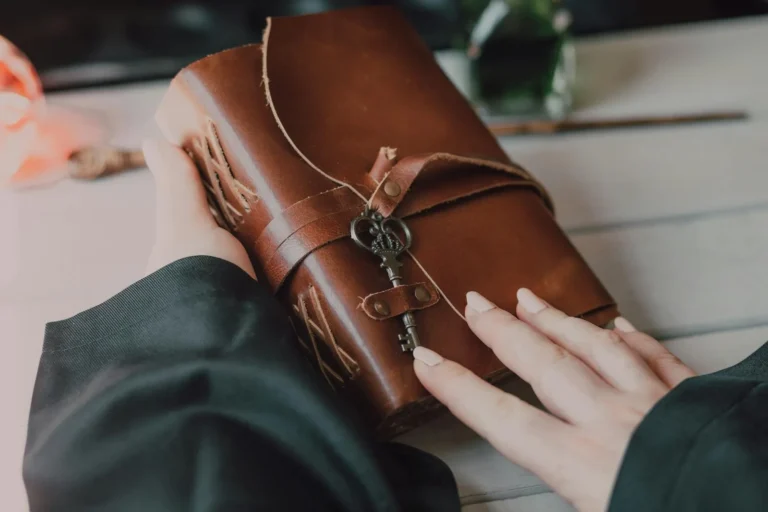
Skip the Etsy “vintage-style” book and grab a real one for $3. A thrifted hardback already has the lived-in cover and spine that brand-new books fake badly, and the only work is gutting some pages to make room for your own. It is one of the most-loved techniques in the craft for a reason: the cover does half the styling work for you before you glue down a single piece. We walk through the whole process in how to make a junk journal from an old book.
Best for full control: a handmade journal
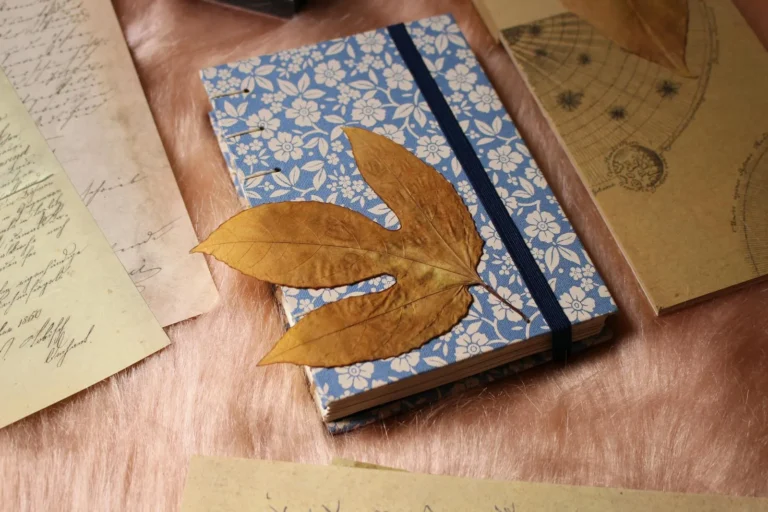
Making your own lets you choose the exact size, paper, and number of signatures, with a spine built to expand and pockets sewn in from day one. It takes time and a few tools, but gives you a base nothing off the shelf can match. People tend to graduate to this once they know what they like; almost no one starts here.
The forgiving pick. A mixed-media book around 120-160 gsm with a spiral or lay-flat binding. Thick paper, easy spine, no buckling under glue. The early frustration most beginners hit just does not happen.
Should you buy a journal or make one?
Buy a journal if you want to start today; make one if you want control over size, paper, and pockets. Both work, and most people end up doing both: a store-bought book to learn on, then handmade once their style is settled.
Buying wins on speed and consistent paper. Making (or upcycling) wins on cost, character, and customisation. If you are brand new, buy or upcycle something cheap and start now. The perfect handmade journal can wait until you have a few finished pages and actually know what you wish was different. For the rest of your materials either way, see the junk journal supplies list.
Frequently asked questions
What kind of notebook is best for junk journaling?
A mixed-media book or a composition book is best for most people. Mixed-media books have thick paper (120 gsm and up) that takes glue and paint without buckling; composition books are cheap, sturdy, and forgiving for beginners. Both beat thin lined notebooks for almost any use case.
Can I use a regular lined notebook for a junk journal?
Honestly, only as a starter. Thin lined paper (60-80 gsm) wrinkles the moment wet glue touches it and bleeds with any paint or coffee wash. Begin in a drawer notebook if that is what you have, but the day you want to layer ephemera or use any wet media, switch to mixed-media or spiral.
What size should a junk journal be?
A6 or A5. Larger books live on the desk, not in your bag.
Is it cheaper to make or buy a junk journal?
Making or upcycling is almost always cheaper, especially if you start with a thrifted hardback and paper you already have. Buying a ready-made book costs more but gives consistent paper quality and saves you from learning bookbinding before you have written a single page.
What paper weight is best for junk journaling?
120 gsm or higher. That is the line where paper stops fighting glue.
How much should you spend on a junk journal base?
Spend nothing, or spend modestly. A thrifted hardback or a composition book gets you started for the price of lunch. A nice mixed-media or disc-bound book is worth it once you know you enjoy the craft.
The sensible path: start cheap, learn what you actually reach for, and only invest in a nicer base after the first book is full. Spending more on paper quality is worth it eventually, just not on day one when you are still figuring out whether you even like working at A5 or A4.
Pick a base today
Pick a base today. The hardest part of a junk journal is owning the first page; everything after that is just gluing things in, and a good base removes most of the small frustrations that stop beginners before page three.
When you have your base, fill it using our page ideas, gather the rest of your kit with the supplies list, or read the complete beginner’s guide for the full picture.
Want to try before you invest? Our free printable starter kit lets you build pages in any notebook you already own. Sign up below and we will send it over.