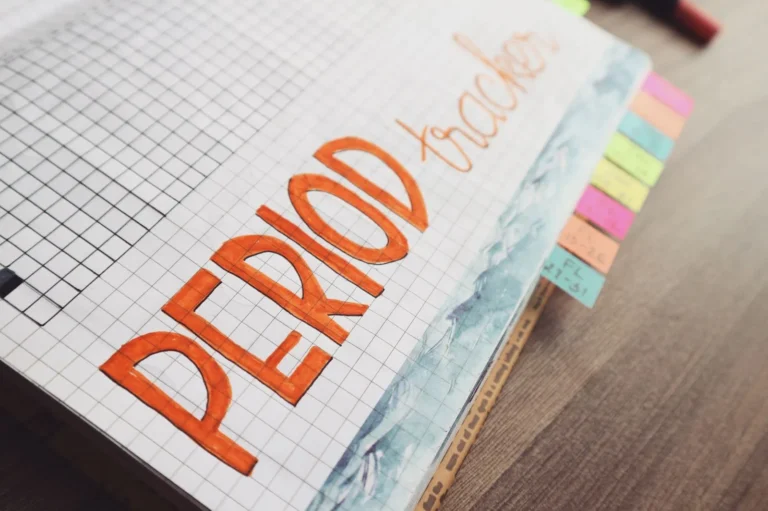
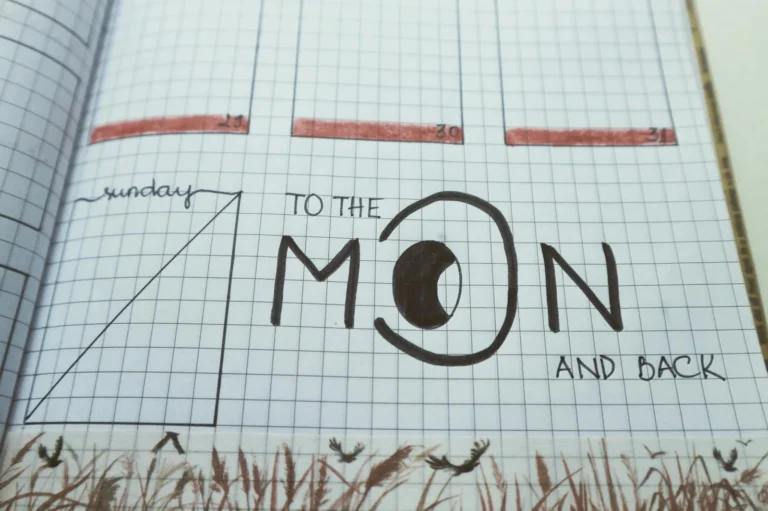
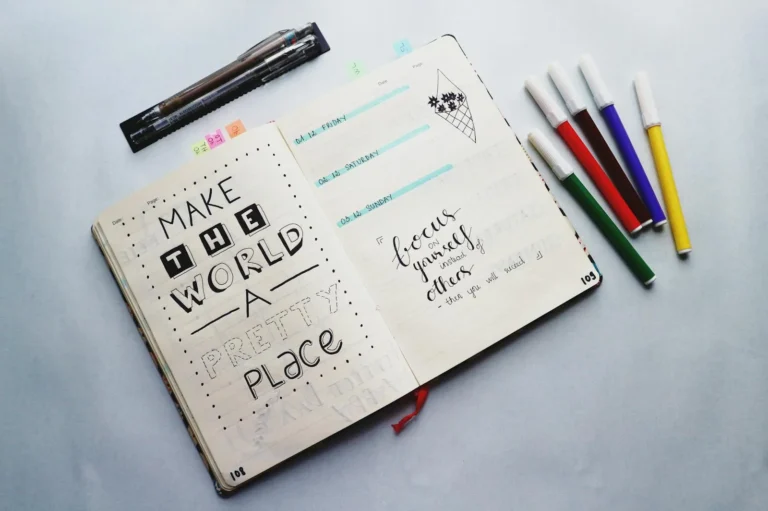
You can’t draw. You have decided this about yourself, somewhere back in a childhood art class, and now every time you see a bullet journal with a little banner header and a row of tiny potted plants down the margin, you file it under “not for me.” Here is the thing the people drawing those banners will not tell you, because to them it is obvious: almost none of it is drawing. It is shapes. A banner is two lines and a couple of notches. A leaf is a curve and a stem. Once you see the journal as built from a dozen simple shapes rather than from talent, the whole decorative side opens up, even for the self-declared stick-figure person.
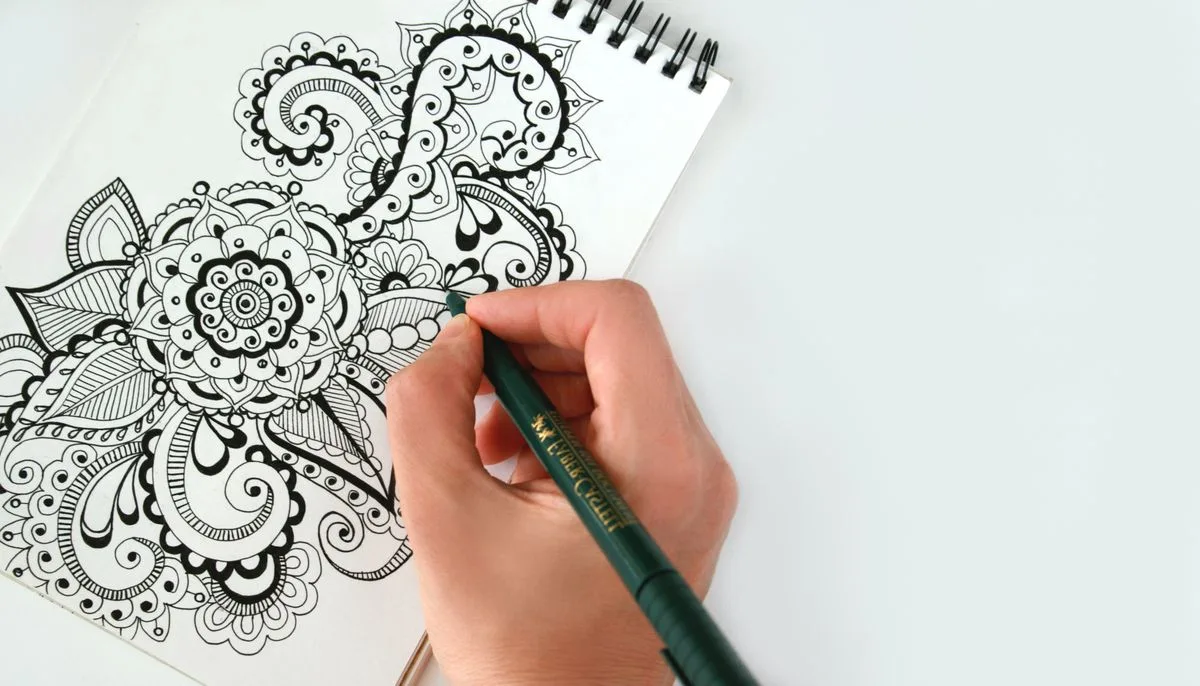
A bullet journal doodle is just a small, simple drawing you add to a page, a header banner, a divider, an icon, a sprig of leaves, to give it a little personality. The good news for the nervous is that the doodles that actually get used are the easy ones, built from lines, circles, and dots you already know how to make.
The short version: Bullet journal doodles are small simple drawings (banners, dividers, icons, leaves) that add personality to a page, and almost all of them are built from basic shapes rather than real drawing skill. Learn a handful of repeatable doodles, banners, arrows, a leaf, a few icons, practice them on scrap, and use them for headers and dividers. If drawing genuinely is not your thing, plain typographic headers look great too.
Every doodle that looks impressive in a spread breaks down into a few marks you can already make. This is the reframe that unlocks it, so it is worth slowing down on.
A banner is a rectangle with a triangle notch cut from each end, or just two slightly curved parallel lines with the ends folded. A potted plant is a trapezoid with some curved stems poking out. A laurel wreath, the thing that makes a header look finished, is two curved lines facing each other with little leaf-dashes along them. A star is five lines. A heart is two bumps and a point. None of these is drawing in the scary sense. They are assembly: known shapes, combined, repeated.
So the skill you are actually building is not “learning to draw.” It is memorizing a small vocabulary of shapes and getting comfortable repeating them. That is a completely different, much more achievable thing, and it is why people who swear they cannot draw end up with perfectly nice doodled journals within a few weeks.
The starter set of easy doodles
You need about six or seven repeatable doodles to make a journal feel decorated. Learn these and you can dress up almost any page.
Banners and ribbons. The workhorse of headers. Start with the simplest: two short parallel lines with V-notched ends. Add a fold or a shadow once that feels easy. One banner shape, used everywhere, ties a journal together.
Dividers. A line is boring; a line with a small flourish is a divider. A row of dots, a vine with a few leaves, a simple zigzag, a line that ends in a tiny arrow. The easiest upgrade to any plain page.
Arrows. Endlessly useful and dead simple. A line with a head, a curved “look here” arrow, a little hand-drawn pointer. They guide the eye and double as decoration.
Leaves and sprigs. A single curved line with small leaf-shapes branching off. The most forgiving doodle there is, because nature is irregular, so wobbly lines look intentional. Perfect for filling a corner.
Weather and mood icons. A sun (circle plus rays), a cloud (a few bumps), a raindrop, a simple smiley. Tiny, fast, and genuinely useful on a tracker or daily log.
Boxes and frames. A simple drawn box around a header or a note, maybe with rounded corners or a doubled line. Barely a doodle, big impact.
Notice none of these is a portrait or a landscape. The useful doodles are small, repeatable, and built from shapes, on purpose.
How to actually practice (so it sticks)
You do not get better at doodling inside your nice notebook, under pressure, with the whole page watching. You get better on scrap.
Keep a cheap practice page or a sticky note nearby and draw the same banner ten times in a row. The first three will be wonky and the last three will not, and that is the entire learning curve, compressed into two minutes. Doodling is muscle memory more than art, so repetition on scrap is what transfers to a clean header later. Warm up there before you commit anything to the real page, and the journal stays free of the “I ruined it” feeling that makes people stop.
If you want models to copy while you build the vocabulary, free printable doodle and practice sheets are an easy starting point. Creative Fabrica has free downloadable doodle reference and practice pages you can print and trace or copy until the shapes are in your hand. We point to a starter set in the free bullet journal templates post.
Where doodles go (and where to leave them out)
Doodles earn their place in a few spots and get in the way in others. Use them where they add personality without slowing down the page you have to keep up daily.
Good homes: header banners at the top of a spread, dividers between sections, small icons on a tracker (a tiny droplet for water, a book for reading), a sprig filling an awkward corner, a decorated cover or monthly title page where you have time to enjoy it. The cover especially is where doodlers go all out, since you only make it once.
Where to go light: the daily working pages you open in a hurry. If a page demands a banner and three icons before you can even use it, the decorating starts costing you more than it gives back. Plenty of journalers doodle their monthly and cover pages and keep the dailies plain, which is a sensible split. And if it turns out doodling is just not your thing, that is completely fine, a clean minimalist journal with plain typographic headers looks just as good and asks even less.
Frequently asked questions about bullet journal doodles
How do I doodle if I can’t draw?
Stop thinking of it as drawing and start thinking of it as assembling shapes. A banner is two lines with notched ends; a leaf is a curve with a stem; a star is five lines. Almost every useful doodle is built from circles, lines, and dots you already know how to make. Learn a handful of these shape-based doodles, practice each a few times on scrap, and you will have a decorated journal without any real drawing talent.
What are the easiest bullet journal doodles for beginners?
Banners, dividers, arrows, simple leaves and sprigs, and basic weather or mood icons. These are forgiving because they are small, repeatable, and built from simple shapes, and slightly wobbly versions still look intentional, especially the leaves. Start with one banner shape and a leafy divider and you can dress up most pages.
Do I need special pens to doodle in my bullet journal?
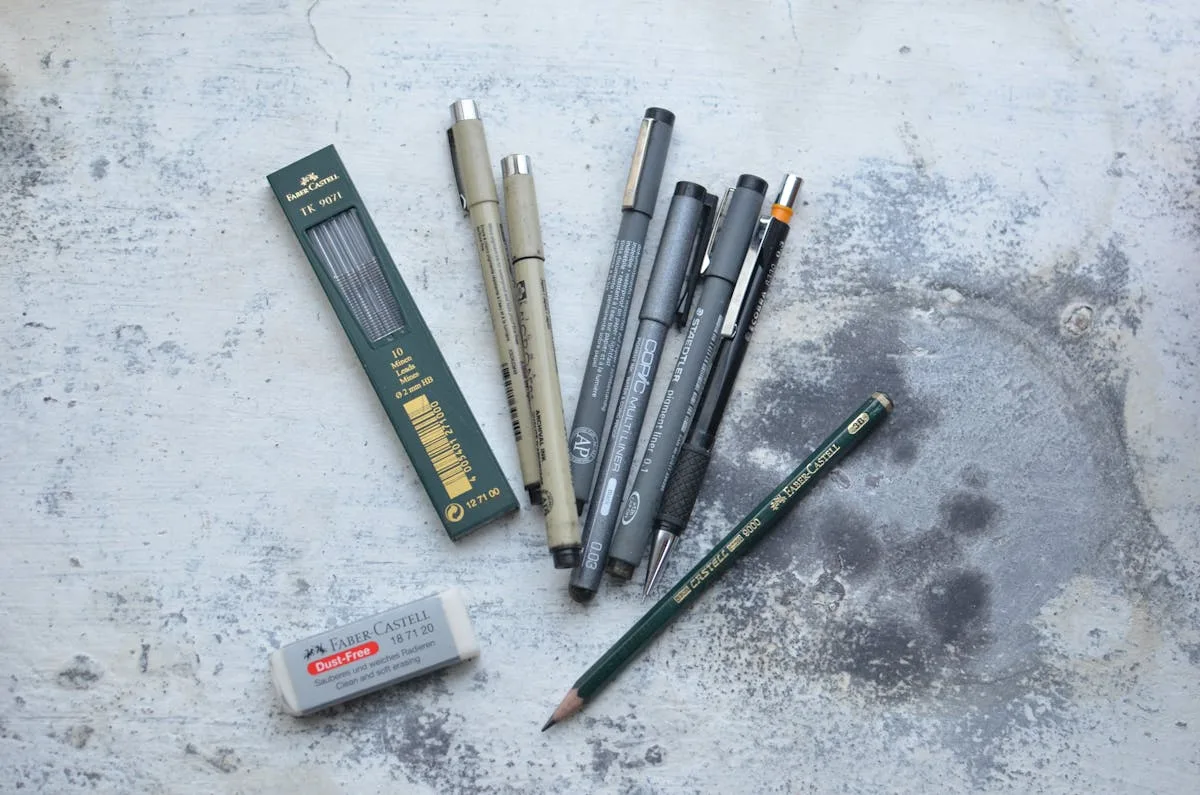
No. Any pen that writes cleanly will do for learning the shapes. Some people add a fineliner for crisp lines or a brush pen later for variety, but those are upgrades, not requirements. Practice the shapes first with the pen you already have; the doodle skill matters far more than the tool.
How do I get better at bullet journal doodles?
Repetition on scrap, not pressure on your nice page. Draw the same doodle ten times on a sticky note and watch the last few come out far cleaner than the first. Doodling is closer to muscle memory than art, so a couple of minutes of warm-up before you commit a header is what makes it stick. Copying from free practice sheets speeds it up.
Where should I put doodles in my bullet journal?
On header banners, dividers, tracker icons, awkward corners, and especially cover or monthly title pages where you have time. Keep them light on the daily pages you open in a rush, so decoration never slows down the part you have to maintain. A common split is doodled monthly and cover pages with plain, fast dailies.
You were never bad at drawing, just at portraits
The banners and sprigs you scrolled past as “not for me” were never about talent. They were a small set of shapes, drawn by someone who practiced them ten times on scrap first. Learn your six or seven, warm up before you commit them, and keep them on the pages you have time for. The self-declared stick-figure person ends up with a journal that looks hand-decorated, because the secret was never drawing. It was repetition.
If you want a gallery of spreads to borrow doodle ideas from, bullet journal page ideas is full of them, and the bullet journal hub ties decoration back into the larger system.
Want practice pages ready to print? Our free printable bullet journal starter kit includes simple layouts you can decorate as you learn, plus clean pages to keep plain on busy days. Sign up below and we will send it over.
Get free junk journal printables
New printables, page ideas, and paper craft tutorials, straight to your inbox.
You spent the better part of an evening on a spread you were proud of. Headers lettered, a tracker laid out, a little color in the corners. Then you turned the page to start the next day and there it was, the whole layout ghosting through from the back, the marker bleeding into shadows of…
You drew the grid on the first of the month, thirty-one little squares marching across the page, eight habits stacked down the side, and for nine days it was glorious. Every square filled in, a wall of color, proof you were finally becoming the person who flosses and stretches and drinks the water. Then the…
The very first page is where a surprising number of bullet journals die before they begin. You open the new notebook, you know the first page is “the cover,” and suddenly it carries the weight of the whole thing. It has to set the tone. It has to be good. So you put it off…
You opened someone’s bullet journal once, maybe a friend’s, maybe a photo online, and the page looked like a code you were not cleared for. Dots and dashes, little arrows, a star in the margin, one task with a neat line through it. It seemed like you needed a decoder ring just to read a…
You quit the first time because the journal started asking too much. Every spread online had hand-lettered headers, a color theme, a little illustration in the corner, and somewhere along the way keeping the notebook stopped being planning and became a nightly art assignment you were too tired to do. So you skipped a day,…
You flip back through last month and one thing jumps out before you read a single word: the Sundays are all the same grey. You never noticed it living through them, one ordinary low Sunday after another blurs into “fine,” but colored in across a page, the pattern is impossible to miss. That is the…
Manage Consent
To provide the best experiences, we use technologies like cookies to store and/or access device information. Consenting to these technologies will allow us to process data such as browsing behavior or unique IDs on this site. Not consenting or withdrawing consent, may adversely affect certain features and functions.
Functional
Always active
The technical storage or access is strictly necessary for the legitimate purpose of enabling the use of a specific service explicitly requested by the subscriber or user, or for the sole purpose of carrying out the transmission of a communication over an electronic communications network.
Preferences
The technical storage or access is necessary for the legitimate purpose of storing preferences that are not requested by the subscriber or user.
Statistics
The technical storage or access that is used exclusively for statistical purposes.The technical storage or access that is used exclusively for anonymous statistical purposes. Without a subpoena, voluntary compliance on the part of your Internet Service Provider, or additional records from a third party, information stored or retrieved for this purpose alone cannot usually be used to identify you.
Marketing
The technical storage or access is required to create user profiles to send advertising, or to track the user on a website or across several websites for similar marketing purposes.