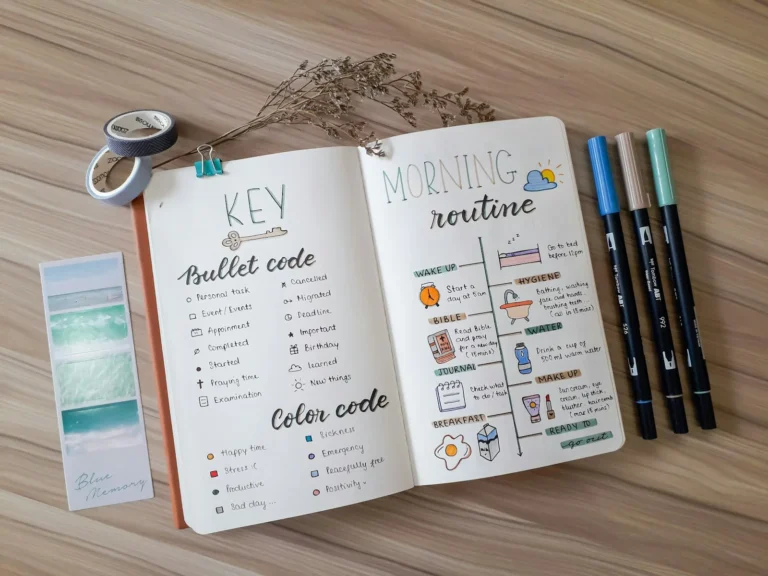
You quit the first time because the journal started asking too much. Every spread online had hand-lettered headers, a color theme, a little illustration in the corner, and somewhere along the way keeping the notebook stopped being planning and became a nightly art assignment you were too tired to do. So you skipped a day, then a week, then the guilt took over and the notebook went in a drawer. A minimalist bullet journal is the version that survives that exact burnout, because it never asked you to make art in the first place.
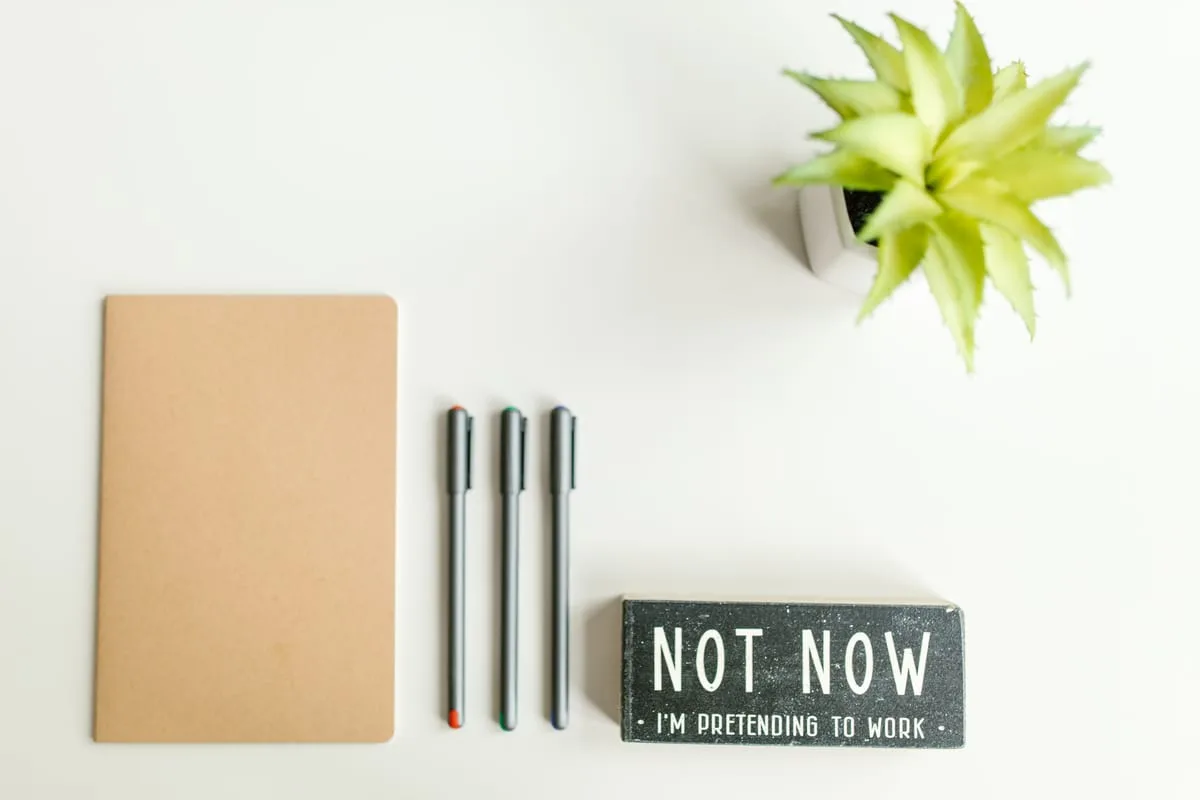
Minimalist does not mean empty or severe. It means function over flourish: clean lines, black ink, no decoration you do not have time for, every page earning its place by being useful rather than pretty. The irony is that the plain journals are the ones people keep for years, while the gorgeous ones quietly stall by February. Less to maintain is more likely to last.
The short version: A minimalist bullet journal strips the system back to what works: plain layouts, black or single-color ink, no decoration for its own sake. It is fast to set up and fast to maintain, which is exactly why it sticks when elaborate spreads burn people out. Keep headers simple, use whitespace instead of color, and let the usefulness of the page be the point.
It is worth clearing up, because “minimalist” gets confused with “bare” or “joyless.” A minimalist spread is not a punishment. It is a page where nothing is doing decorative work, so everything on it is doing real work. The header is just legible, not lettered. The structure is ruled or freehand-straight, not flourished. There is no color unless color is carrying information, like a single highlighter marking priorities.
The aesthetic that comes out the other side is its own kind of lovely, calm, ordered, a lot of clean white space. But that look is a byproduct, not the goal. You are not styling a minimalist page; you are removing everything that is not pulling its weight, and what is left happens to look good. That distinction is the whole philosophy: subtract until only the useful remains.
Why the plain version outlasts the pretty one
This is the real argument for going minimal, and it comes down to one thing. Maintenance cost decides whether a journal survives, and decoration is almost all of the cost.
An elaborate spread carries a hidden tax. Every week you owe the page lettering, a color scheme, maybe a doodle, and that debt is fine on a good Sunday and impossible on a bad Tuesday. Miss one decorating session and the spread looks half-finished, which makes you not want to open it, which is how the gap becomes the end. A minimalist spread has almost no maintenance tax. You can set up a plain week in a few minutes flat, and there is no decoration to fall behind on, so a tired day never leaves a visible hole. The page looks the same whether you were inspired or exhausted.
That is why minimal lasts. It is not about discipline or taste. It is that a system you can keep up on your worst day is a system you actually keep. If your last journal died of decoration fatigue, this is the fix, and it is the lane the bullet journal hub points anxious beginners toward for exactly this reason.
Minimalist layout ideas that work
None of these need a ruler you do not own or a single marker. They are about clean structure and restraint.
The one-line-a-day log. A dated line per day, that is it. No boxes, no grid, just the date and what mattered. The leanest daily layout there is, and a quiet record over a month.
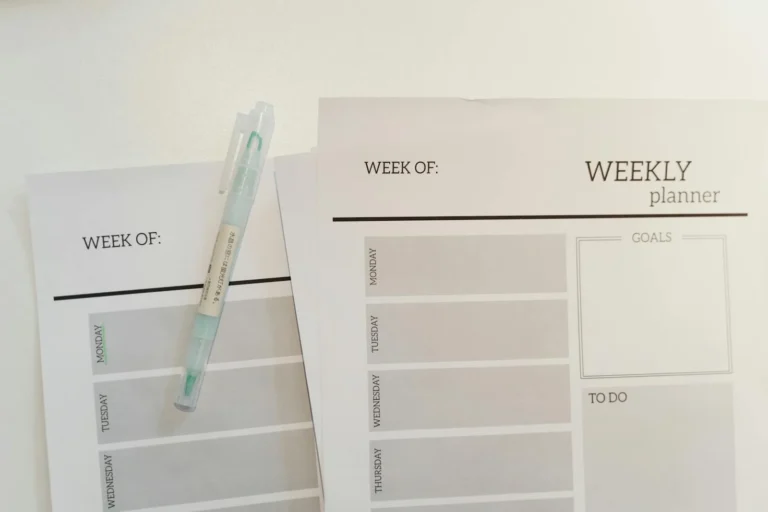
The plain horizontal weekly. Seven simple sections down the page, each a day, each an open space. No time slots, no color blocks, just room to list. The weekly and monthly spreads guide covers the structure; the minimalist move is to draw it in black and leave the white space alone.
The single-highlighter system. Keep the whole journal in black ink, then use exactly one highlighter for one job, marking priorities, or migrated tasks, or events. One color carrying real information reads cleaner than five colors carrying mood.
The whitespace monthly. A simple month grid with generous empty margins. Resist filling the blank space; the room is what makes it calm and readable. Whitespace is a design choice, not a gap to decorate.
Typographic headers, not lettered ones. Want a little style without the maintenance tax? Write headers in plain capitals or a simple underline instead of hand-lettering. It gives structure a finished look in two seconds, no art skills required.
The thread through all of these is the same: structure stays, decoration goes, white space does the work color usually does.
A few ways minimalists keep it consistent
Two small habits keep a minimalist journal from sliding back into fussiness.
First, set a one-pen rule for a month. Black ink, one highlighter at most. Removing the choice of which marker to use removes most of the decorating urge, and you will be surprised how little you miss it.
Second, reuse the same plain layout instead of designing a new one each week. Minimalism and reuse are the same instinct, do the useful thing the simple way, repeatedly, until it is automatic. If you want a clean grid without ruling it yourself, a plain printable does the job invisibly; the free bullet journal templates post has simple, undecorated layouts you can print.
Frequently asked questions about minimalist bullet journals
What is a minimalist bullet journal?
It is a bullet journal stripped back to function: plain layouts, black or single-color ink, and no decoration that does not serve a purpose. The look is clean and uncluttered, but that is a byproduct of removing everything unnecessary rather than a style you add. It is fast to set up and fast to keep, which is its main appeal.
Is a minimalist bullet journal better for beginners?
For many, yes. The most common reason beginners quit is decoration fatigue, feeling they owe every page art they do not have time for. A minimalist approach removes that pressure entirely, so the habit can form before any styling is involved. You can always add decoration later, once keeping the journal is second nature.
How do I make my bullet journal look clean and minimal?
Keep it to black ink and at most one highlighter used for a single job. Write headers in plain capitals or with a simple underline instead of hand-lettering, leave generous white space rather than filling it, and reuse the same plain layout each week. The clean look comes from restraint and repetition, not from adding anything.
Do minimalist bullet journals still use trackers and spreads?
Yes, just in their plain form. A minimalist habit tracker is a simple ungarnished grid; a minimalist weekly is seven clean sections without color blocks. You keep the useful structure, like trackers and monthly spreads, and drop only the decoration around them. The function of the system is unchanged.
Will a minimalist journal get boring?
It might look plain, but boring is often what keeps it alive. A journal you can maintain on a tired day without falling behind is one you actually return to, and consistency tends to matter more than novelty. If you miss some creativity, channel it into one page, a decorated cover or a single doodled spread, and keep the daily working pages plain.
Keep the version you will actually open
The prettiest journal in the world is worthless in a drawer, and that is where most elaborate ones end up. A minimalist bullet journal trades the art for staying power: plain pages, fast setup, nothing to fall behind on, a notebook that looks the same whether your week was good or wrecked. If decoration fatigue killed your last attempt, this is the version that does not ask for more than you have.
Start plain, reuse your layouts, and let usefulness be the whole point. When you want a gallery of ideas to borrow, bullet journal page ideas has plenty of simple ones, and how to start a bullet journal covers the basic setup if you are just beginning.
Want plain layouts ready to print? Our free printable bullet journal starter kit keeps it minimal: a clean monthly spread, a simple weekly, a plain habit tracker, and a daily log, no decoration to keep up with. Sign up below and we will send it over.
Get free junk journal printables
New printables, page ideas, and paper craft tutorials, straight to your inbox.
Sunday night, fresh week ahead, and you are staring at two blank pages trying to remember how you laid out last week, the good one, the week the journal actually worked. Was it the vertical columns? The one with the box in the corner for the brain dump? You cannot quite recreate it, so you…
You spent the better part of an evening on a spread you were proud of. Headers lettered, a tracker laid out, a little color in the corners. Then you turned the page to start the next day and there it was, the whole layout ghosting through from the back, the marker bleeding into shadows of…
You did the hard part. The notebook is set up, the index is labeled, you learned the little symbols, and you kept it going for a week. Then you turned to a fresh spread, pen in hand, and drew a complete blank about what should actually go on it. The setup is finite. The pages…
You can’t draw. You have decided this about yourself, somewhere back in a childhood art class, and now every time you see a bullet journal with a little banner header and a row of tiny potted plants down the margin, you file it under “not for me.” Here is the thing the people drawing those…
You bought the notebook for the look of it, the clean dotted pages, the promise of spreads like the ones you saved. Then you tried to draw a straight habit-tracker grid freehand, the lines wandered, the boxes came out different sizes, and the page you meant to keep for a year looked like a rough…
You opened someone’s bullet journal once, maybe a friend’s, maybe a photo online, and the page looked like a code you were not cleared for. Dots and dashes, little arrows, a star in the margin, one task with a neat line through it. It seemed like you needed a decoder ring just to read a…
Manage Consent
To provide the best experiences, we use technologies like cookies to store and/or access device information. Consenting to these technologies will allow us to process data such as browsing behavior or unique IDs on this site. Not consenting or withdrawing consent, may adversely affect certain features and functions.
Functional
Always active
The technical storage or access is strictly necessary for the legitimate purpose of enabling the use of a specific service explicitly requested by the subscriber or user, or for the sole purpose of carrying out the transmission of a communication over an electronic communications network.
Preferences
The technical storage or access is necessary for the legitimate purpose of storing preferences that are not requested by the subscriber or user.
Statistics
The technical storage or access that is used exclusively for statistical purposes.The technical storage or access that is used exclusively for anonymous statistical purposes. Without a subpoena, voluntary compliance on the part of your Internet Service Provider, or additional records from a third party, information stored or retrieved for this purpose alone cannot usually be used to identify you.
Marketing
The technical storage or access is required to create user profiles to send advertising, or to track the user on a website or across several websites for similar marketing purposes.