Paper stickers are perfect right up until the moment one gets touched, splashed, or stuck to anything that moves. Then the edges fuzz, the ink lifts, and the cute label you printed for a water bottle looks like it went through the wash. That is the exact gap printable vinyl fills, and it is also where home sticker-making gets a little more involved than “hit print and peel.”
Printable vinyl sticker paper is a plastic-based sticker sheet you print on at home, then cut and usually seal, to make water-resistant, durable stickers that survive handling, water bottles, laptops, and planner covers. The catch is the extra steps: vinyl wants a print-then-cut workflow and a sealing pass that everyday paper skips.
This guide is the durable-sticker companion to our roundup of the best printable sticker paper, which covers the matte everyday sheets most journaling uses. Here we stay on vinyl: when it is worth it, which kind to get, and the step-by-step for printing, cutting, and sealing stickers that actually last.
Vinyl costs more than paper, so it is worth knowing when it actually pays off.
Choose vinyl when the sticker will be touched often or get wet: water bottles, laptops, phone cases, planner and notebook covers, kids’ crafts, anything outdoors or in a bag. Vinyl’s water resistance and durability are the whole point.
Stick with paper when the sticker lives in a journal or planner page and gets written on. Matte paper takes pen, sits flat, and blends into a layout, and it costs less. Putting vinyl inside a paper journal usually means a slick, shiny surface you cannot write on, in the wrong place.
In short: vinyl for things that get handled, paper for things that get filled in. Our journal stickers hub lays out the full type-by-type picture if you want the overview.
Types of printable vinyl, sorted
Like regular sticker paper, vinyl splits along your printer and your finish, but the choices carry more weight because vinyl is the pricier sheet.
Inkjet vs laser vinyl. Same rule as any sticker paper: buy the version made for your printer, since the two are not interchangeable. We walk through that choice in the best printable sticker paper guide; for vinyl, most home users want inkjet printable vinyl.
Matte vs glossy vinyl. Glossy is the classic durable-sticker look, bright and wipeable; matte mutes the glare for a more modern finish. Both are tougher than paper, which is the part that matters here.
Clear vs white vinyl. White backs full-color designs. Clear floats a design with no edge, just keep in mind that home printers lay down no white ink, so any white area prints clear.
Pigment vs dye ink. This is the one that catches people out: if your inkjet uses dye-based ink, the print can run when it gets wet even on vinyl, while pigment ink holds up far better. If you are not sure which your printer uses, sealing (below) covers you either way.
Printable vinyl vs adhesive craft vinyl. Worth clearing up: printable vinyl is made to run through a printer. Regular craft vinyl (the kind you cut from a roll for decals) is not printable and can jam or damage a printer. For printed stickers, you want the sheet that says printable.
Reputable names in printable vinyl include Avery, Online Labels, Koala, and HP, and if you cut with a machine, Cricut and Silhouette both offer printable vinyl tuned to their print-then-cut systems. Always confirm the label says printable vinyl and matches your printer type.
How to print vinyl stickers at home, step by step
This is the part that makes durable stickers work. The order matters, and the sealing step is the one beginners skip and then wonder why their stickers peel.
Design and add a cut line. In your design app or your cutting machine’s software (Cricut Design Space or Silhouette Studio), size your stickers and add a cut line or offset around each shape. If you are cutting by hand, you can skip the cut line and just leave space between designs.
Set your print options to match the sheet. In the print dialog, set the paper or media type to match your vinyl (matte or glossy) and choose the best or high quality setting. This is the single biggest factor in how the print looks.
Print, then wait. Run the sheet, then leave it untouched while the ink sets, a few minutes for matte and closer to ten for glossy. Vinyl is less absorbent than paper, so wet ink sits on the surface longer than you expect.
Seal, or plan when to. Sealing is what makes a vinyl sticker waterproof rather than just water-resistant, with a clear laminate sheet pressed on by hand or two or three light coats of clear spray sealant. If you cut by hand, seal the whole sheet now so the printed edges are protected before you cut. If you cut by machine, seal after cutting instead, because a thick laminate can throw off the blade and the registration scan.
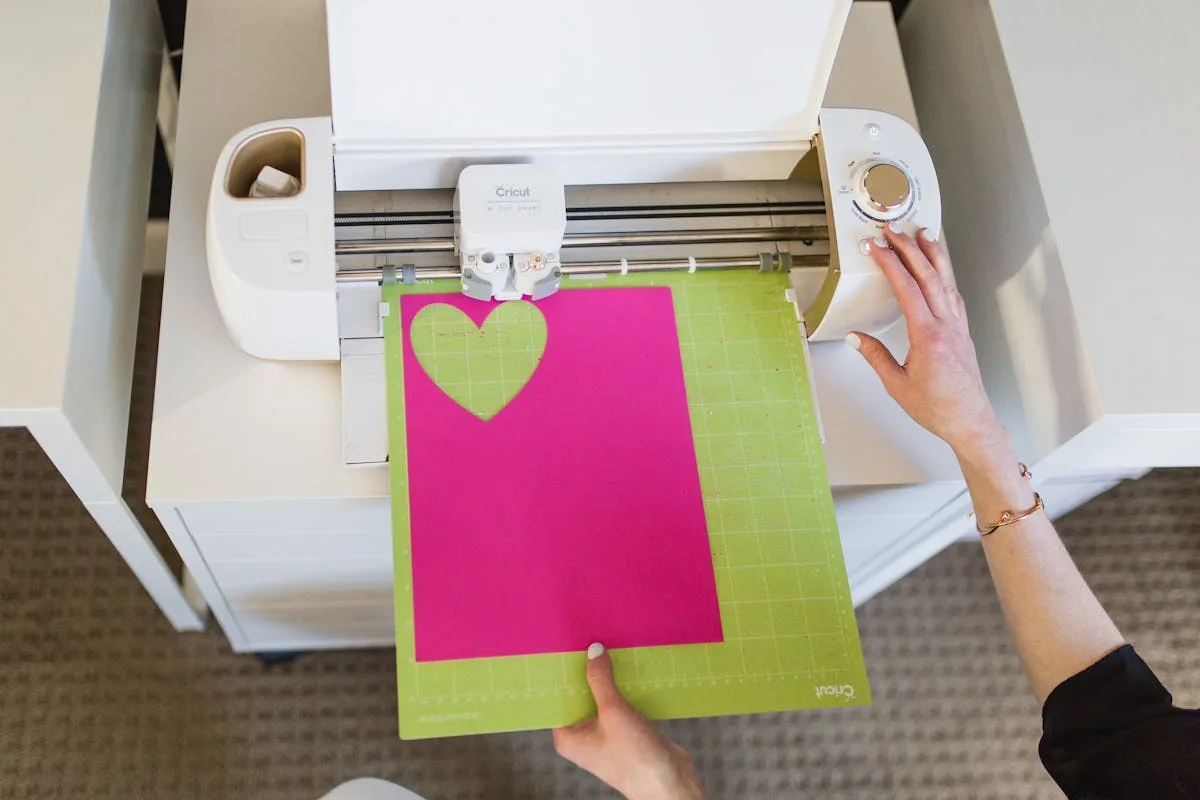
Cut. By machine, run the sheet on a print-then-cut setting so it reads the registration marks and cuts around each design. By hand, use scissors or a craft knife and leave a thin border around each shape.
Peel and stick. Burnish each sticker down firmly, pressing from the center outward, so the adhesive grabs and no edge is left to lift. To smooth on a laminate without bubbles, press from the middle out to the edges the same way.
That is the whole workflow. The two steps people drop are letting the ink dry and sealing, and those two are exactly what separate a sticker that lasts from one that smears and peels.
Sealing options compared
For true waterproofing, sealing is the step that does it, and there are three common routes:
Laminate sheets. Cold-laminate sheets you press on by hand, no machine needed. Clean, even, and beginner-friendly, though they add a little thickness.
Spray sealant. A clear acrylic spray in light coats. Cheap and great for batches, but it needs ventilation and patience between coats.
Water-resistant paper without sealing. Some printable vinyl is sold as already water-resistant, which skips the sealing step for light use. For anything that gets scrubbed or soaked, a seal on top is still the safer bet.
For journal stickers that never leave the page, you can skip all of this, which is exactly why matte paper, covered in our best printable sticker paper roundup, is the everyday default.
Test the workflow with free designs first
Vinyl sheets and laminate cost more than plain paper, so it is worth running the whole print-cut-seal process once on a free design before you commit a full sheet to a real project. Creative Fabrica has a large library of printable sticker designs you can download free and use to practice your settings, and our free junk journal printables roundup has sheets to test with. Nail the dry time and the seal on a freebie, then print the stickers you care about.
Frequently asked questions about printable vinyl sticker paper
Is printable vinyl sticker paper waterproof?
Printable vinyl is water-resistant on its own, and becomes genuinely waterproof once you seal it with a laminate sheet or a clear spray sealant. The vinyl base resists water far better than paper, but sealing the printed surface is what protects the ink from rubbing or washing off.
Can I print vinyl stickers with a regular printer?
Yes, as long as you buy printable vinyl made for your printer type, inkjet or laser. Most home inkjet printers handle inkjet printable vinyl well. Do not run regular craft vinyl (the roll kind for decals) through a printer, since it is not made for printing and can cause damage.
Do I need a Cricut to make vinyl stickers?
No. A cutting machine like a Cricut or Silhouette makes clean, intricate cuts and reads registration marks for print-then-cut, but you can cut vinyl stickers by hand with scissors or a craft knife. Hand-cutting just works best with simpler shapes.
How do I seal printed vinyl stickers?
Apply a clear cold-laminate sheet over the printed design, or spray two to three light coats of clear acrylic sealant, letting each coat dry. Seal before you cut so the printed edges stay protected. This step is what turns a water-resistant sticker into a waterproof one.
What is the difference between printable vinyl and regular sticker paper?
Printable vinyl is a durable, water-resistant plastic-based sheet for stickers that get handled or wet, and it usually needs sealing. Regular sticker paper, especially matte, is paper-based, cheaper, easy to write on, and ideal for journals and planners. Vinyl is for durability, paper is for everyday journaling.
Print one test sheet and go
Durable stickers are not hard, they just have two more steps than paper, and the steps are dry time and sealing. Run one free design through the full workflow, print, dry, seal, cut, peel, and you will have the whole process in your hands before you spend on a real sheet.
When your stickers are headed for a journal page instead of a water bottle, switch back to matte paper, our best printable sticker paper roundup has the picks, and the journal stickers hub covers every type in one place. Do the dry and seal steps once and that water-bottle label stops peeling by the weekend.
Want designs to practice with? Our free printable sticker kit gives you sticker art you can run through the print-and-seal process at home. Sign up below and we will send it over.
Get free junk journal printables
New printables, page ideas, and paper craft tutorials, straight to your inbox.
You bought the cute sticker book, peeled off the first little washi flower, pressed it onto the corner of a fresh page, and somewhere between sheet two and sheet five you ran out of ideas for where the rest should go. The page looks busy, not finished. That gap, between owning stickers and using them…
You found the perfect sticker design, hit print, peeled it off the sheet, and it either curled at the edges, smudged the second your hand touched it, or refused to stick to anything. The design was never the problem. Printable sticker paper is one of those supplies where the cheap mystery pack and the right…
Where to download free printable scrapbook paper and how to print it so it actually looks right.
Manage Consent
To provide the best experiences, we use technologies like cookies to store and/or access device information. Consenting to these technologies will allow us to process data such as browsing behavior or unique IDs on this site. Not consenting or withdrawing consent, may adversely affect certain features and functions.
Functional
Always active
The technical storage or access is strictly necessary for the legitimate purpose of enabling the use of a specific service explicitly requested by the subscriber or user, or for the sole purpose of carrying out the transmission of a communication over an electronic communications network.
Preferences
The technical storage or access is necessary for the legitimate purpose of storing preferences that are not requested by the subscriber or user.
Statistics
The technical storage or access that is used exclusively for statistical purposes.The technical storage or access that is used exclusively for anonymous statistical purposes. Without a subpoena, voluntary compliance on the part of your Internet Service Provider, or additional records from a third party, information stored or retrieved for this purpose alone cannot usually be used to identify you.
Marketing
The technical storage or access is required to create user profiles to send advertising, or to track the user on a website or across several websites for similar marketing purposes.