You set up a clean weekly spread, ruled the boxes, wrote your headers, and then stalled. It is correct and it is boring, and you know one strip of washi along the top and a couple of small stickers would fix it, but you do not want to wreck twenty minutes of work with the wrong sticker in the wrong spot. So the spread stays bare, and you tell yourself minimalist was the goal all along.
Bullet journal stickers and washi tape are the fastest way to take a functional spread and make it one you actually want to open. Stickers add structure and decoration in a single peel, and washi tape (or washi-style sticker strips) frames sections, divides a page, and hides a wobbly ruled line without any drawing skill at all.
The reason they suit bullet journaling specifically is that a bujo runs on repetition. The same headers, the same trackers, the same day labels, week after week. Anything that lets you stop hand-drawing the repeating parts buys you time and keeps the look consistent. That is exactly what a sticker does.
The short version: Use functional stickers (dates, headers, trackers, icons) to speed up the repeating parts of your spreads, and washi tape or washi-style strips to frame, divide, and decorate. Start with one neutral washi roll and a small functional sticker set, keep your palette tight, and reach for free printable sheets to test layouts before you buy.
What washi tape and stickers actually do in a bullet journal
In a bujo, decoration is not the point, the system is. So the useful question is not “is this cute” but “does this save me time or make the page easier to read.” Stickers and washi earn their place on both counts.
Washi tape frames and divides. A strip along the top sets off your header. A strip down the middle splits a daily log from a tracker. It does the job of a ruler and a divider while looking like decoration.
Functional stickers remove repetition. Date covers, day tabs, and section headers mean you stop rewriting the same labels every single week.
Tracker stickers make data readable. A row of small mood or habit icons turns a tracker from a wall of text into something you can scan in a second.
Both hide mistakes. A crooked line vanishes under a washi strip. A misspelled header disappears under a header sticker. The page looks intentional instead of patched.
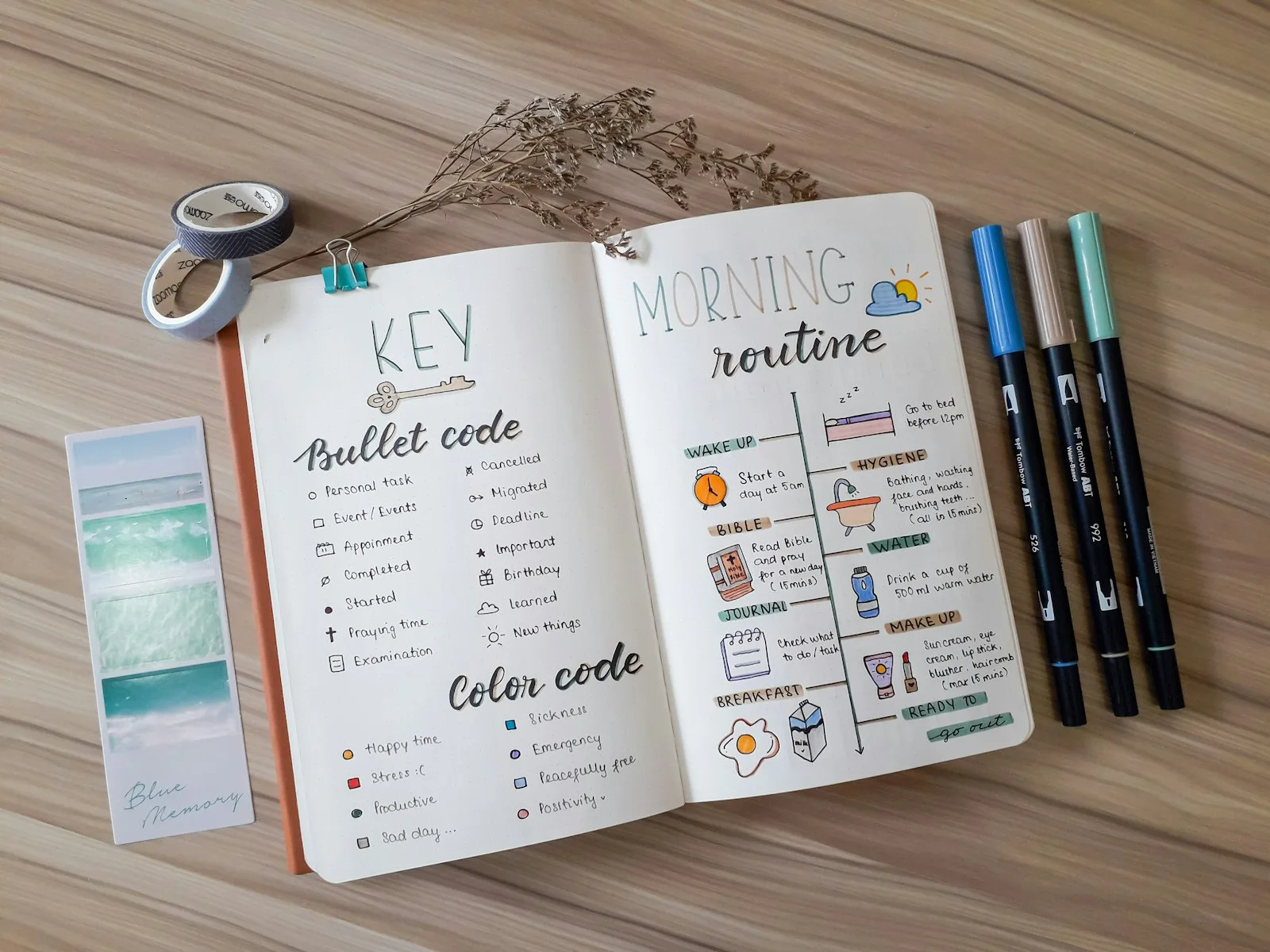
Picture a plain weekly: a washi strip across the top under the month, a header sticker for each day stacked down the left, a row of small mood icons along the bottom, and one floral in the corner where you have white space. That is four sticker decisions on a spread that took you twenty minutes to rule, and it is the difference between a page you skim past and one you stop on. If you are still finding your layout style, start with simple weekly and monthly spreads and build the decoration on top once the structure works. Our bullet journal page ideas gallery has layouts to borrow.
One thing beginners get wrong: scale. Stickers sold for planners are often sized for an A5 or larger page, and they swallow a pocket-sized or A6 journal. Check the sheet against your page before you buy, or print your own so you can size them to your columns.
Stickers vs washi tape: when to reach for which
They overlap, but they are not interchangeable. A quick way to decide:
Reach for washi tape when you need a line, a border, or a divider, want to frame something, or want a repeating pattern along an edge. Most washi also lifts and repositions for a few seconds before it sets, so a crooked strip is fixable.
Reach for stickers when you need a specific shape or a piece of information: a date, an icon, a banner, a single flower in a corner. A sticker goes in one deliberate spot rather than running along a line.
The cleanest spreads usually use washi for the bones (borders and dividers) and a few stickers for the details (headers and icons). Trying to do everything with one or the other is where pages start to look either bare or busy.
Washi-tape stickers: the roll without the wrestling
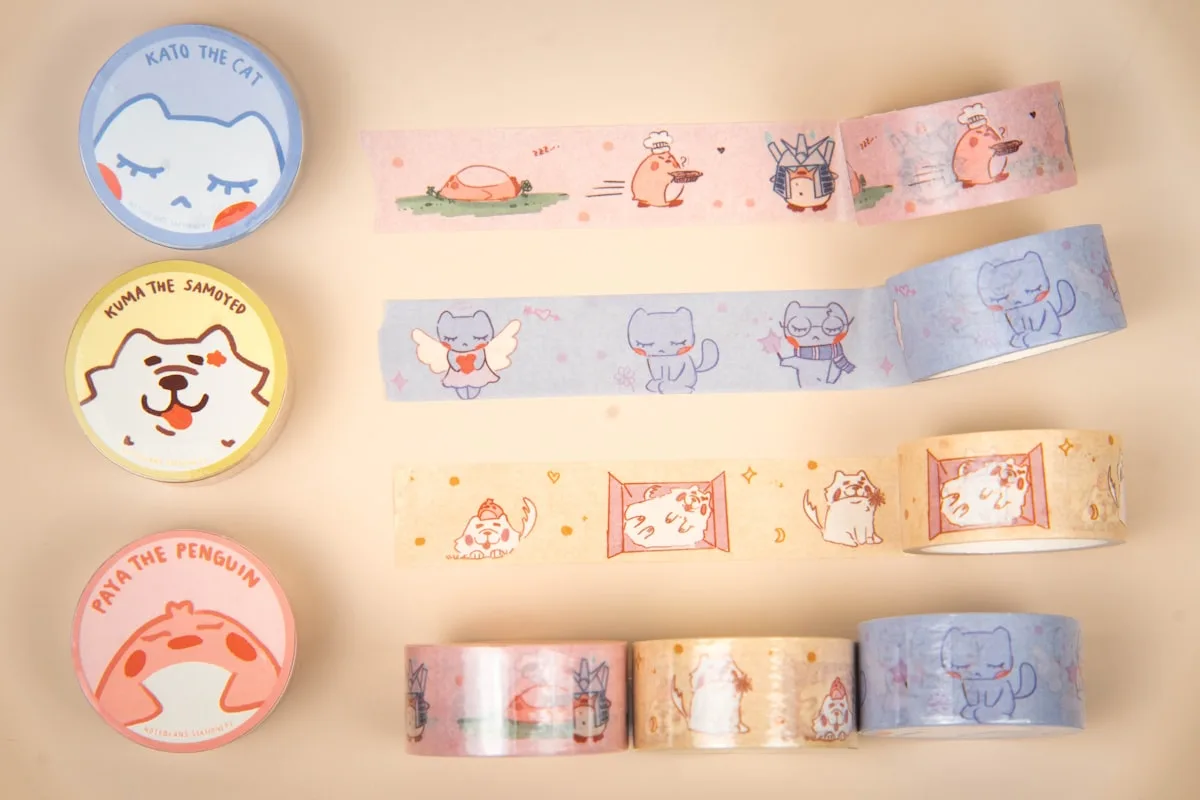
If you have ever fought a roll of washi, tugged a strip that tore at an angle, or lost the end of the tape into the roll, washi-tape stickers solve exactly that. They are peel-and-stick strips printed to look like torn or cut washi, with clean ends and no roll to manage. You get the layered, taped-down look in a form you can place precisely, which is why they have become a bujo staple.
They are also easier to print at home than real washi, because they are just stickers. If you want to make your own, the material you print on is what makes or breaks them, and we break down the options in our guide to the best printable sticker paper.
How to use them without burying your system
The whole appeal of a bullet journal is that it works. Decoration that fights the function is decoration that has to go. A few rules to keep both:
Tight palette. Two or three colors across the whole spread, picked once. A rainbow of washi rolls is how spreads start looking chaotic.
Leave the data alone. Decorate the margins, headers, and borders. Keep stickers off the part of a tracker you actually fill in, or you will be writing over them in a week.
Repeat across the spread. If you put a washi strip on the left page, echo it on the right so the two pages read as one.
Stop one sticker early. The minimalist instinct is right more often than not. A header sticker and two small icons usually beats a fully decorated page.
For a memory-keeping bujo you want to last, watch the materials: cheap acidic paper and adhesive can yellow and stain the page beneath over time, so for keepsake spreads, look for acid-free, lignin-free stickers and tape and test a scrap first.
Where to get bullet journal stickers and washi
You have three options, and the right one depends on how settled your style is. If you want a concrete first shop, start with one neutral washi roll, a set of day-of-the-week header stickers, a sheet of small mood and habit icons, and a date-cover set. That covers the repeating parts of almost every spread, and it is a far cheaper start than a decorative haul.
Buy ready-made. Functional sticker kits built for planners and bujos, sold as books or themed packs, plus washi by the roll. Good once you know your style. The common trap is buying decorative sheets you love in the shop and never matching them to a real spread.
Print your own. Cheapest per sticker and endlessly flexible, since you can size a header to your exact column width. You print onto sticker paper and cut by hand or machine. Worth doing once you know which functional pieces you reuse, and we cover printing them cleanly in our printable vinyl sticker paper walkthrough.
Free printables. The right starting point. Print a free functional set, run it for two weeks of spreads, and you will learn fast which pieces you reach for and which you ignore. Creative Fabrica has a large library of printable bujo stickers and washi designs you can download free, and our free junk journal printables roundup has sheets that work in a bujo too.
Frequently asked questions about bullet journal stickers and washi tape
What stickers are best for a bullet journal?
Functional stickers earn their place first: date covers, day tabs, headers, and small habit or mood icons that you would otherwise rewrite every week. Add a few decorative pieces in a tight palette. Start with one functional set rather than a giant decorative haul.
How do you use washi tape in a bullet journal?
Use it for structure: a strip along the top to frame a header, a line down the middle to divide sections, or a border to set off a tracker. Most washi lifts and repositions for a few seconds before it sets, so you can adjust a crooked strip without ruining the page.
What are washi tape stickers?
They are pre-cut strips that mimic washi tape but peel off a backing sheet instead of unrolling. You get the same layered, taped-down edge with cleaner ends, and because they are technically stickers, they are simple to print at home.
Can I print my own bullet journal stickers?
Yes. Print sticker designs onto sticker paper with a home printer, then cut them by hand or with a cutting machine. This lets you size headers and trackers to your exact spread, and it is the cheapest route once you own the paper.
How do I decorate a bullet journal without ruining the layout?
Keep a palette of two or three colors, decorate margins and headers rather than the data you fill in, and echo any element across both pages of a spread. Stopping one sticker early almost always looks cleaner than using the rest of the sheet.
Frame one spread and see
You do not need a drawer of washi to fix a bare spread. Take that clean weekly you stalled on, run one neutral washi strip along the top, add a header sticker and two small icons, and stop there. The spread that felt too plain to touch becomes one you want to open, and it cost you one strip and three stickers.
When you want to build the system out, the full journal stickers guide covers every sticker type, and the broader junk journal supplies list has the pens and basics. Before you buy, print a free sheet and test it on a real week first.
Want bujo sticker sheets to print? Our free printable kit includes headers, trackers, and washi-style strips you can print at home and stick straight into your spreads. Sign up below and we will send it over.
Get free junk journal printables
New printables, page ideas, and paper craft tutorials, straight to your inbox.
Paper stickers are perfect right up until the moment one gets touched, splashed, or stuck to anything that moves. Then the edges fuzz, the ink lifts, and the cute label you printed for a water bottle looks like it went through the wash. That is the exact gap printable vinyl fills, and it is also…
Free printable planner stickers: where to download them, how to print on matte sticker paper, and which functional sheets to print first.
Manage Consent
To provide the best experiences, we use technologies like cookies to store and/or access device information. Consenting to these technologies will allow us to process data such as browsing behavior or unique IDs on this site. Not consenting or withdrawing consent, may adversely affect certain features and functions.
Functional
Always active
The technical storage or access is strictly necessary for the legitimate purpose of enabling the use of a specific service explicitly requested by the subscriber or user, or for the sole purpose of carrying out the transmission of a communication over an electronic communications network.
Preferences
The technical storage or access is necessary for the legitimate purpose of storing preferences that are not requested by the subscriber or user.
Statistics
The technical storage or access that is used exclusively for statistical purposes.The technical storage or access that is used exclusively for anonymous statistical purposes. Without a subpoena, voluntary compliance on the part of your Internet Service Provider, or additional records from a third party, information stored or retrieved for this purpose alone cannot usually be used to identify you.
Marketing
The technical storage or access is required to create user profiles to send advertising, or to track the user on a website or across several websites for similar marketing purposes.