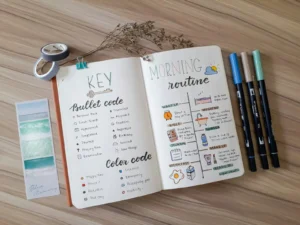
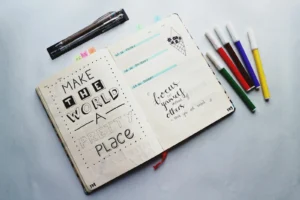
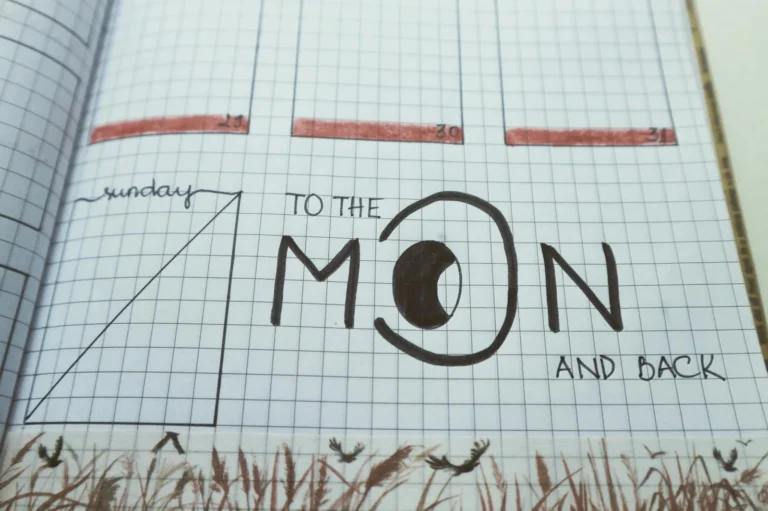
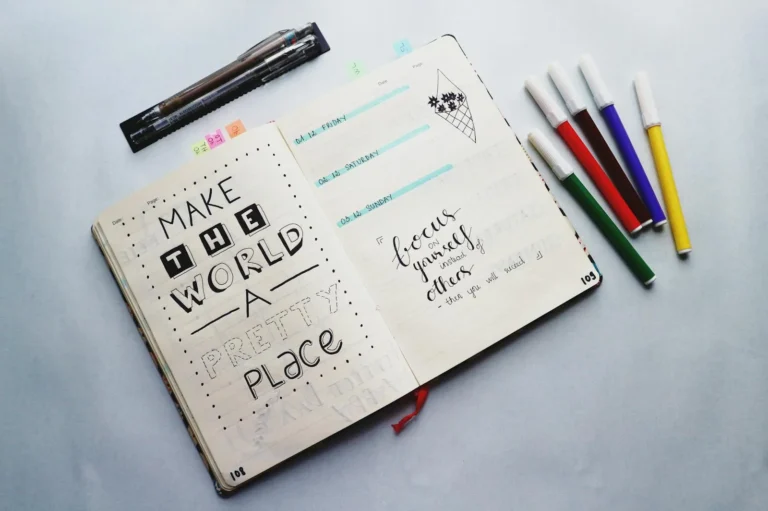
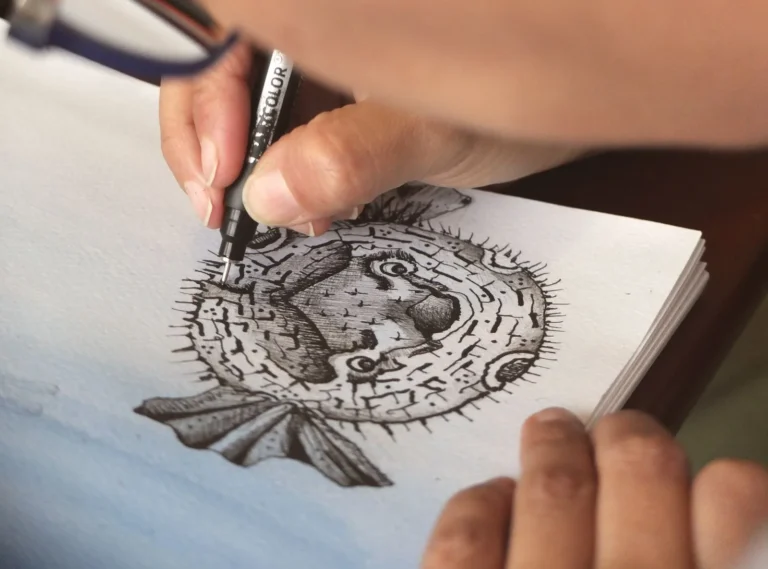
You spent the better part of an evening on a spread you were proud of. Headers lettered, a tracker laid out, a little color in the corners. Then you turned the page to start the next day and there it was, the whole layout ghosting through from the back, the marker bleeding into shadows of your own work. The notebook was on sale. That is usually the reason.
The best bullet journal supplies come down to two purchases that matter and a long list that does not: a notebook with paper good enough to take your ink, and a pen that does not bleed through it. Get those two right and almost everything else is optional. Get the notebook wrong and no pen, sticker, or stencil will save the page.
So this guide spends most of its time on the notebook and the pen, points to the brands that have earned the trust, and tells you plainly which supplies you can skip until you actually miss them.
The short version: For most people the best bullet journal notebook is a dotted A5 with paper thick enough to resist bleed-through and numbered pages with an index, which is exactly what a Leuchtturm1917 gives you. If you use markers or watercolor, step up to thicker paper like Archer & Olive. Pair it with one non-bleed fineliner (a Sakura Pigma Micron is the standard) for everyday writing, add a brush pen and a muted highlighter only if you want to decorate, and skip the rest of the supply wall until you hit a real need.
The notebook is the one decision worth slowing down for, because you live in it for months. A few questions sort the shelf.
Paper, first and most
The single spec that decides whether you love or resent a notebook is how its paper handles ink. Thin paper lets pens ghost through to the next page and lets markers bleed outright, ruining the back of every spread. Thicker, smoother paper takes a fineliner cleanly and, at the high end, even survives brush pens and a light watercolor wash. This matters more than the cover, the brand, or the price, and it is covered in full below because it is the part most people learn the expensive way.
Dot grid, blank, or grid
Dot grid is the bullet journal default for good reason: the faint dots guide your lines and spacing without boxing you in the way full graph paper does, and they all but disappear under a finished page. Blank pages give total freedom and suit heavy doodlers. Lined and square-grid notebooks work but fight you a little when you want to draw a tracker. If you are unsure, dotted is the safe first choice.
Numbered pages and a built-in index
The original system runs on an index, and a notebook that arrives with pages already numbered and a few blank contents pages up front saves you the tedium of numbering by hand. It is a small convenience that you feel every single time you log a new collection.
Size and cover
A5, roughly the size of a paperback, is the standard, big enough to write in and small enough to carry. A hardcover survives a bag better than a softcover, and two things worth having are a ribbon bookmark and an elastic closure to keep it shut. None of this is essential, but it is the difference between a notebook that lasts the year intact and one that does not.
The best bullet journal notebooks
With paper as the deciding factor, the notebooks sort themselves by who they are for. These are the names that have earned their reputations, pick by the job, not the hype.
The classic: Leuchtturm1917
If you buy one notebook without overthinking it, this is the one. The German-made Leuchtturm1917 became the default bullet journal notebook because it arrives ready for the system: dotted pages, pages already numbered, blank contents pages for your index, a back pocket, and ribbon bookmarks. There is even an official Bullet Journal Edition, made with Ryder Carroll, that prints the key and the basic framework right into the front. The paper handles fineliners and gel pens well, though heavy markers can still show through, which is the trade-off for its everyday usability.
Best for markers and watercolor: Archer & Olive
If your idea of bullet journaling involves brush lettering, bold color, or the occasional watercolor wash, you need thicker paper than the classics offer, and Archer & Olive built its reputation on exactly that. Its notebooks use notably heavy paper that resists bleed-through far better than standard journals, which is why the artistic, decoration-heavy crowd swears by them. For a minimalist who writes in fineliner, it is more paper than you need. For anyone reaching for markers, it is the difference between a clean spread and a ruined back page.
Best smooth writing: Rhodia Goalbook
Rhodia’s Goalbook runs on Clairefontaine paper, the kind that feels almost slick under the nib and resists feathering even with a fountain pen. It comes dotted with numbered pages, so it fits the system out of the box. Reach for the Goalbook over the more ubiquitous Leuchtturm1917 when the feel of pen on paper matters to you more than having the most common notebook with the widest range of covers and accessories.
Best built for beginners: Scribbles That Matter
Scribbles That Matter is aimed squarely at bullet journalers rather than being a general notebook adopted for the job. It leans on thicker paper to cut down on ghosting and includes thoughtful touches like a dedicated pen-testing page and a key page printed in, so you can try your pens before committing them to a spread. It is a friendly, lower-stakes place to learn the system before deciding whether you want a pricier classic.
Best for pen-and-pencil minimalists: Moleskine
Moleskine makes a dotted notebook, and if you journal in pencil, fineliner, or ballpoint and never touch a marker, its thinner paper is not the liability it is for the marker crowd. You get the iconic slim hardcover and a notebook that disappears into a bag. Just go in knowing that brush pens and heavy markers will bleed, so this is a pick for the plain, minimalist style rather than the decorated one.
The budget route
You do not need a name-brand notebook to start, and plenty of inexpensive dotted A5 notebooks on the market come with numbered pages and decent-enough paper for a fineliner. A budget notebook is the smart way to find out whether the habit sticks before you invest in a classic. Just check reviews specifically for bleed-through, since that is where the cheapest ones cut corners.
The pens worth owning
The pen list is short. You need exactly one to start, and the rest are for decoration you may never want.
An everyday fineliner that does not bleed. This is your workhorse. The Sakura Pigma Micron is the standard, an archival pigment-ink fineliner that comes in a range of nib sizes and resists smudging and feathering. Staedtler fineliners are the usual alternative, and their Triplus sets come in a wide spread of colors if you like to write in more than black. One fine nib for writing and one slightly broader for headers covers most journaling.
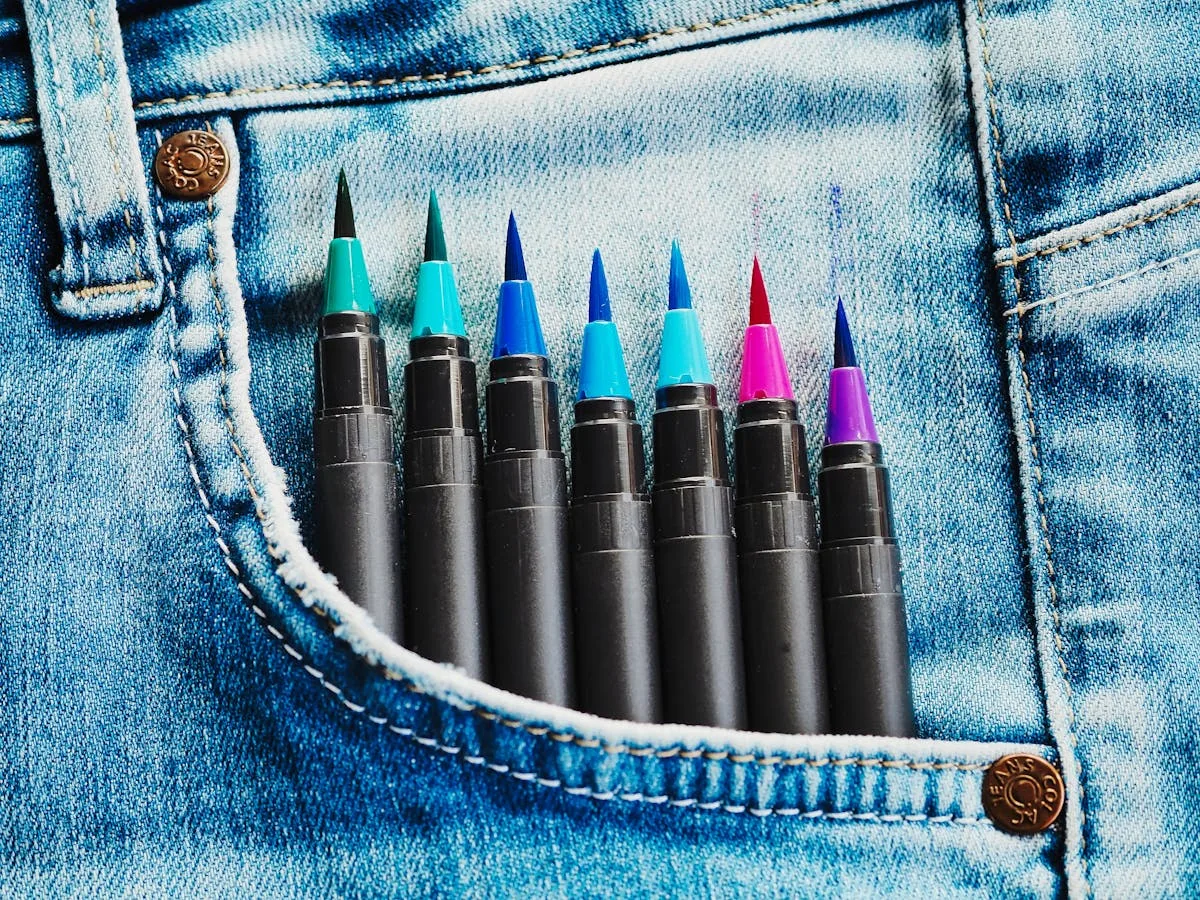
A brush pen, if you letter. For headers and hand lettering, a brush pen gives you the thick-and-thin strokes a fineliner cannot. The Tombow Dual Brush pens pair a brush tip with a fine end and come in colors, while the Tombow Fudenosuke is a single hard-tipped brush pen many people find easier to control when starting out.
A muted highlighter, if you color-code. The Zebra Mildliner is the favorite here, a dual-tip highlighter in soft, muted shades that accent a page without the eye-searing glow of a standard highlighter.
A basic gel pen for fast everyday writing when you do not want to reach for the good fineliner. Whatever writes cleanly on your paper without smearing works.
That is the entire pen kit most people ever need. Start with the fineliner alone and add the others only when you actually want to letter or color-code.
The extras, in order of how much they matter
Once the notebook and pen are sorted, everything else is genuinely optional. Roughly in order of usefulness:
A mechanical pencil and a small ruler. The most useful extras by far, because mapping a spread in pencil before you ink it is what keeps layouts from going crooked. A ruler keeps your grids straight.
Washi tape and stickers. The fastest way to decorate without drawing. A strip of washi frames a page, a sticker anchors a corner, and neither asks anything of your handwriting. Our bullet journal stickers and washi guide covers the pieces worth keeping, and the wider journal stickers guide sorts the types.
Stencils. Pre-cut shapes for headers, banners, boxes, and trackers, handy if drawing the same layout by hand each month wears thin.
Everything else. The brush marker sets, the dozen washi rolls, the sticker books. These are the fun extras, the ones to buy a single piece at a time for a page you are actually making, or they pile up unused in a drawer.
The one spec that matters: bleed-through and ghosting
This is the part that decides whether you keep a notebook or quietly abandon it. Two related problems plague cheap paper. Bleed-through is when ink soaks all the way through and stains the back of the page, which ruins whatever spread lives there. Ghosting is the milder cousin, where you can see a faint shadow of the writing through the paper without it actually bleeding.
Both come down to paper weight and quality. Thin paper ghosts under a gel pen and bleeds under a marker. Thicker, denser paper holds the ink on its own side. A fineliner is forgiving and will behave on most decent notebooks, which is why a minimalist can journal happily in a Moleskine or a Leuchtturm1917. The moment you bring in brush pens, alcohol markers, or watercolor, paper weight stops being a nicety and becomes the whole game, which is the entire reason a brand like Archer & Olive exists.
The cheap test before you trust a notebook with a real spread: take your actual pens to the very first page, write and color a few lines, and turn the page over. If the back is clean, journal freely. If it ghosts or bleeds, you have just learned to keep your markers for the notebooks that can take them, and to reach for a fineliner everywhere else. One scribbled test page saves a year of ruined backs.
Test your layouts free before buying the nice notebook
A good notebook is worth the money once you know you will keep going, and a waste of it if the habit does not take. The low-risk order is to test the layouts free first. Print a monthly spread, a daily log, and a habit tracker, run them loose for a couple of weeks, and you find out both whether the habit sticks and which layouts you actually use, all before committing to a notebook you paid for.
Creative Fabrica has a broad library of free printable bullet journal pages and trackers to test with, and our free bullet journal templates post gathers a starter set. Once you know you are in, come back and buy the notebook with confidence. For the full setup walkthrough, how to start a bullet journal takes it page by page, and the bullet journal hub covers the whole system.
Frequently asked questions about bullet journal supplies
What is the best notebook for bullet journaling?
For most people, a dotted A5 notebook with paper thick enough to resist bleed-through and pages that come numbered with a built-in index. The Leuchtturm1917 is the long-standing default because it arrives ready for the system. If you use markers or watercolor, step up to thicker paper like Archer & Olive, and if you write only in fineliner or pencil, even a Moleskine works.
What supplies do I need to start a bullet journal?
Two: one dotted notebook and one non-bleed fineliner, such as a Sakura Pigma Micron. That honestly covers it. A mechanical pencil and a small ruler are the most useful extras for mapping spreads, and a brush pen or muted highlighter is worth adding only if you want to letter or color-code. Skip the larger supply sets until you hit a real need.
What kind of pens are best for bullet journaling?
A fineliner with pigment ink that does not bleed through the page is the core pen, and the Sakura Pigma Micron is the usual recommendation, with Staedtler a common alternative. For decoration, a Tombow brush pen handles lettering and a Zebra Mildliner gives muted highlighting. One good fineliner is genuinely all you need to start.
What paper weight is best for a bullet journal?
Heavier paper resists bleed-through and ghosting, so it is the safer choice, especially if you use markers, where thicker paper is essential rather than nice. For fineliner and pencil work, mid-weight paper like a Leuchtturm1917’s is plenty. The reliable test is to take your own pens to the first page and check whether they show through the back before trusting the rest of the notebook.
Can I use a regular notebook for bullet journaling?
Yes. The system works in any notebook, and a plain lined or blank one you already own is a fine place to start before spending money. What you give up is the dot grid that makes drawing trackers and boxes easier, and on cheaper paper you will likely see more ghosting and bleed-through. Start with what you have, then upgrade to a dotted notebook with better paper once you know the habit will stick.
Buy the two that matter, skip the rest
Most people’s supply problem is not that they own too little. It is that the notebook and the pens showed up before the habit did. Two purchases are the ones that earn their place: a notebook with paper that takes your ink, and one fineliner that does not bleed through it. Add a brush pen, a highlighter, a ruler, or a roll of washi only when a page actually calls for it, one at a time.
Test your layouts on free printables first, take your real pens to the first page before you trust a notebook with a spread you care about, and you will not buy a single thing you regret. When you want the full picture, the bullet journal hub covers the system, how to start a bullet journal walks the setup, and page ideas gives you layouts to fill it with. That evening spread you were proud of will still look just as good from the back, on paper that can hold it.
Want layouts to test before you buy the notebook? Our free printable bullet journal starter kit includes a monthly spread, a habit tracker, and a daily log you can print and run this week. Sign up below and we will send it over.
Get free junk journal printables
New printables, page ideas, and paper craft tutorials, straight to your inbox.
You quit the first time because the journal started asking too much. Every spread online had hand-lettered headers, a color theme, a little illustration in the corner, and somewhere along the way keeping the notebook stopped being planning and became a nightly art assignment you were too tired to do. So you skipped a day,…
You saw the spread online first. Clean dotted page, a hand-lettered header, a little watercolor wash in the corner, a habit tracker that looked like a piece of art. So you bought the notebook and the good pens, opened to page one, and sat there. The blank dot grid stared back, the cursor of paper,…
Every January it goes the same way. You buy the notebook, you fill in three perfect days, then life happens, you miss a Tuesday, and the unmarred pages start to feel like an accusation. By the twentieth the notebook is in a drawer and you have decided you are just not a bullet journal person….
The very first page is where a surprising number of bullet journals die before they begin. You open the new notebook, you know the first page is “the cover,” and suddenly it carries the weight of the whole thing. It has to set the tone. It has to be good. So you put it off…
You flip back through last month and one thing jumps out before you read a single word: the Sundays are all the same grey. You never noticed it living through them, one ordinary low Sunday after another blurs into “fine,” but colored in across a page, the pattern is impossible to miss. That is the…
You can’t draw. You have decided this about yourself, somewhere back in a childhood art class, and now every time you see a bullet journal with a little banner header and a row of tiny potted plants down the margin, you file it under “not for me.” Here is the thing the people drawing those…
Manage Consent
To provide the best experiences, we use technologies like cookies to store and/or access device information. Consenting to these technologies will allow us to process data such as browsing behavior or unique IDs on this site. Not consenting or withdrawing consent, may adversely affect certain features and functions.
Functional
Always active
The technical storage or access is strictly necessary for the legitimate purpose of enabling the use of a specific service explicitly requested by the subscriber or user, or for the sole purpose of carrying out the transmission of a communication over an electronic communications network.
Preferences
The technical storage or access is necessary for the legitimate purpose of storing preferences that are not requested by the subscriber or user.
Statistics
The technical storage or access that is used exclusively for statistical purposes.The technical storage or access that is used exclusively for anonymous statistical purposes. Without a subpoena, voluntary compliance on the part of your Internet Service Provider, or additional records from a third party, information stored or retrieved for this purpose alone cannot usually be used to identify you.
Marketing
The technical storage or access is required to create user profiles to send advertising, or to track the user on a website or across several websites for similar marketing purposes.