You did the hard part. The notebook is set up, the index is labeled, you learned the little symbols, and you kept it going for a week. Then you turned to a fresh spread, pen in hand, and drew a complete blank about what should actually go on it. The setup is finite. The pages are forever, and that second blank is the one nobody warns you about.
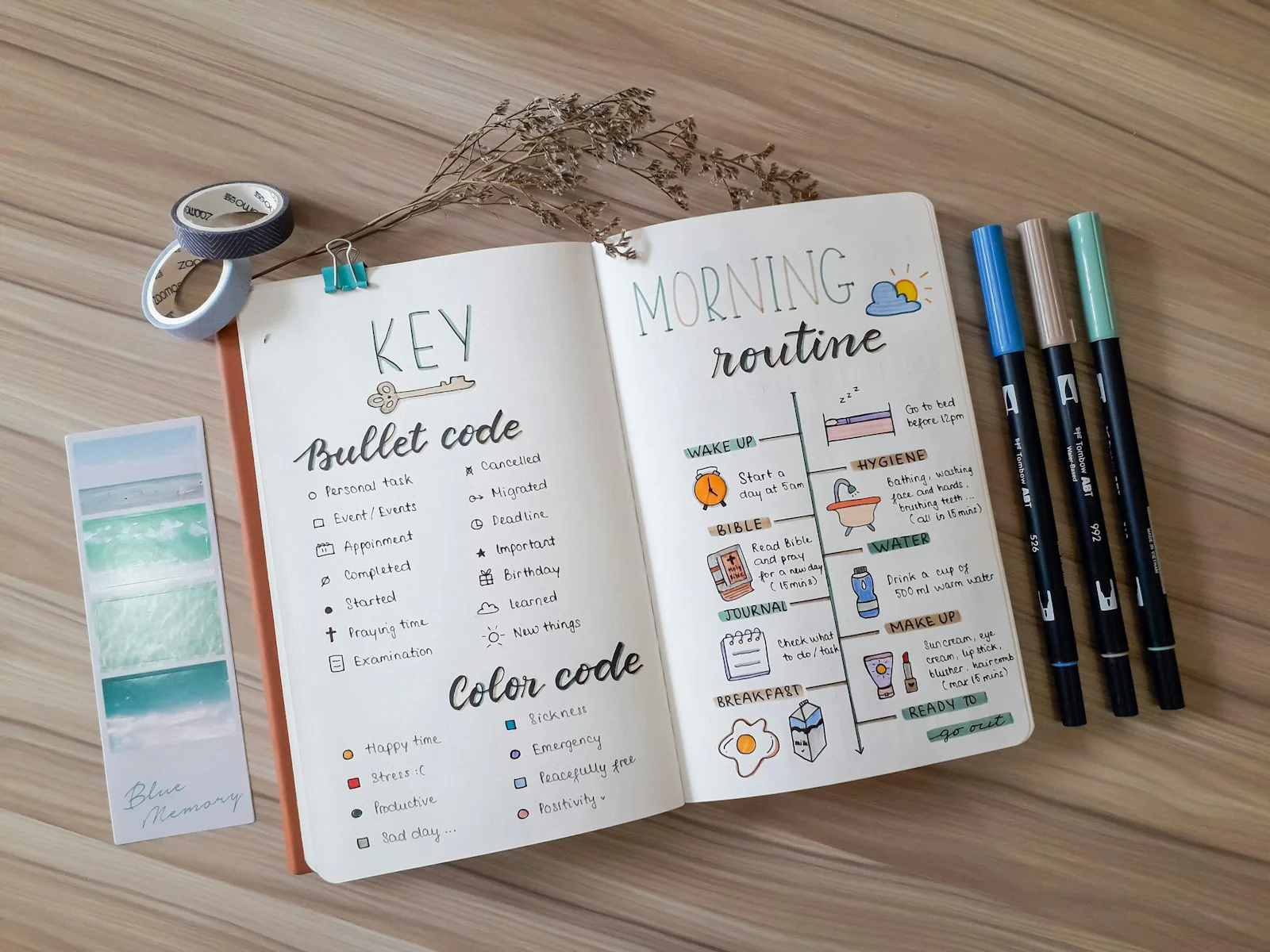
The good news is you never have to invent a layout from scratch. Bullet journaling runs on borrowed spreads. The best page ideas are the ones you lift from someone else and bend to fit your own week, and nobody is keeping score. What follows is a working library of them, sorted by the job they do and written so you can redraw each one without a screenshot to copy from.
Take what fits, ignore the rest, and remember that the plainest version of any spread below still counts.
The short version: The most useful bullet journal pages fall into a few buckets: monthly setups, weekly and daily logs, trackers (habit, mood, sleep, spending), list and collection pages (reading, watchlist, recipes), and the occasional creative or seasonal spread. Start with a monthly log, a daily log, and one tracker, then add a collection page whenever a running list outgrows the back of your hand. Borrow layouts freely and keep them as plain or as decorated as you like.
The start of every month is a natural reset, and a small handful of pages set the tone for the next thirty days.
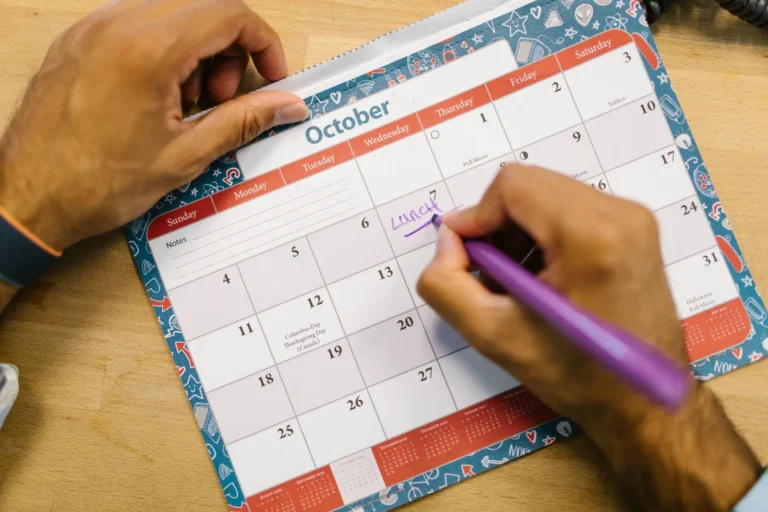
A monthly calendar. The fastest version is a vertical list: write the numbers 1 to 31 down the left margin, the day’s initial beside each (1 M, 2 T, 3 W), and keep the rest of the line for appointments. Five minutes, no ruler. The grid version looks more like a wall calendar but eats a whole spread. Anti-fail: keep the list narrow, a couple of words per day, or you run out of page by the 20th.
A month-at-a-glance task list, the few things this month is genuinely about, kept short on purpose.
A goals page, two or three intentions rather than a wishlist, with room to note how they went.
A cover page if you enjoy the ritual, just the month’s name and whatever decoration you feel like, or nothing at all.
This is also where a theme, if you want one, gets set, a color or a motif you carry across the month’s pages. The weekly and monthly spreads guide goes deeper on the calendar layouts themselves.
Weekly and daily spreads
The pages you live in. This is where most of the actual planning happens, and the layout is worth matching to how busy your weeks really are.
A weekly spread gives each day a small block across one or two pages, good for seeing the whole week at once. The simplest layout: split a two-page spread into eight boxes, seven for the days and one spare for notes or a mini to-do. A daily log gives today its own space to fill as the day goes, better for heavy or unpredictable days. Plenty of people run a hybrid: a light weekly overview plus a daily page when a day needs the room. Anti-fail either way: mornings always feel emptier than the day turns out to be, so give each day more room than you think you need, or tomorrow’s tasks get crammed into the margins.
If you are not sure which suits you, try a week of each and keep the one you did not resist. The layouts and the trade-offs are laid out in the weekly and monthly spreads post.
Tracker pages
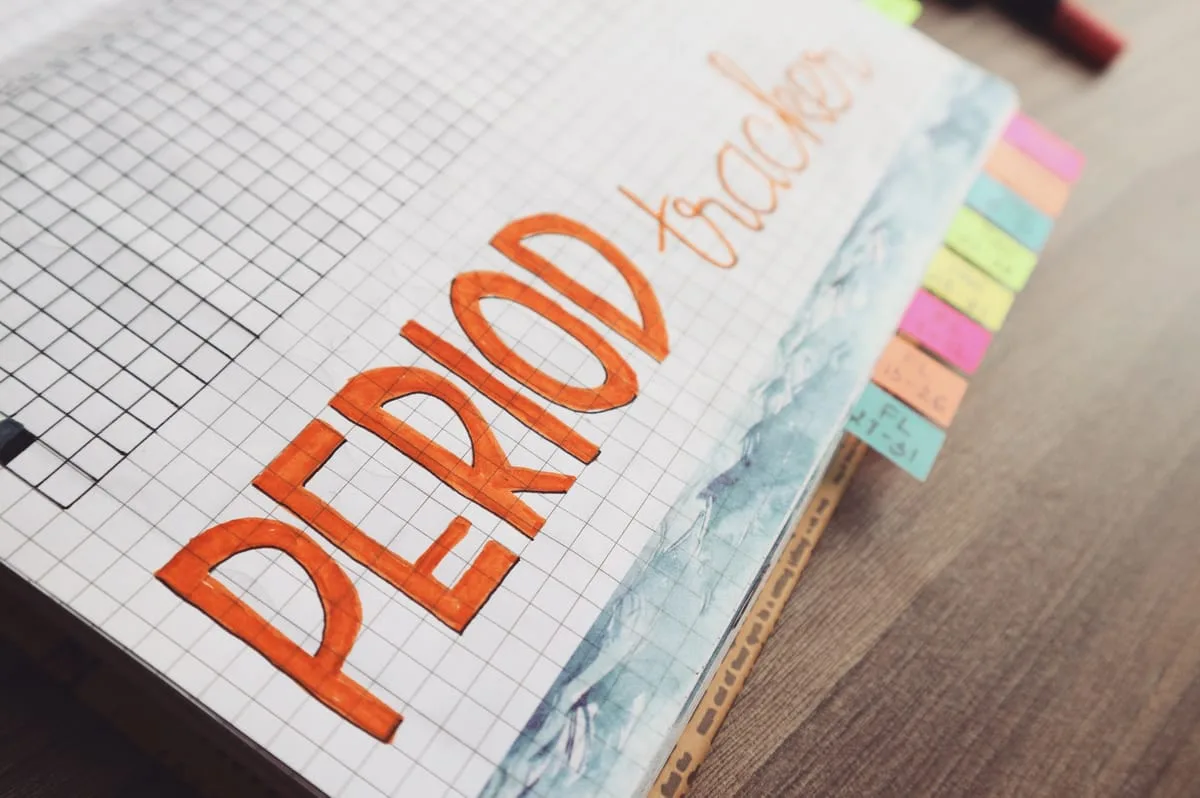
Trackers are where a bullet journal earns its keep, turning a vague sense of how things are going into something you can actually see on a grid.
Habit tracker. Draw a grid: four or five habits down the left (water, read, walk, lights-out by eleven), the days 1 to 31 across the top, and color or X a box each day you hit one. The building streak is the motivation. Anti-fail: track things you nearly do already, so the grid earns a streak instead of cataloging your guilt. More layouts in our habit tracker guide.
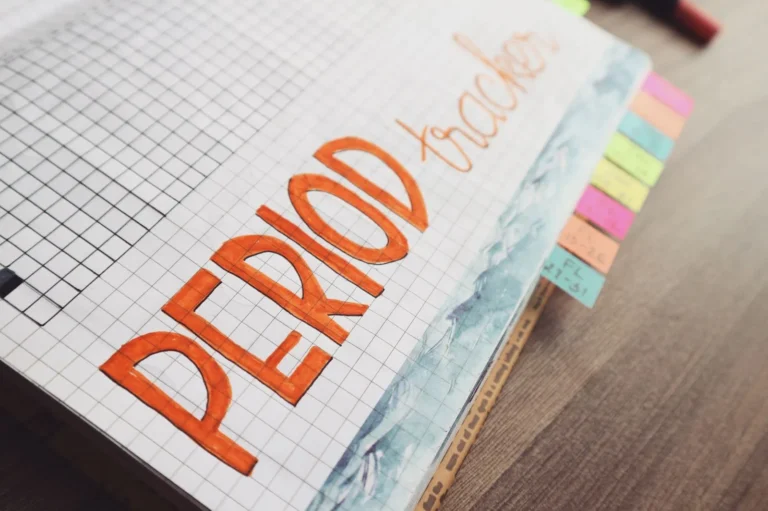
Mood tracker. Pick four or five moods, give each a color (calm blue, good green, flat gray, stressed red, great yellow), and fill one small shape per day. A month in, it shows patterns your memory would blur, like most of the low days landing on a Sunday. The mood tracker post covers the formats, from a simple key to a full mood mandala.
Sleep tracker. Shade in the hours you slept each night as a horizontal bar, and after a few weeks your worst nights cluster visibly around the same days.
Spending or savings tracker. A running log of expenses, or a thermometer outline you fill in as a savings goal climbs.
Water, reading, or workout trackers, whichever daily thing you want to nudge yourself toward.
Add one or two, not ten. A wall of trackers set up in a hopeful January is the fastest route to a guilty February.
List and collection pages
Collections are the running lists that otherwise live on scattered sticky notes and the backs of receipts. Giving them a home in the notebook is half the appeal of the whole system.
Reading list and watchlist, the books and films you keep meaning to get to.
Recipes to try, or a page of the weeknight meals you actually rotate through.
Gift ideas, jotted year-round so December stops being a scramble.
Bucket list and goals for the year, the bigger-picture pages.
Brain dump pages, one open page to empty everything cluttering your head onto, no structure required.
A running master task list, the things with no deadline that you do not want to lose.
These pages are why the index matters. Log each collection there as you make it, and a list from four months ago is findable in seconds instead of lost three notebooks deep.
Creative and memory pages
Not every page has to be productive. Some of the most-kept spreads are the soft ones, the pages you flip back to rather than the ones that run your week.
A gratitude log, a line a day. Read a full month back at once, and the small things you forgot you even wrote down do the work.
Memory pages, where a good day gets written down before it blurs, the territory a junk journal lives in full-time.
Doodle and lettering practice pages, low-stakes spreads just to play, covered in our bullet journal doodles guide.
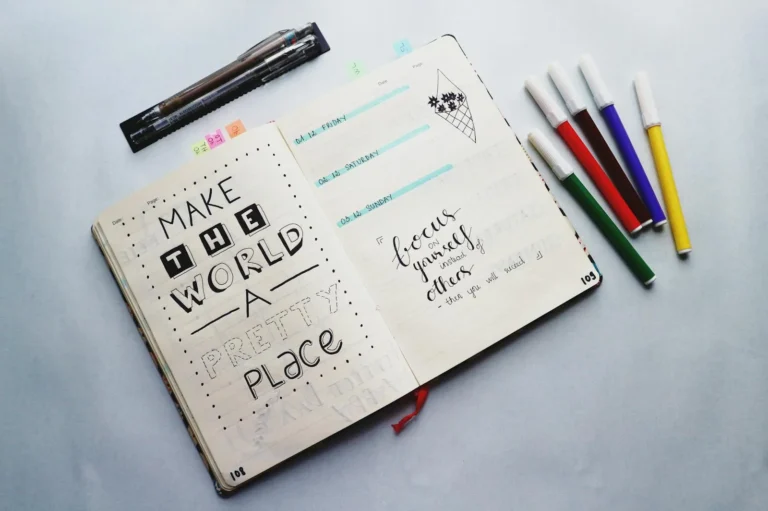
Quote and affirmation pages, the lines you want in front of you.
If decorating is the part you enjoy, this is where to spend it. And journal stickers do a lot of the work here without any drawing: a sticker frames a photo, anchors a corner, or sets a theme in one peel. Our journal stickers guide covers the types worth keeping, and the bullet journal stickers and washi post is built for exactly these pages.
Seasonal and themed pages
Tied to the calendar, these are the pages that make a notebook feel like the time of year. A holiday planning spread in December, a summer reading list in June, a spring cleaning checklist, a back-to-school setup. They are also the easiest place to experiment with a look, since you only commit to it for a season. Print a free seasonal template to test the layout before you redraw it by hand.
The one trick: design the spread for the job, not the photo
Here is what separates a page you use from a page you admire once and abandon. Before you ink anything, decide what the spread is actually for, then map it in pencil.
Most abandoned layouts fail because they were designed to look good in a photo, not to be lived in. The boxes are too small to write in, the tracker has more habits than anyone keeps, the daily log left no room for an actual day. A spread that works starts from the function: how much do I really need to write here, how many days, how much space per entry. Sketch that in light pencil first, dots only, then commit the lines in pen once you know it fits. Decoration goes on last, in the space that is left, never in the space you needed for words.
In practice it is four quick moves. Count how many entries the page actually needs (a week is seven blocks, a habit tracker is days times habits). Pencil the grid in lightly, using the dots as your guide. Write a line of real content into the smallest box to check it fits your handwriting. Only then commit the lines in pen and add color in whatever space is left.
It is the unglamorous habit behind every layout that survives past week one. Function first, in pencil. Pretty second, in ink. A spread built that way gets used, and a used spread is the only kind worth making.
Borrow these free before you draw them
You do not have to redraw every idea here by hand. Print the layouts first, run them for a week, and you find out which ones fit your real weeks before you commit a page to them. It is the cheapest way to build a setup that sticks, and it spares your notebook from a graveyard of spreads you tried once.
Creative Fabrica has a deep library of free printable bullet journal pages, trackers, and monthly spreads you can download and test today, and our free bullet journal templates post gathers a starter set. When you want the full setup walkthrough, how to start a bullet journal takes it step by step, and the bullet journal hub ties the whole system together.
Frequently asked questions about bullet journal page ideas
What pages should a bullet journal have?
At minimum, an index, a future log, a monthly log, and a daily log. Beyond those, the most useful additions are one or two trackers (habit and mood are the common starters) and a few collection pages, like a reading list or a brain dump. Add pages as you need them rather than setting up a dozen on day one.
What can I put in my bullet journal besides planning?
Plenty. Collection pages (books to read, films to watch, recipes, gift ideas), trackers for habits, mood, sleep, or spending, memory and gratitude logs, and creative pages for doodling or lettering. A bullet journal stretches as far as you want it to, from pure productivity to a keepsake closer to a junk journal.
How do I make my bullet journal pages look good without art skills?
Lean on layout and restraint rather than drawing. Clean headers, plenty of white space, and a two- or three-color palette go further than any illustration. Journal stickers do the decorative work without a steady hand: a sticker frames a photo or anchors a corner in one peel. Map the spread in pencil first so it stays balanced.
How many trackers should I put in my bullet journal?
Start with one, maybe two. A habit tracker is the usual first one because the visible streak is motivating. Setting up ten trackers at once almost always backfires, since maintaining them turns into a chore and the whole page gets abandoned. Add a new tracker only once an existing one has stuck.
What is a good first spread for a beginner?
A simple monthly log paired with a basic daily log. Set up the month’s calendar and a short task list, then start rapid-logging your days. Add one habit tracker once that feels comfortable. Keep it plain and functional for the first month, and let decoration come later once the habit holds.
Pick one page and start it today
You do not need a notebook full of spreads to make this work. You need the one page in front of you to do its job. Flip back through this library, find the spread that fits the week you are actually having, a monthly setup, a habit tracker, a brain dump, and draw the plain version of it now.
When you want to go further, the bullet journal hub covers the whole system, the supplies guide helps you choose gear, and the journal stickers guide shows you how to decorate without drawing. The blank spread stops being intimidating the moment it has a purpose. Give it one, and the rest of the page fills itself in.
Want spreads ready to print? Our free printable bullet journal starter kit includes a monthly layout, a habit tracker, and a daily log you can print and use this week. Sign up below and we will send it over.
Get free junk journal printables
New printables, page ideas, and paper craft tutorials, straight to your inbox.
You spent the better part of an evening on a spread you were proud of. Headers lettered, a tracker laid out, a little color in the corners. Then you turned the page to start the next day and there it was, the whole layout ghosting through from the back, the marker bleeding into shadows of…
You flip back through last month and one thing jumps out before you read a single word: the Sundays are all the same grey. You never noticed it living through them, one ordinary low Sunday after another blurs into “fine,” but colored in across a page, the pattern is impossible to miss. That is the…
Sunday night, fresh week ahead, and you are staring at two blank pages trying to remember how you laid out last week, the good one, the week the journal actually worked. Was it the vertical columns? The one with the box in the corner for the brain dump? You cannot quite recreate it, so you…
You drew the grid on the first of the month, thirty-one little squares marching across the page, eight habits stacked down the side, and for nine days it was glorious. Every square filled in, a wall of color, proof you were finally becoming the person who flosses and stretches and drinks the water. Then the…
Every January it goes the same way. You buy the notebook, you fill in three perfect days, then life happens, you miss a Tuesday, and the unmarred pages start to feel like an accusation. By the twentieth the notebook is in a drawer and you have decided you are just not a bullet journal person….
You saw the spread online first. Clean dotted page, a hand-lettered header, a little watercolor wash in the corner, a habit tracker that looked like a piece of art. So you bought the notebook and the good pens, opened to page one, and sat there. The blank dot grid stared back, the cursor of paper,…
Manage Consent
To provide the best experiences, we use technologies like cookies to store and/or access device information. Consenting to these technologies will allow us to process data such as browsing behavior or unique IDs on this site. Not consenting or withdrawing consent, may adversely affect certain features and functions.
Functional
Always active
The technical storage or access is strictly necessary for the legitimate purpose of enabling the use of a specific service explicitly requested by the subscriber or user, or for the sole purpose of carrying out the transmission of a communication over an electronic communications network.
Preferences
The technical storage or access is necessary for the legitimate purpose of storing preferences that are not requested by the subscriber or user.
Statistics
The technical storage or access that is used exclusively for statistical purposes.The technical storage or access that is used exclusively for anonymous statistical purposes. Without a subpoena, voluntary compliance on the part of your Internet Service Provider, or additional records from a third party, information stored or retrieved for this purpose alone cannot usually be used to identify you.
Marketing
The technical storage or access is required to create user profiles to send advertising, or to track the user on a website or across several websites for similar marketing purposes.